




What is executive search?
Executive search is a specialized form of recruiting that finds and assesses candidates for senior leadership and board roles. A search firm or an in-house recruiting team researches the market, approaches leaders who are often employed and not looking, and evaluates them against the role's requirements. The client makes the final hiring decision.
How executive search is defined
The US Census Bureau's industry classification, NAICS 561312, describes executive search services as recruiting for clients with executive and senior management position requirements. The work it describes may include developing a search strategy and position specification, researching, identifying, screening, and interviewing candidates, verifying qualifications, and helping with offer negotiations and the new leader's assimilation. The people placed are not employees of the search firm. Statistics Canada's product classification adds that the client selects and hires the candidate.
The AESC, an industry association for executive search firms, names three general ways a business can hire executive-level people: executive search consulting, in-house recruiting, and contingent recruiters. It describes executive search firms as specialized management consultants that a client retains on an exclusive basis in an advisory capacity. Companies turn to executive search for roles such as board seats, C-suite positions, confidential and cross-border searches, hard-to-fill positions, and newer leadership roles, according to AESC.
Executive search differs from general recruiting in a few ways:
- Seniority: It covers executive, senior management, and board roles. AESC says in-house recruiting teams are generally best resourced for entry-level to middle management roles.
- Who it reaches: AESC says the best candidates are often already happily employed, so the first step is convincing them to consider a new opportunity. Trust and confidentiality matter for that reason.
- Depth of assessment: AESC lists methods such as competency-based interviewing, 360-degree referencing, and due diligence, sometimes with psychometric testing.
- How the firm is engaged: Executive search firms usually work on a retained, exclusive basis. Contingent recruiters usually work without exclusivity and are paid only on successful placement of a candidate they referred. See retained search for how the two models compare.
Common terms in a search include the position specification, the market map, the longlist, and the shortlist or candidate slate. A success profile describes what it takes to succeed in the role.
Why executive search matters for talent teams
- The cost of a wrong hire: AESC says the direct costs of an unsuccessful executive hire include replacing the executive and the effect on sales or market position, and that indirect costs such as lost momentum and lower employee morale can be larger.
- Deciding who runs the search: AESC says in-house teams often work with an executive search firm to fill their most senior roles and board seats. Findem Executive Search is also built for in-house teams that run executive searches themselves.
- Agreeing on the specification: AESC advises clients to have all relevant parties sign off on the search strategy and position specification, and calls the agreed specification the cornerstone of the search. An intake meeting is where that agreement usually starts.
How Findem approaches executive search
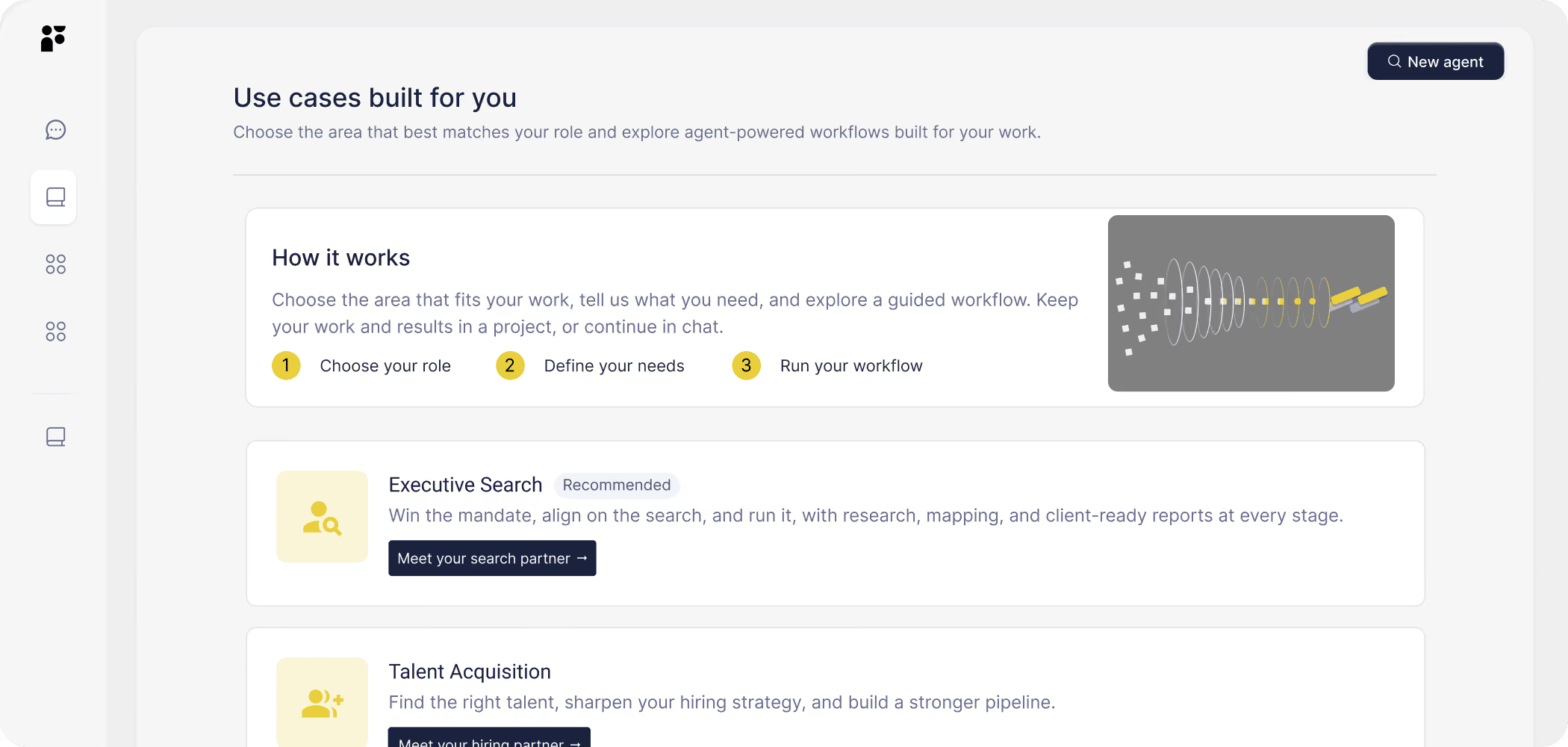
Findem is not a search firm. Findem Executive Search gives in-house teams and search firms Findem Studio agents for each stage of a search. The agents do the research, and the search team makes the call.
- Before the pitch: The Company and Talent Brief agent combines web and Findem evidence on the client's business, leadership, competitors, and recent developments, and packages cited insights for the team to review and shape into its pitch.
- Planning where to look: The Search Strategy agent organizes the target market around four company archetypes tied to the mandate, verifies the organizations within each, and sets outreach priorities before anyone is sourced.
- Mapping the market: The Executive Map agent turns a search brief into a company-by-company view of relevant leaders, with fit assessments and sources to review before anyone is approached.
The agents support researchers and partners. They do not make hiring decisions.
Further reading
Sources
- 2022 NAICS 561312 Executive search servicesUS Census Bureau. Description read from the official 2022 NAICS descriptions file
- NAPCS Canada 2017 Version 1.0, 781128 Executive/retained searchStatistics Canada
- NAPCS Canada 2017 Version 1.0, 781121 Permanent placementStatistics Canada
- AESC Global Guide to Choosing an Executive Search FirmAssociation of Executive Search and Leadership Consultants, an industry association, October 2025 edition
- Intake meeting
- Findem Executive Search
- Company and Talent Brief agent
- Search Strategy agent
- Executive search market map