

.svg)
AI and people intelligence terms to know.
This glossary explains the AI, data, and people intelligence concepts that shape modern people-centric work. It includes foundational definitions, workflow applications, and the signals and platform components that power Findem.

AI & Data Foundations
Artificial Intelligence (AI)
AI refers to systems that perform tasks requiring human-like reasoning, pattern recognition, or decision-making. In talent workflows, AI interprets data at scale to support sourcing, screening, analytics, and communication.
Machine learning (ML)
A subset of AI that uses algorithms to identify patterns and make predictions from data. ML powers tasks like candidate filtering, ranking, and classification.
Deep learning
A type of ML that uses neural networks to process unstructured or high-volume datasets — including resumes, profiles, and company information.
Generative AI (GenAI)
GenAI creates new content — outreach messages, summaries, job descriptions — by learning from large datasets of text and code.
Large language models (LLMs)
AI models trained to understand and generate human language. In talent workflows, they help interpret recruiter intent, answer questions, and power conversational interfaces.
Hyperautomation
The combination of AI, ML, and automation tools to streamline multi-step workflows. In talent acquisition, hyperautomation reduces manual tasks across sourcing and engagement.
Business intelligence (BI)
Tools that gather, store, and analyze data for reporting and decision support. BI complements AI by surfacing funnel metrics, performance signals, and workforce trends in readable form.
Person data sources
A person's professional footprint — roles, achievements, contributions, certifications, and digital profiles — used to generate structured talent data.
Company data sources
A company's digital footprint — funding events, team growth, markets served, leadership structure — that provides context for interpreting a person's experience.
3D People Graph
Findem's structured intelligence foundation, containing 1.6 trillion expert-labeled data points across individuals, companies, and time. It connects who someone is, where they worked, how their career evolved, and how they are connected to others — giving AI the context it needs to reason over people data, not just search it.
3D data (Person × Company × Time)
The data model underlying the 3D People Graph. It structures career history as three intersecting dimensions — person, company, and time — so the system understands what experience actually means in context, not just what titles a candidate held.
3D candidate profiles
Profiles generated from 3D data that provide an integrated view of a person's background, achievements, and career trajectory.
Attributes
Verifiable facts derived from 3D data — scope increases, technical depth, tenure at a specific company stage, industry specialization — used to assess fit with precision.
Findem Magics
Findem's library of 300,000+ proprietary, searchable attributes that translate intangible, hard-to-articulate career qualities — impact, leadership style, strategic thinking, retention risk — into concrete, data-backed search criteria. Magics close the gap between what a recruiter knows they want and what a keyword search can find.
AI Labeling Engine
The system that transforms raw person and company data into structured 3D data, identifies attributes, and produces Success Signals and Relationship Signals. It combines machine-scale processing with expert human review, so the intelligence behind every Findem recommendation is labeled, structured, and verifiable — not generated on the spot.
Success Signals
Verified, expert-labeled patterns that indicate which experiences and career markers predict success for a role, team, or environment. Success Signals are not black-box scores — they are structured, explainable patterns that help teams narrow the field with more confidence. Findem attaches roughly 75–100 Success Signals to a given candidate profile.
Relationship Signals
Structured representations of how people are connected inside and outside an organization — through shared work history, alumni networks, referral paths, employee connections, and permissioned network relationships. Warm paths identified by Relationship Signals convert 2–8x more than cold outreach.
Domain-specific AI for talent
AI models built on talent-specific data and expert-labeled signals, rather than general-purpose language models. Because these models are trained on role expectations, career patterns, and organizational context, they produce recommendations grounded in how hiring actually works — not just how language works.
People Intelligence Platform
A People Intelligence Platform turns fragmented people data into context that teams and AI can reason over and act on — across hiring, executive search, internal mobility, learning and development, and workforce planning. The intelligence is labeled, structured, and verifiable, not generated from general-purpose models.
Insights powered by Findem
Analysis derived from 3D data, Success Signals, and Relationship Signals that supports workforce planning, hiring decisions, internal mobility, and talent strategy. These insights reflect structured, labeled data, not raw search output.
Talent Workflows & Use Cases
Talent decisions
An umbrella term for decisions across hiring, mobility, succession, retention, and development. Findem's platform supports these decisions with shared context and explainable signals.
Talent sourcing
The practice of finding qualified candidates and engaging them for open roles. AI supports sourcing by interpreting role expectations, ranking candidates, and identifying warm relationships.
Multichannel sourcing
A sourcing strategy that pulls talent from inbound applicants, referrals, rediscovery, alumni, and external search. Warm channels typically produce faster engagement and stronger pipelines.
Natural language sourcing
A sourcing capability that allows recruiters or hiring managers to begin a search using plain language. The AI interprets intent and translates it into search criteria.
Attribute search
Searching for talent based on verified attributes — such as company-stage experience, promotion velocity, scope growth, or industry depth — rather than keywords or job titles.
Copilot for sourcing
An assistive AI companion that helps interpret job descriptions, run searches, rank candidates, and accelerate outreach. Copilot works with human oversight and enhances efficiency.
Candidate rediscovery
Identifying qualified candidates already in your ATS. AI refreshes profiles with updated data and highlights past applicants who now fit active roles.
Candidate Relationship Management (CRM)
Nurturing and tracking qualified candidates for future roles. AI-driven CRMs personalize outreach, update data automatically, and support ongoing engagement.
Talent ecosystem
A holistic strategy that combines sourcing, CRM, referrals, alumni, employer branding, and talent communities into one unified approach.
Talent analytics
Analytics that help teams understand funnel health, sourcing performance, recruiter activity, and outreach effectiveness. Findem unifies data across channels to improve insight.
Talent insights
Data-driven analyses that support decisions related to hiring, planning, mobility, and development. They draw from 3D data, Signals, and observed behaviors.
Fia (Findem Intelligent Assistant)
Findem's conversational AI layer, embedded directly in product surfaces — search, campaigns, inbound applicant review, shortlist — rather than living in a separate chat window. Recruiters describe what they want in plain language, and Fia sets up criteria, drafts segments, highlights or flags candidates, prepares bulk actions, and surfaces performance benchmarks. Fia never makes final calls: it shows evidence against criteria the recruiter set, and always requires explicit confirmation before executing bulk actions.
Calibration (process)
Iterative alignment on what "great" looks like for a role. Calibration uses Success Signals, market data, and examples to ensure teams share expectations before sourcing begins.
Interview-ready
A state where candidates are pre-screened, qualified, and prepared to enter interviews. Interview-ready candidates include clear reasoning and documented signals.
Findem Platform &Agentic AI
People Intelligence Platform
One platform — three commercial forms. Apps (the customer owns the work), Agents (Findem does a bounded piece of the work and passes it back), and Services (Findem owns the result). The same expert-labeled intelligence and agent infrastructure underlies all three.
Talent Solutions
Findem's direct enterprise applications — sourcing, CRM, screening, assessment, interview, verification, learning and development, and workforce planning — built on the 3D People Graph and delivered to talent teams as workflow tools. Each product is built on the same expert-labeled foundation so work stays connected across the talent lifecycle.
Embedded Solutions
Findem's co-innovation model. Job boards, HR platforms, and talent networks embed Findem's data and agent infrastructure to deliver AI-powered hiring outcomes their customers couldn't build on their own. Partners access the same expert-labeled intelligence and agent infrastructure that powers Findem's own products.
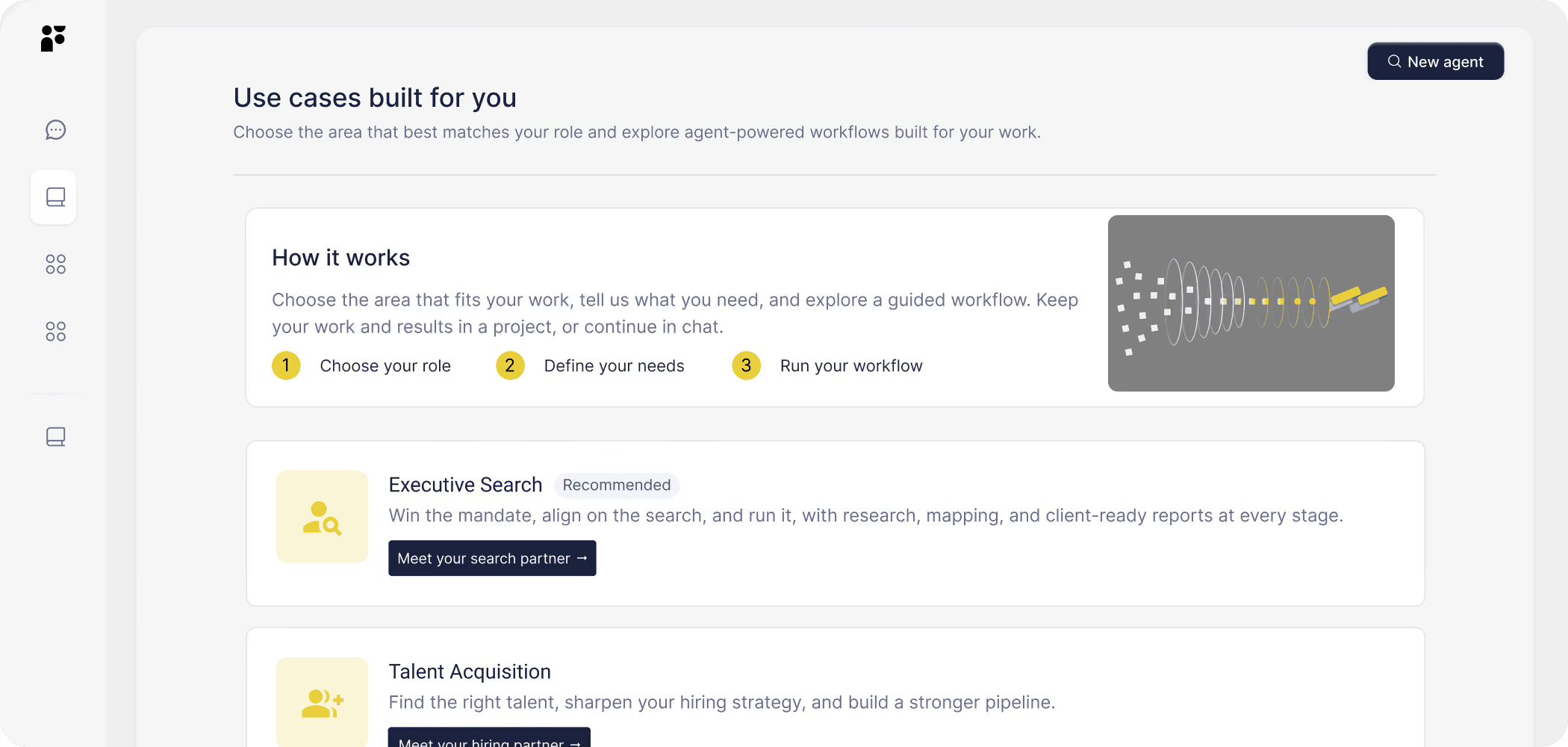
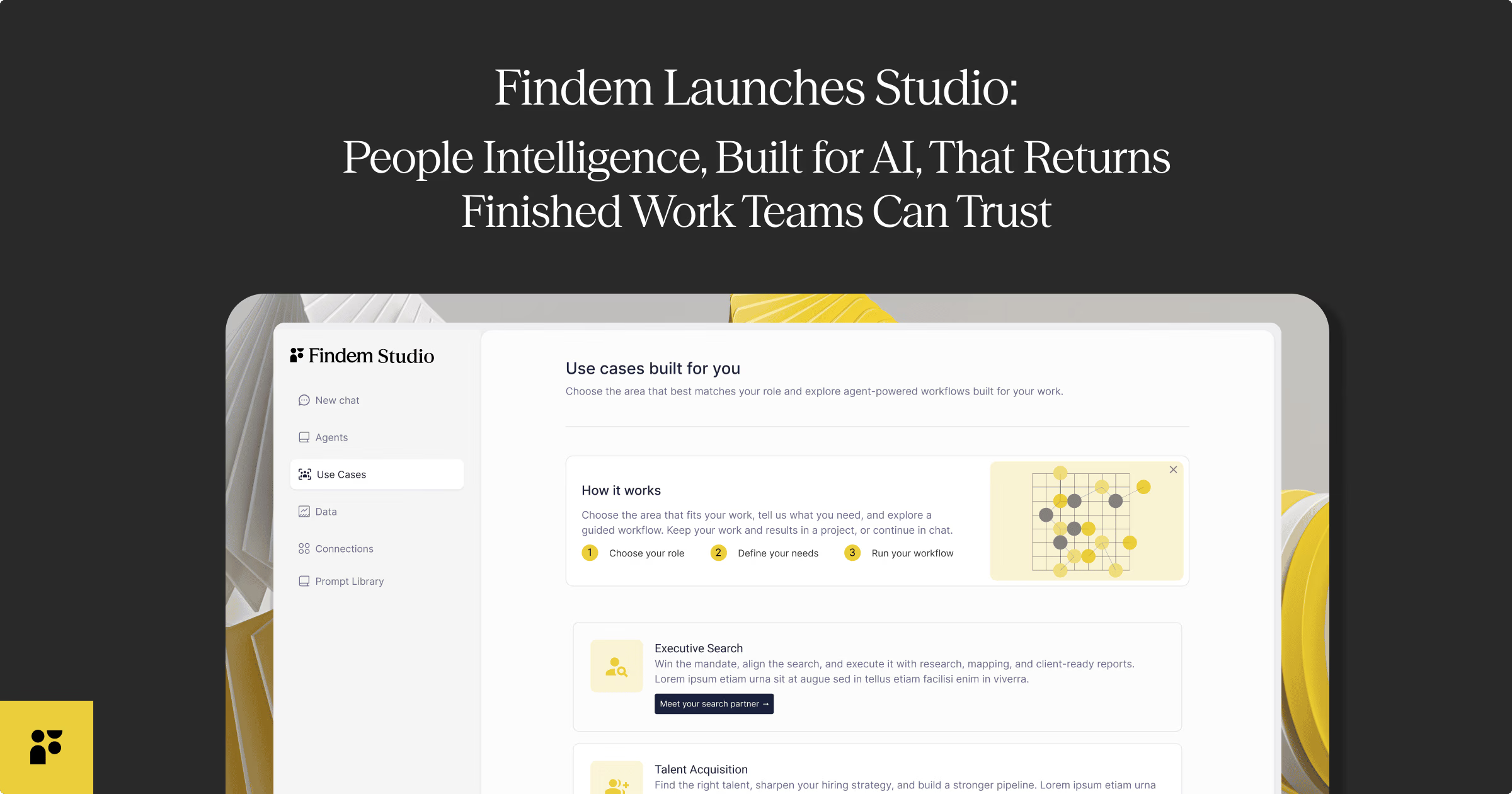
Findem Studio
Findem's AI-native work surface — people intelligence, built for AI. Studio turns that intelligence into finished work you can trust. Ask for a succession plan, a market map, a benchmark, or an intake, and it comes back done: built on labeled people data, following an expert methodology, and checked against the evidence before you see it. Three things make that possible: the right intelligence before it starts, the right method while it works, and the right checks before anyone acts.
Run a pre-built agent, build your own, or connect Studio's MCPs to whatever AI you're already using.
Model Context Protocol (MCP)
An open protocol that gives AI systems a connection to external data, tools, and capabilities. Findem exposes its people intelligence and agents via MCP so they can be called from Claude, other AI clients, and custom-built applications. MCP provides the connection — what Findem adds on top is the structured intelligence, expert methodology, and verification layer that turns raw access into finished work.
Findem Studio agents
Pre-built agents available in Findem Studio. Each returns a finished artifact — not a list or a score to still process. Agents are organized by primary audience below; many are available across multiple audiences.
Talent Acquisition
- Role Intake & Calibration: Convert a role brief into an approved intake, reusable scorecard, and calibrated search definition.
- Candidate Sourcing: Turn a role brief into a focused, evidence-backed pool of candidates with the required experience.
- Candidate Outreach: Create a review-ready outreach campaign for an approved candidate shortlist using saved role context.
- Talent Market Mapping: Map target companies and relevant talent pools to focus recruiting effort where supply and fit are strongest.
- Talent Market Insights: Analyze talent supply, skill concentrations, and location patterns to guide where and how to hire.
- Hiring Readiness Planning: Build a candidate slate and surface missing evidence or validation steps before candidates advance.
- Candidate Shortlist Status Reporting: Summarize candidate-shortlist progress, quality, risks, and next actions for executive stakeholders.
- Workforce Talent Flow Analysis: Trace hiring, internal movement, and departures to reveal workforce flows and retention patterns over time.
- Historical Talent Mapping: Reconstruct who held a role at a company during a specified period, with evidence for each finding.
- Segment Talent Search: Find and assess people who match a defined market or talent segment from end to end.
Executive Search
- Candidate Success Profile: Define the role mandate, measurable outcomes, and ideal candidate profile using company and market context.
- Candidate Search Strategy: Define company archetypes, search priorities, and outreach strategy from a focused role intake.
- Leadership Talent Landscape: Benchmark a leadership role across 10–15 peer companies to reveal incumbent profiles, career paths, and search implications.
- Leadership Career Path Benchmarking: Benchmark how leaders reached a specific seat across peer companies and translate the patterns into succession and search insights.
- Talent Market Mapping by Archetype: Organize target companies and candidate pools into clear archetypes to guide search strategy.
- Single-Company Executive Mapping: Map relevant executives and leadership structure within one target company for an executive search.
- Executive Org Chart Mapping: Build a dated executive organization chart with reporting relationships and confidence-backed evidence for each role.
- Department Leadership Mapping: Identify department leaders and infer a fit-for-size organization chart from verified titles and reporting clues.
- Executive Leadership Changes: Track executive appointments, departures, and interim transitions, distinguishing announced changes from those already effective.
- Executive Comparison: Compare executives across role scope, career history, industry experience, board service, and disclosed compensation.
- Board Composition Analysis: Analyze board composition, committee roles, independence, and relevant experience with evidence for every observation.
- Board Candidate Search: Identify and assess board candidates based on executive experience, industry background, and committee expertise.
- Subsidiary Mapping: Map a company's disclosed subsidiaries and jurisdictions with dated filing evidence and explicit coverage limits.
- Company & Talent Intelligence Brief: Create an evidence-backed briefing on a company, its leadership, competitors, talent context, and recent developments.
- Historical Talent & Leadership Mapping: Reconstruct historical leadership teams and talent movement across a defined company, role, or period.
- Succession Planning: Build a ranked, evidence-backed slate of internal and external successors for a critical leadership role.
HR & Workforce Planning
- Workforce Skills Gap Analysis: Compare current workforce skills with future business requirements to identify capability gaps and priorities.
- Internal Mobility Planning: Match employees to internal roles and identify realistic development paths based on skills and experience.
- Organization Structure Benchmarking: Compare leadership structures across peer companies, including functional ownership, organizational layers, and operating models.
- Executive Compensation Benchmarking: Benchmark disclosed executive pay across companies while separating salary, incentives, equity, reporting periods, and one-time awards.
- Workforce Competitive Benchmarking: Benchmark talent movement, priority skills, hiring hubs, and market momentum against peer companies.
- Leadership Career Path Analysis: Analyze and benchmark the career moves and experiences that commonly lead to a target leadership role.
- Role Talent Flow Analysis: Map where talent for a role comes from and goes next to reveal market movement and inform hiring plans.
Named expert methodology
Each Findem Studio agent runs a defined workflow authored or reviewed by a named practitioner — not a method the model invented on the spot. This is what makes Studio output defensible: a person with domain expertise reviewed the methodology before the agent ran it.
Intelligent Job Post
A job post that functions as an active agent. It reaches out to qualified talent, manages replies, conducts pre-screens, and builds an interview-ready pipeline automatically — attached to a single role.
Agentic workflow
A multi-step workflow in which an AI agent plans, executes, and refines tasks to deliver a defined outcome. In talent acquisition, the primary output is interview-ready candidates or a finished people-work artifact. Agentic workflows differ from assistive AI in that the agent handles sequencing and execution — a person reviews the output and makes the final call.
Outcome-based pricing
A pricing model that ties spend to deeper-funnel outcomes: qualified responses, completed applications, or interview-ready candidates.
Job as the atomic unit
A deployment model where agents are attached to a single role first, proving outcomes before expanding across more requisitions.
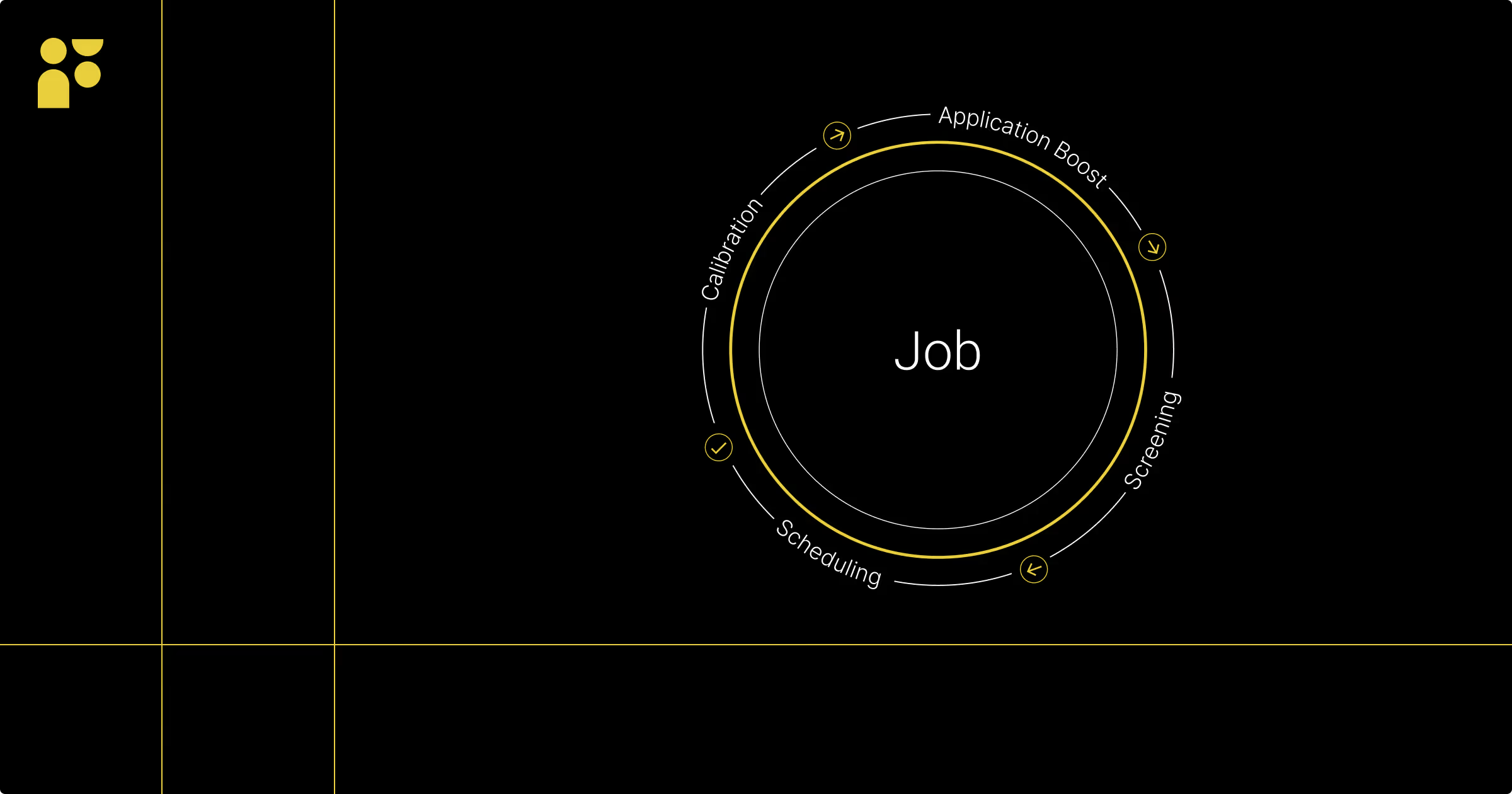
Calibration Agent
An agent that structures intake conversations, evaluates market data, and aligns hiring teams on Success Signals and examples before sourcing begins.
Application Boost Agent
An agent that increases completed, qualified applications through personalized outreach and a simplified application experience.
Screening Agent
An agent that runs pre-screens using role-aware questions, analyzes responses, and returns ranked candidate summaries with documented reasoning.
Scheduling Agent
An agent that finds availability, books interviews, manages reschedules, and keeps calendars and ATS statuses in sync.
Assessment Agent
An agent that delivers role-aligned, proctored simulations, flags anomalies, and returns scores with standardized summaries.
ID Verify Agent
An agent that performs identity verification and credential checks to confirm candidate authenticity before interviews or hire.
Veteran Sourcing Agent
An agent that surfaces qualified veteran talent from trusted communities and returns interview-ready candidates.
Fia (Findem Intelligent Assistant)
Findem's conversational AI layer and in-platform orchestration tool. Fia coordinates agents, manages workflow sequencing, and maintains consistent context across the hiring lifecycle — so each step informs the next. Embedded directly in product surfaces, Fia lets recruiters take action through plain-language requests while keeping humans in control of every consequential decision.
The Takeaway
Most AI in talent tools is general-purpose — trained on language, not on careers. It can generate text and move tasks along, but it doesn't understand what good looks like for a specific role, team, or stage of company. And since 2025, almost every vendor opened an MCP: access to people data has become table stakes.
Findem is built differently. The 3D People Graph contains 1.6 trillion expert-labeled data points across people, companies, and time. Success Signals and Relationship Signals give the platform a structured view of how careers actually unfold and what patterns predict performance in a given context. And Findem Studio brings all of that together with a named expert's methodology and verification before anyone acts — so what comes back isn't raw material to still process. It's finished work you can defend.
That's what separates access from outcomes, and task automation from decisions you can act on with confidence.