


.svg)
Your market map takes 7 to 14 days. The pitch is Thursday.

October 9, 2026

Why the slow part of an executive search market map was never finding names, and what changes when the evidence is written down on day zero.
The brief lands Monday. By Wednesday afternoon, a researcher has run the Boolean strings, pieced together three org charts, and still can't say whether the VP of Finance at one target company holds the scope the client described. The pitch is Thursday. At the usual pace, the map shows up next week, after the client has picked a firm.
Search firms get paid on placements, so the pitch decides who gets paid. A partner who walks in with the client's market already mapped changes the meeting. It stops being "here's our process" and becomes "here's your market, where do you disagree?" That's hard to do when a first map usually takes 7 to 14 days from brief to reviewed draft.
The slow part of mapping isn't finding names
By hand, the work starts with a search hypothesis: title variants, a first company list, a view of what "adjacent" means. A researcher runs LinkedIn Recruiter searches against it and reruns them as the hypothesis shifts. Names come quickly.
Then the real work starts. Org charts, because a title that means one thing at one company means something else at the next. Desk research in press, funding news, speaker lists, podcasts and patents. Reconciling what LinkedIn, the company site and last month's news each say about the same person. Only then does it get assembled into tiered companies, named people, rationale and a view on where the role is likely to be filled from.
Most of those days go into deciding who really holds the seat the brief describes, and settling it when the sources disagree. That's the work that makes a map defensible in front of a client. It's also rarely written down, which means that when the client asks "what about the CFO at that other company?", the answer lives in a researcher's head.
The same market mapping brief, run by an agent
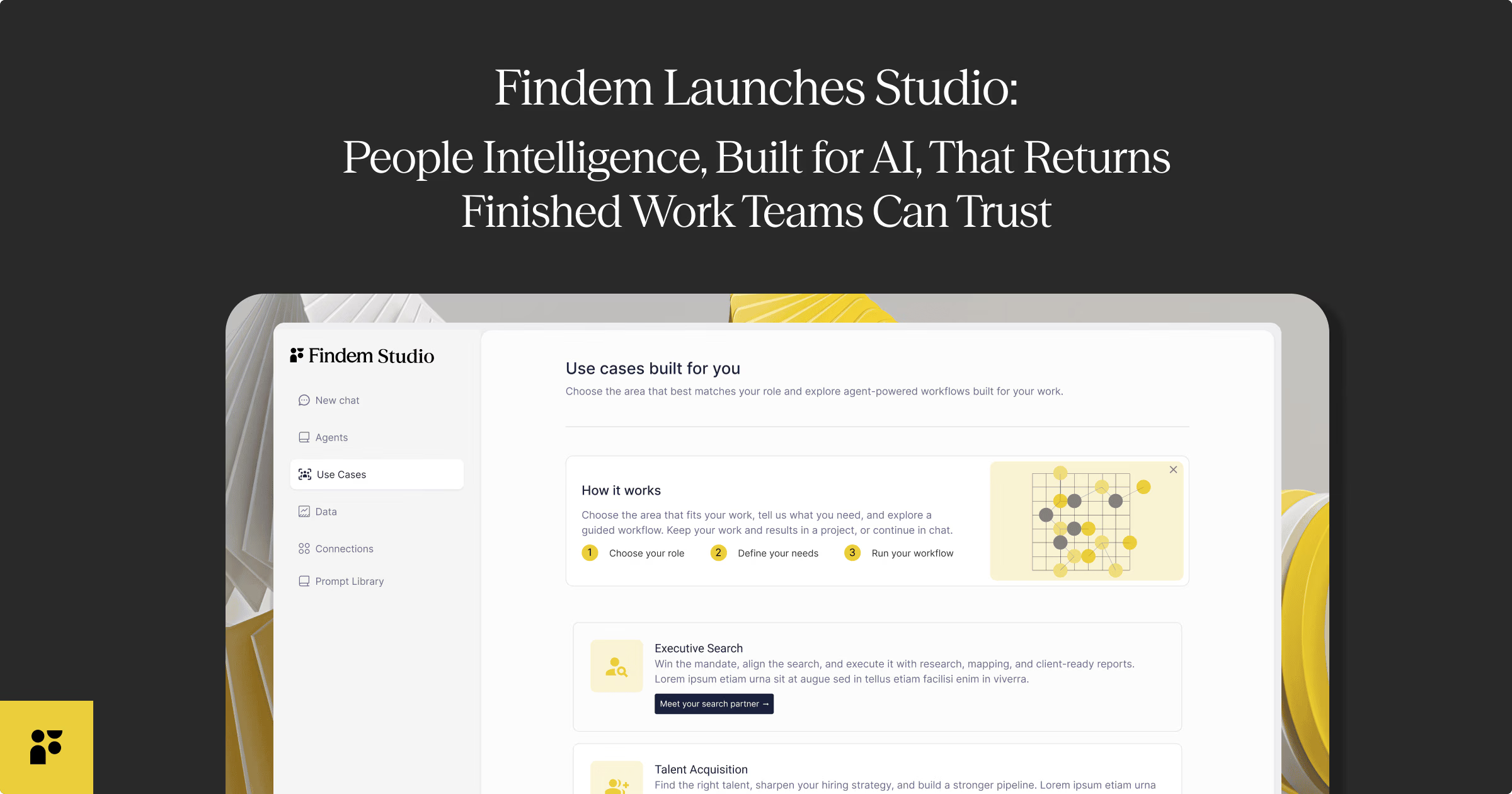
Findem Studio is people intelligence that returns finished work, and the Executive Map agent is one of its agents. Hand it the same brief, say a CFO search at a PE-backed food distributor, and it reads the role, requirements, companies and constraints as one picture, then searches Findem's people data alongside open sources. An average run takes 15 to 30 minutes.
What comes back is closer to a map than a list. Companies are grouped into segments (primary, secondary, adjacent and peer), with the reasoning written down. Each person is checked against their profile or a primary source, then marked current or former. Every person stays in the roster with a fit tier and the reasoning, and every company that returned nobody is listed with a reason. A sample CFO coverage report shows what that looks like on the page.
That record is the point. Thirty minutes beats two weeks, but speed only matters because it gets the map in front of the pitch. What makes the map worth bringing is that "what about X?" already has an answer in the document, with a source behind it.
What stays with your team
The agent doesn't choose whom to approach, and it doesn't replace your researchers. It does the assembly. You re-tier companies, add the firm it missed, mark who's off-limits and build the slate. Put the off-limits companies in the brief up front, or the first map can come back full of people you can't approach. Reading and judging takes the place of collecting and reconciling, and because the reasoning is written down, you can see exactly what you're overruling.
Check the sources behind your five most important claims before a map goes to a client. Know the scope, too. The agent is built for leadership searches: C-suite, VP, and senior functional roles, where a market maps cleanly by company and seat. For roles with dozens of people in the same seat at one company, the per-company cap means not everyone surfaces. And manual work still wins when a search turns on relationships or off-the-record context that no data source holds.
Test the agent on a search you've already mapped
The first map is free and capped at 10 names, so don't judge it on size. Judge it on evidence.
Hand it a brief you've already mapped by hand and compare the 10: whether each person really holds the seat, how its fit reasoning stacks up against yours, and what it says about everyone it left out. If that holds up, you know what Thursday can look like.
Build a verified market map for your next search in Findem Studio ->