.svg)
See how developers work, not just what they submit.
A take-home test tells you what a candidate can produce when no one is watching. A live coding interview tells you how they think. Live Coding Interviews run in a collaborative cloud IDE that mirrors real development environments, so what you observe reflects how they'd work on the job.
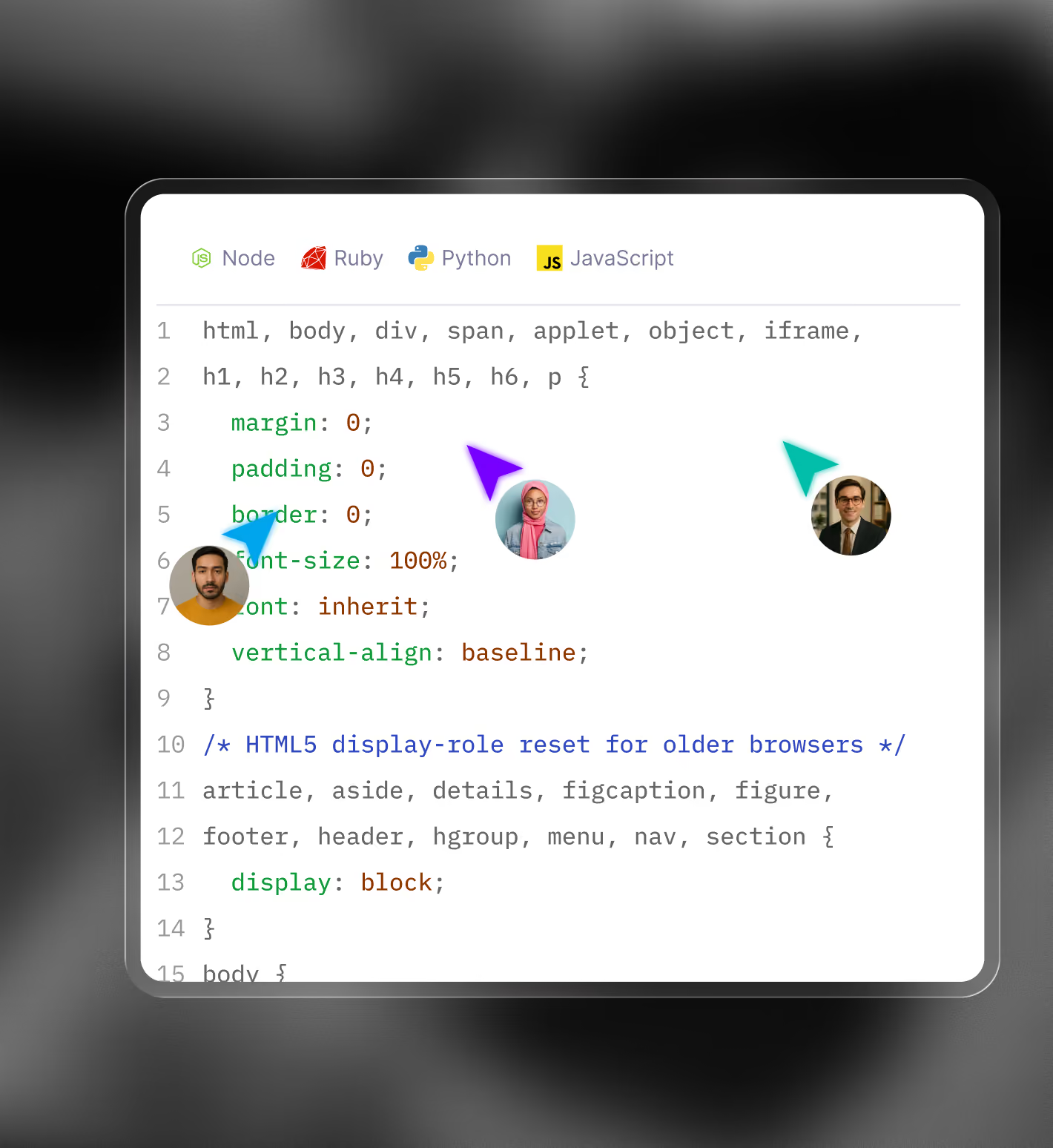
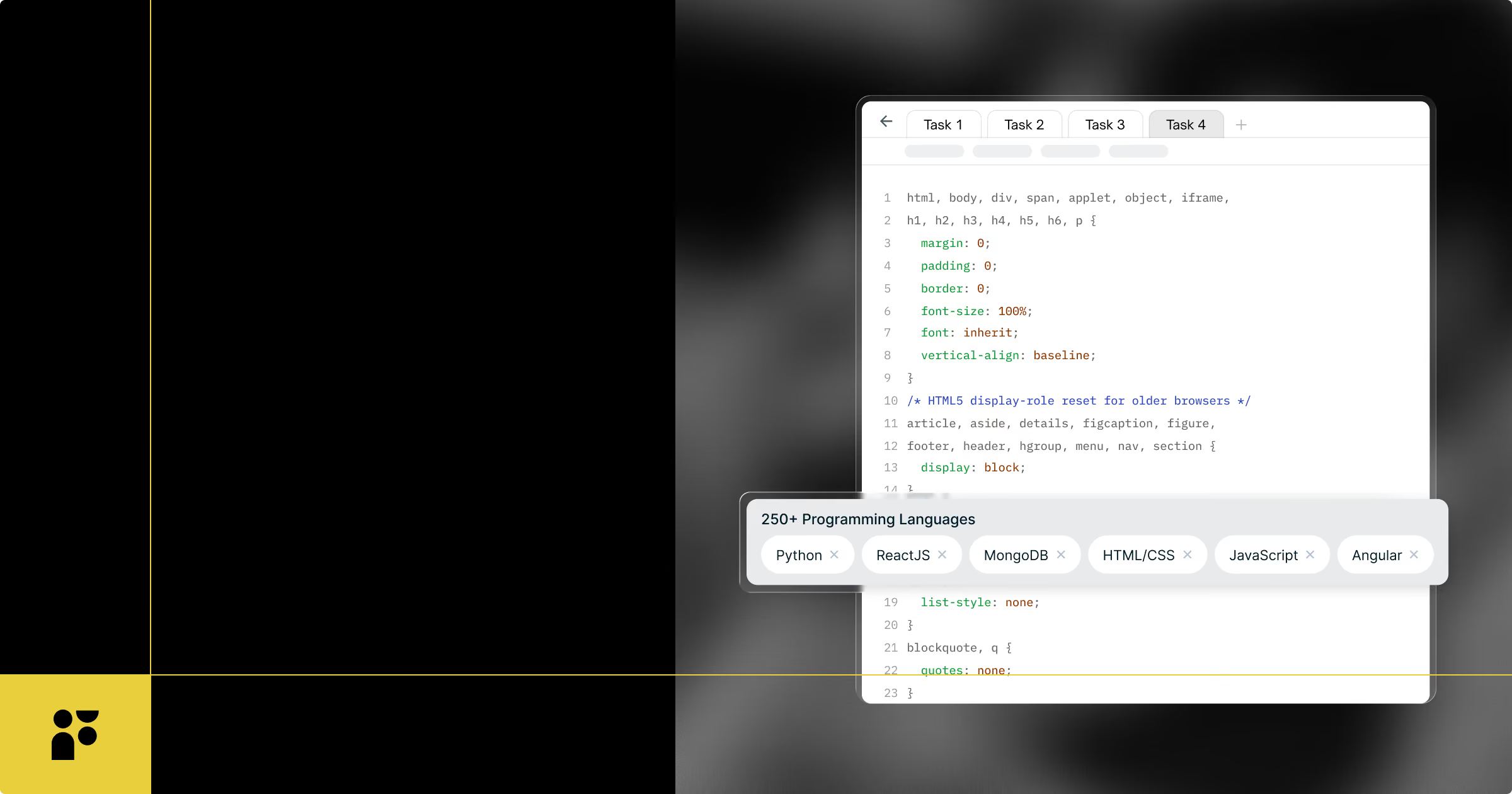
250+ languages, frameworks, and libraries.

Take-home tests don't show you how a developer actually works.
A candidate who submits clean code on a take-home test may have had help, looked up every answer, or spent hours on something that should take minutes. Algorithm puzzles compound the problem — they test a narrow skill that often has little to do with the actual job.
Pair programming ability is invisible in standard interviews.
How someone codes with another person in the room is different from how they code alone. Standard technical interviews don't evaluate that dimension, so a candidate who excels at solo problem-solving may still struggle in a collaborative environment.
Technical interviewers can score the same session differently.
When different engineers conduct live technical interviews, their implicit standards for what constitutes a strong answer vary significantly.
Shallow signals
Most AI relies on thin inputs like resumes and keywords. It can’t identify warm relationships or trusted connections, which means it’s working with an incomplete picture.
Watch candidates code the way they work.
A real development environment, not a whiteboard simulation.
Live Coding Interviews run in a collaborative cloud IDE supporting 250+ languages, frameworks, and libraries. Candidates use the tools and workflows they're most comfortable with in an environment that reflects real development conditions. Interviewers watch in real time as the candidate writes code, handles errors, and works through the problem — observing approach, debugging instincts, and code quality as they emerge.
Evaluate collaboration, not just solo output.
Pair Programming Mode lets interviewers work alongside the candidate in the same IDE, simulating how the candidate would pair with a colleague on the job. That changes what the interview reveals: not just whether the candidate can solve a problem, but whether they can think out loud, respond to input, and stay productive with another person in the conversation. The session is recorded throughout so the interaction can be reviewed and shared after the fact.
Replay sessions, calibrate scores, and report on what happened.
Every session is recorded and replayable — interviewers can review what they observed, hiring managers can watch sessions they weren't in, and teams can compare notes against an actual record when scores diverge. Automated reports on problem-solving approach, skill depth, and role fit are ready immediately after the session. AI proctoring runs throughout to address impersonation, plagiarism, and code leakage.
Frequently asked questions.
How does the AI coding interview assistant maintain integrity during a live session?
AI proctoring runs throughout the session, monitoring for impersonation and flagging suspicious behavior in real time. Code-specific integrity checks address plagiarism and code leakage — concerns specific to live technical interviews that generic proctoring tools don't always cover. The integrity record is generated alongside the evaluation record, so both travel with the candidate.
How does scoring work across different interviewers on a platform for live coding interviews?
Automated reports on problem-solving approach, skill depth, and role fit give every interviewer a structured starting point for evaluation. Session replay lets teams compare scores against the actual recording when interviewers disagree, making calibration concrete. Standardized scoring frameworks reduce the variability introduced when different engineers apply different implicit standards to what a strong answer looks like.
Can candidates use the languages and tools they're most comfortable with in Live Coding Interviews?
Yes. The environment supports 250+ languages, frameworks, and libraries, and candidates can use their preferred tools and workflows rather than being constrained to a specific stack. That flexibility keeps the evaluation focused on actual coding ability rather than familiarity with the interview tool.
What is Pair Programming Mode in Live Coding Interviews?
Pair Programming Mode lets the interviewer work alongside the candidate in the same IDE — both can write, edit, and review code simultaneously, simulating how the candidate would actually pair with a colleague on the job. It evaluates collaboration, communication, and the ability to work productively with another person, dimensions that solo coding tests don't surface. Sessions are recorded for post-interview review.
How does a live coding interview platform differ from coding simulations?
Coding Simulations are unattended take-home evaluations — candidates complete tasks in a configured environment on their own time, and results are auto-graded. Live Coding Interviews are observed in real time by a human interviewer in a collaborative IDE. The live format reveals how a candidate thinks, communicates, and responds to feedback while working — not just what they produce when working alone. Both run within the same AI-proctored environment and share breadth across 250+ languages and frameworks.
See people in higher resolution.