.svg)
Expert-level interviews, without the experts.
Most recruiters don't have the domain expertise to probe deeply in a technical or specialized interview. Interviewer Assist gives them real-time question prompts, adaptive follow-ups, and structured scoring so any recruiter can run a high-quality, role-specific interview without pulling a subject-matter expert into every session.
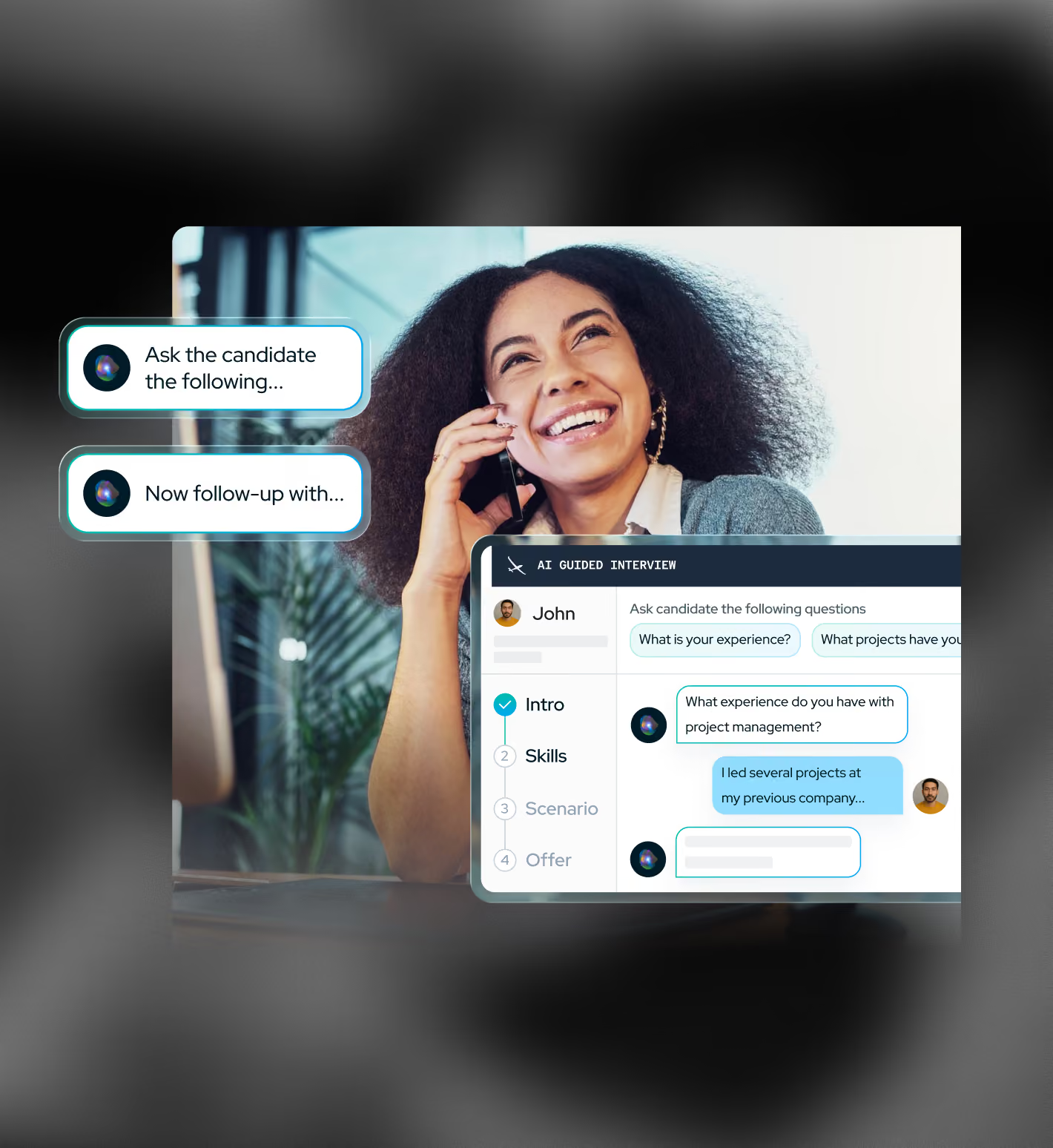
Reduced interview costs. Higher talent quality.

Technical, specialized interviews depend on SME participation.
When a role requires domain expertise to evaluate well, someone with that expertise has to be on the call. At scale that's a real constraint — SME time is finite, and the scheduling overhead shows up directly in time-to-hire.
Interview quality varies significantly across recruiters.
Without structured guidance, two recruiters interviewing for the same role can ask different questions, probe to different depths, and score candidates against different mental models.
Manual note-taking means recruiters are only half-present.
Trying to type structured notes while listening, following up, and evaluating a candidate at the same time is a real cognitive load. Something always suffers — usually the quality of the follow-up questions or the accuracy of what gets written down.
Shallow signals
Most AI relies on thin inputs like resumes and keywords. It can’t identify warm relationships or trusted connections, which means it’s working with an incomplete picture.
Give every recruiter an expert edge.
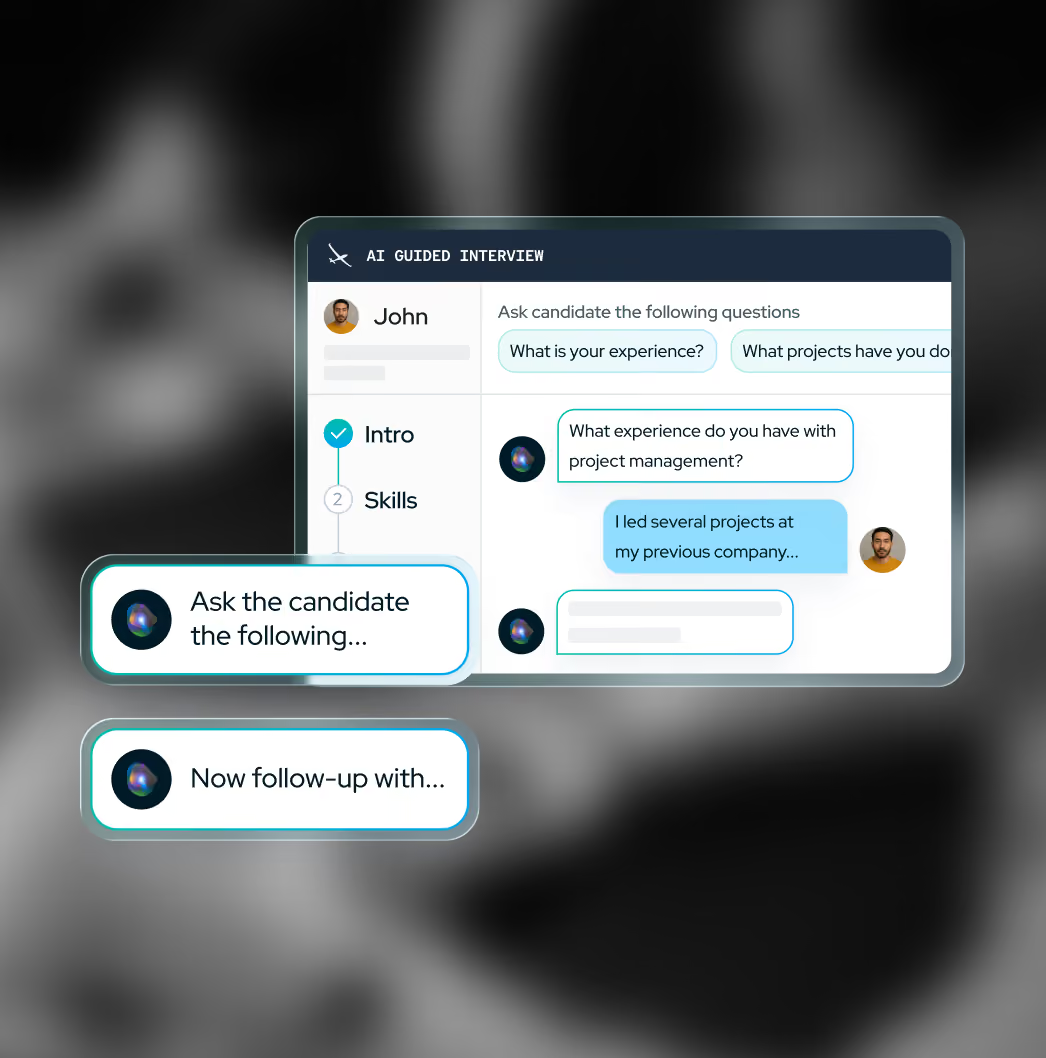
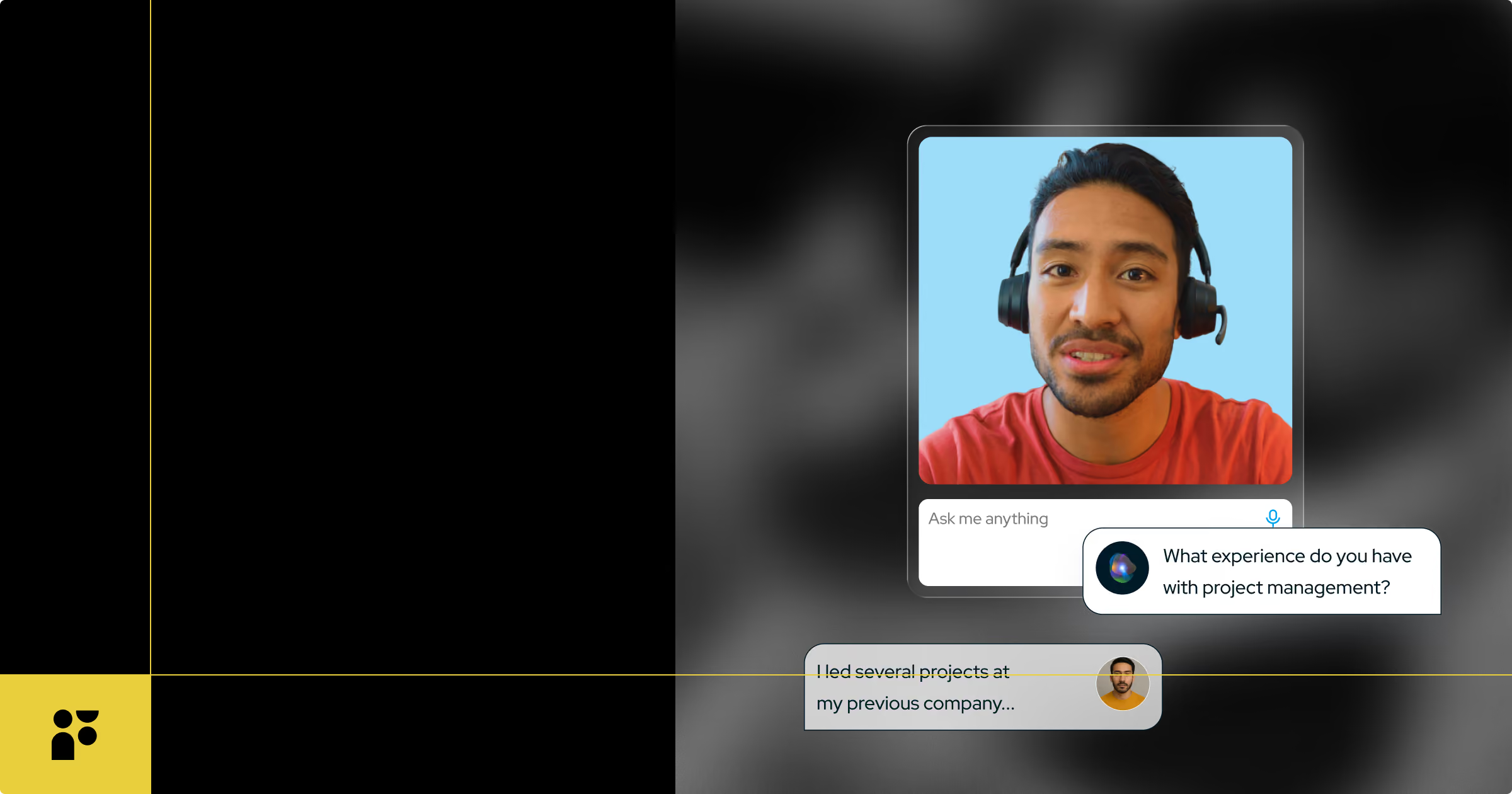
Real-time guidance so any recruiter can run an expert-level interview.
The recruiter launches a live session from Findem or their ATS, uploads the job description and candidate resume, and the AI generates a tailored interview plan. During the session, it feeds real-time question prompts calibrated to the role and seniority level — follow-up questions adjust dynamically based on what the candidate says. Structured notes are captured automatically throughout, and a scored candidate report is ready when the session ends.
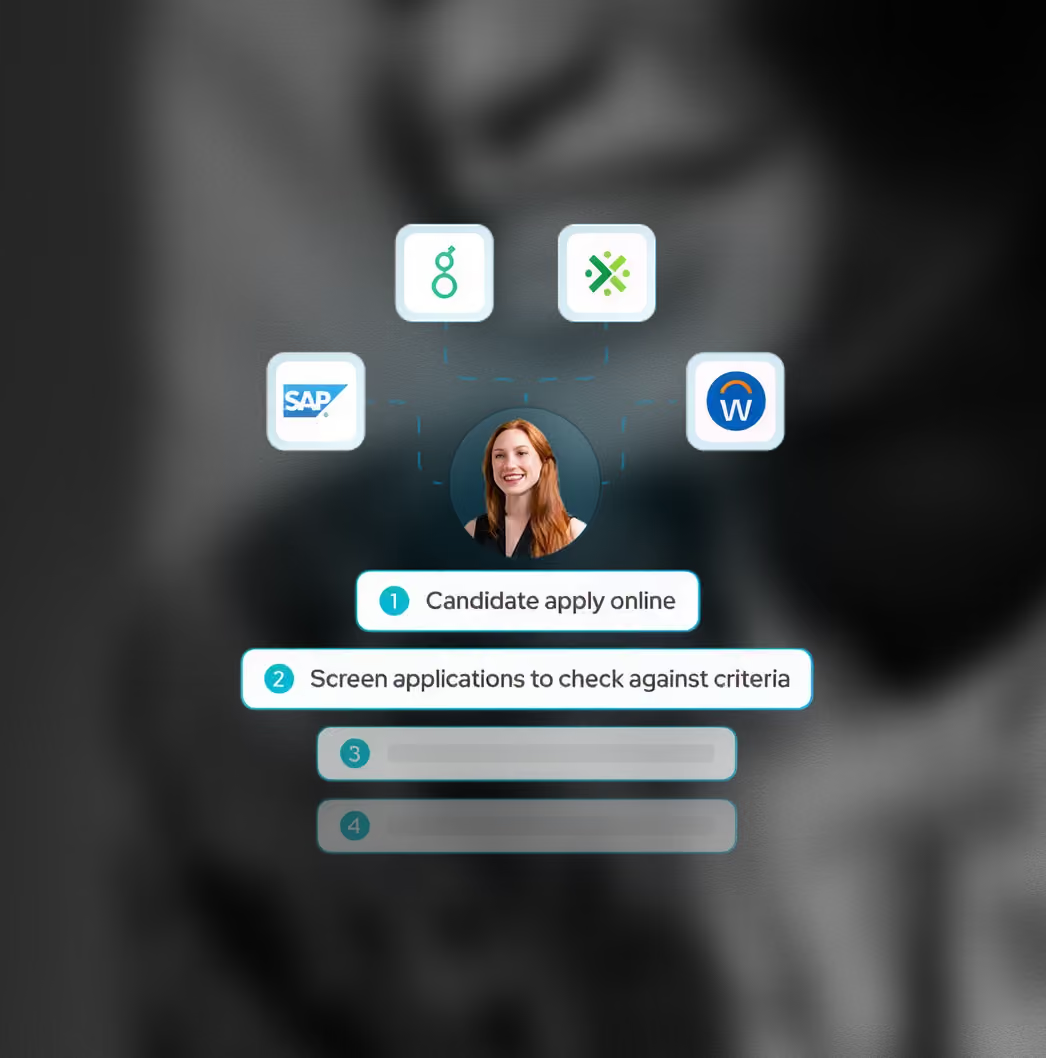
Interview plans built from the job description, calibrated by role and level.
Before the session begins, Interviewer Assist generates a structured interview plan from the job description and candidate resume, calibrated to the role type and seniority level. During the session, it adjusts follow-up questions dynamically based on candidate responses, probing deeper where answers are incomplete and moving on where they're strong. The interview follows the candidate's actual answers, not a fixed script.
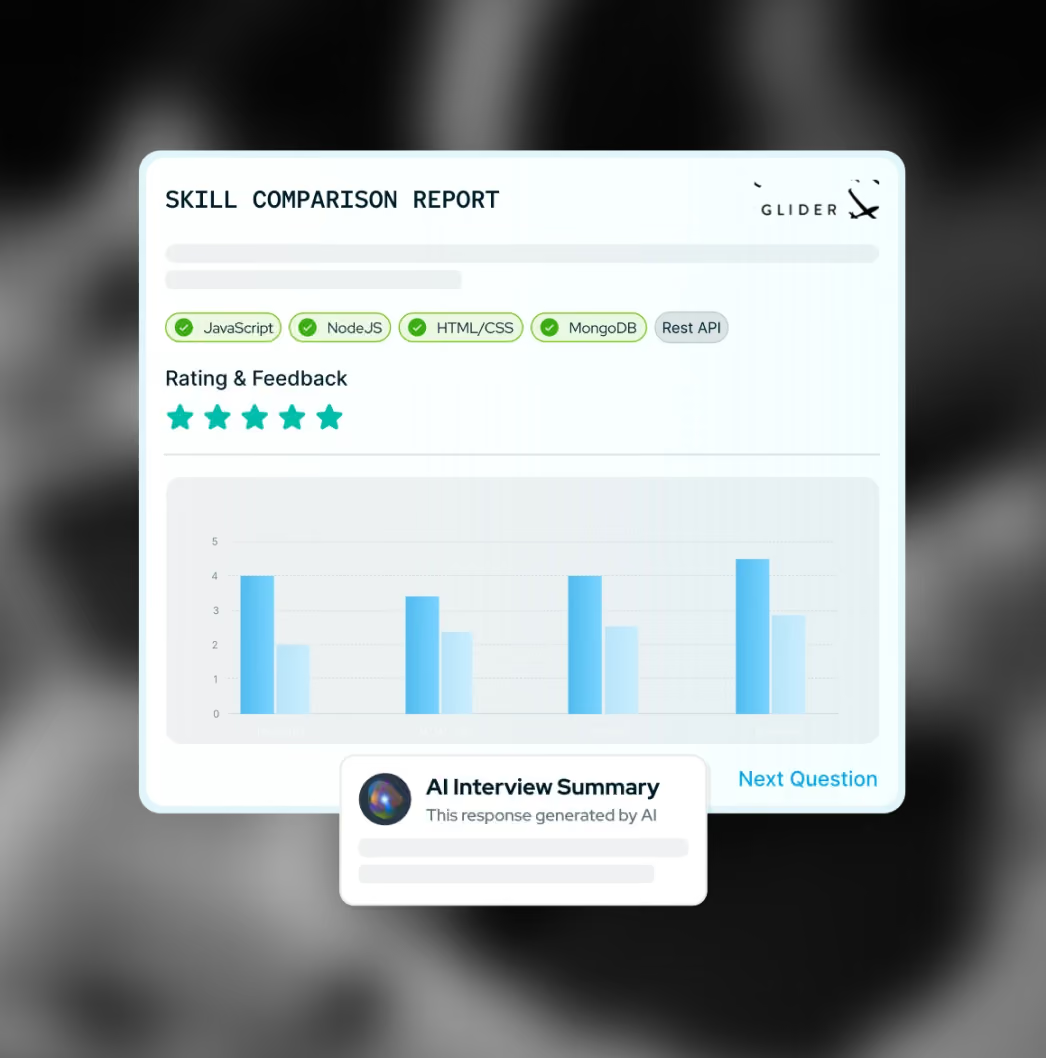
Automatic notes, instant reports, built-in integrity.
Interviewer Assist generates structured notes throughout the session so recruiters stay focused on the candidate. Immediately after, skill ratings, fit indicators, and interview performance are summarized in a scored report — no manual write-up required. Built-in proctoring and ID verification run throughout, so the evaluation record comes with an integrity record. ATS integration lets teams launch sessions directly from their existing workflow.
Frequently asked questions.
How does Interviewer Assist connect to the ATS and the rest of the platform?
Interviewer Assist integrates with SAP SuccessFactors, Workday, and Greenhouse, among others — sessions can be launched directly from the ATS without leaving the existing workflow. It sits within Findem's broader interview platform alongside AI Video Interviews, One-Way Video Interviews, and Live Coding Interviews, with proctoring, ID verification, and reporting consistent across all of them.
Does the recruiter have to take notes during an Interviewer Assist session?
No. Interviewer Assist generates automatic structured notes throughout the interview, freeing the recruiter to focus on the candidate. A scored candidate report is available immediately after the session ends, including skill ratings, fit indicators, and interview performance — without a manual write-up required.
How does Interviewer Assist scoring work, and does it reduce bias?
AI scoring frameworks are applied consistently across every candidate evaluated for the same role, using the same criteria regardless of which recruiter is running the session. That consistency reduces the variability introduced when different interviewers apply different implicit standards. Standardized scoring doesn't eliminate all sources of bias, but it removes interviewer-to-interviewer inconsistency from the evaluation.
How does the AI interview copilot know what questions to ask?
Before the session, the AI generates a tailored interview plan from the job description and candidate resume, calibrated to the role type and seniority level. During the session, it adjusts follow-up questions dynamically based on candidate responses, probing deeper where answers are incomplete and moving on where they're strong. The plan is generated fresh for each candidate, not pulled from a generic question bank.
Is Interviewer Assist an AI interview assistant, or does a human still run the session?
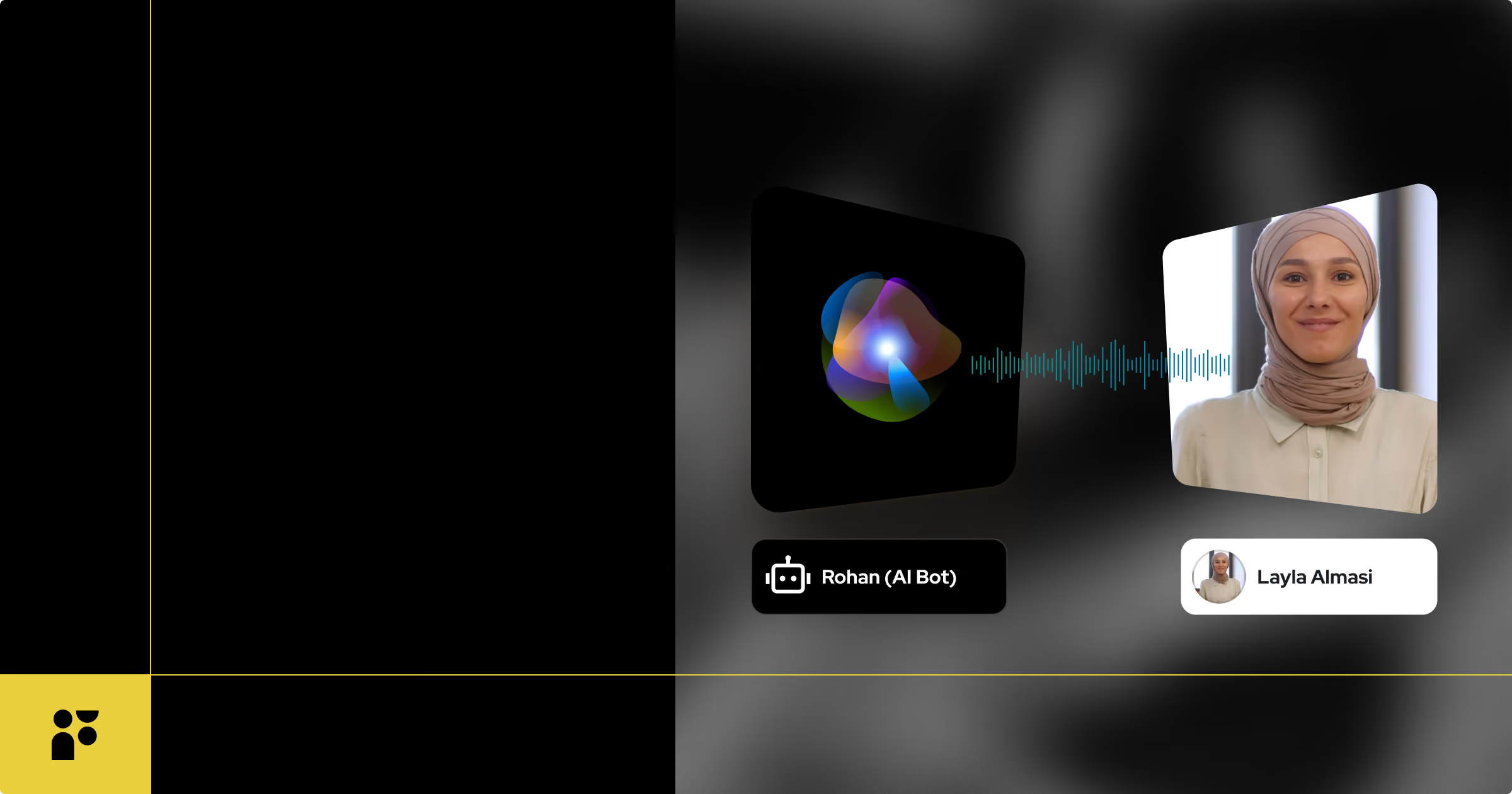
A human runs the session throughout. Interviewer Assist is a real-time AI interview assistant that gives recruiters question prompts, adaptive follow-ups, and automatic note-taking, but the recruiter is the one in the conversation and stays in control from start to finish. The product makes generalist recruiters more effective in sessions that would otherwise require a subject-matter expert, without removing their judgment from the process.
See people in higher resolution.