.svg)
Test for how engineers work today.
Most developers use AI tools on the job. A coding test that forbids them is measuring performance under an artificial constraint — one that disappears the moment the hire starts. AI Assessment Assistant gives candidates real-time support during technical assessments and live coding interviews, then shows hiring teams exactly how they used it.
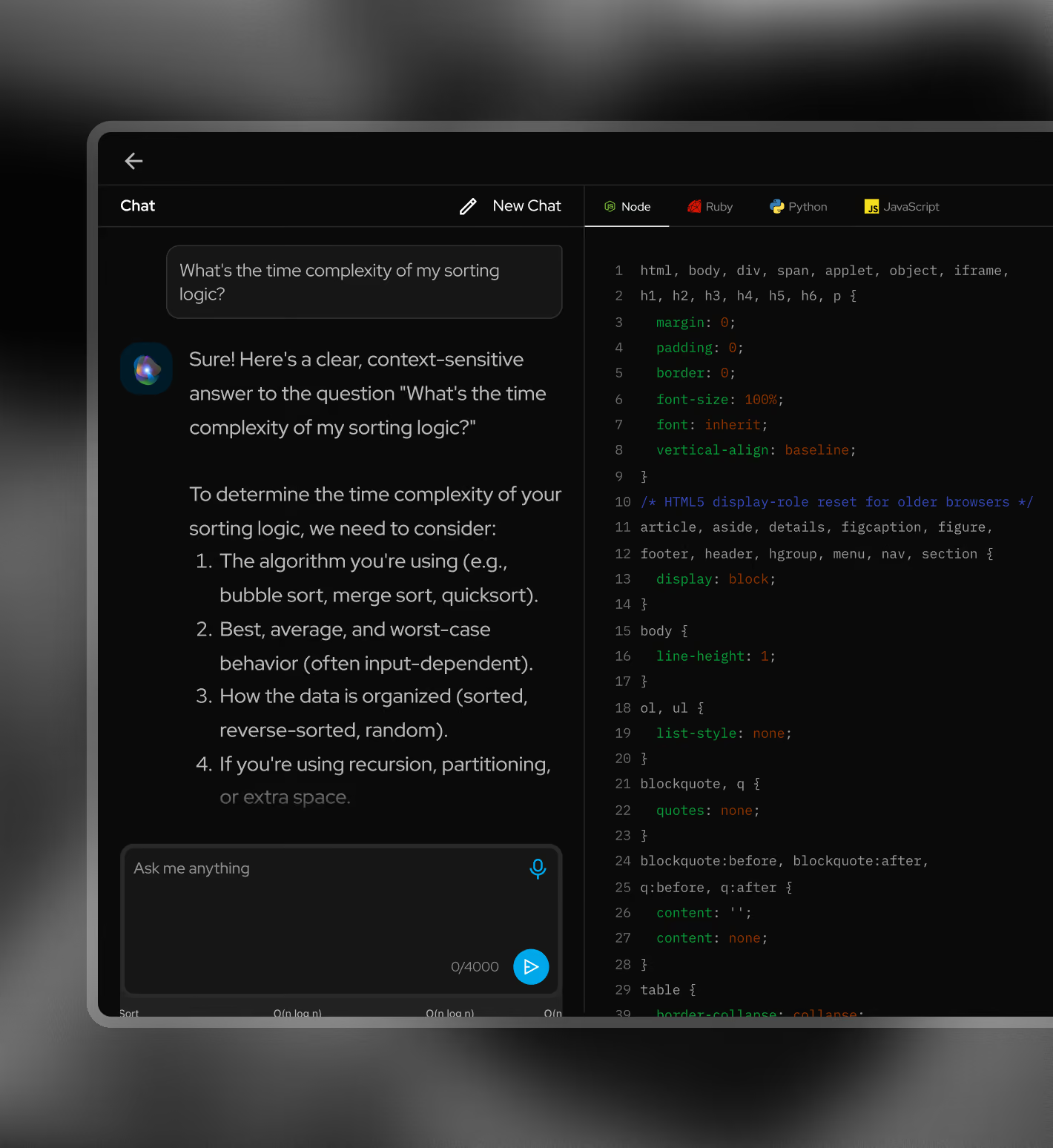
44% reduced time-to-hire. 3x improved hiring decisions.

Coding tests that ban AI are testing outdated skills.
Most engineers use AI coding assistants as a standard part of their workflow. A test that strips that out is measuring performance under an artificial constraint — one that tells you little about how a candidate actually operates on your team.
Final code output doesn't tell you how someone thinks.
Two candidates can submit identical solutions through entirely different processes. Without visibility into how a candidate approached the problem, responded to feedback, and iterated, a code score is a thin signal.
Letting candidates use AI during feels like giving away the answers.
The instinct to lock down assessments is understandable, but it creates its own problem: an assessment that doesn't reflect real work won't accurately predict real performance.
Shallow signals
Most AI relies on thin inputs like resumes and keywords. It can’t identify warm relationships or trusted connections, which means it’s working with an incomplete picture.
Measure how candidates think.
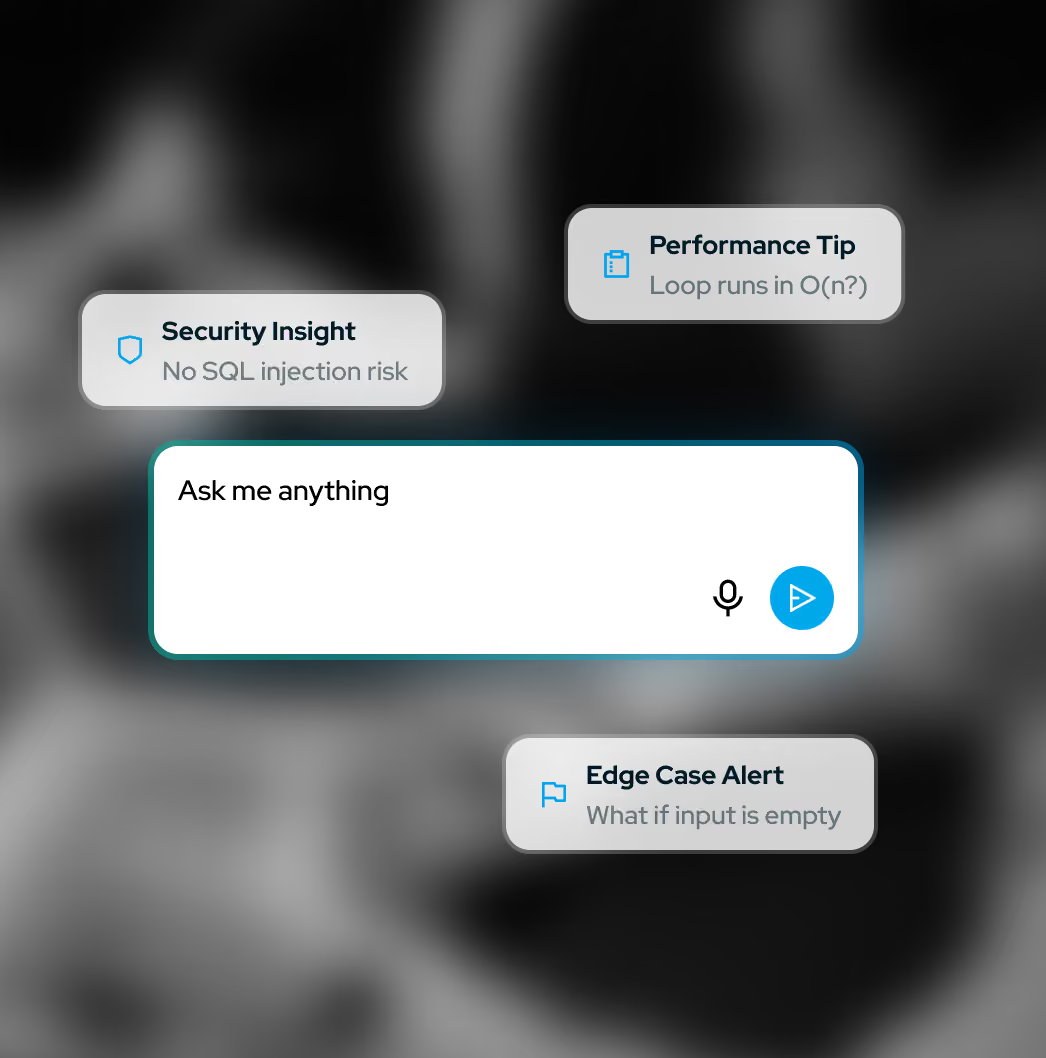
Let candidates use AI the way they would on the job.
During technical skill assessments, AI Assessment Assistant gives candidates the same support they'd have in a real working environment: the ability to ask clarifying questions, get code suggestions, receive debugging feedback, and check for security or edge-case issues. It works like a capable peer reviewer, offering context and nudges rather than answers. Your hiring team sees how the candidate interprets a problem, incorporates AI guidance, and delivers a solution — detail that a code score alone doesn't capture.
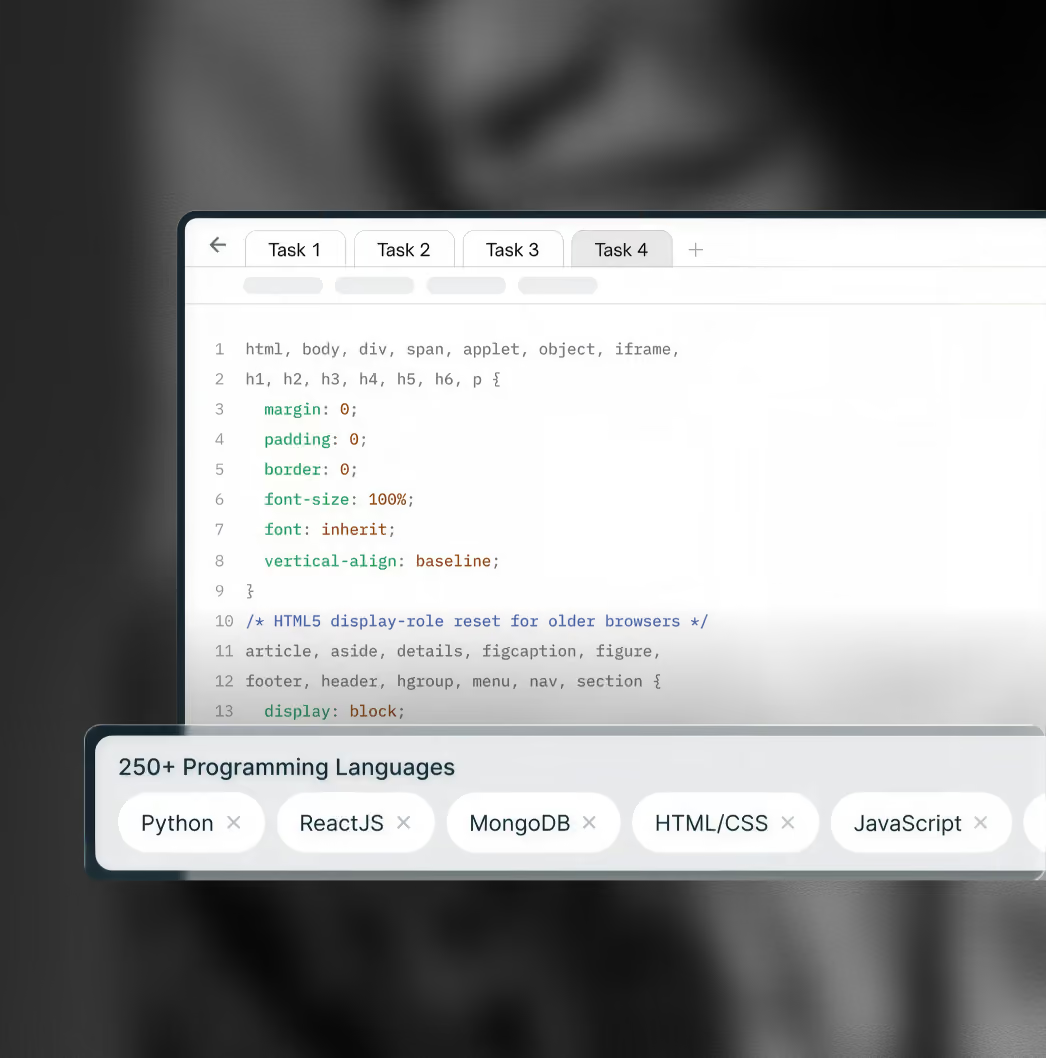
See how candidates respond to feedback in real time.
In live coding interviews, AI Assessment Assistant provides nudges and flags potential issues in real time. It tracks how the candidate incorporates that guidance into their solution and evaluates their ability to think critically and respond to feedback — without interfering with the interviewer's process. The result is a more nuanced signal than code output alone: coachability, problem-solving approach, and how a candidate is likely to work alongside both people and AI tools on your team.
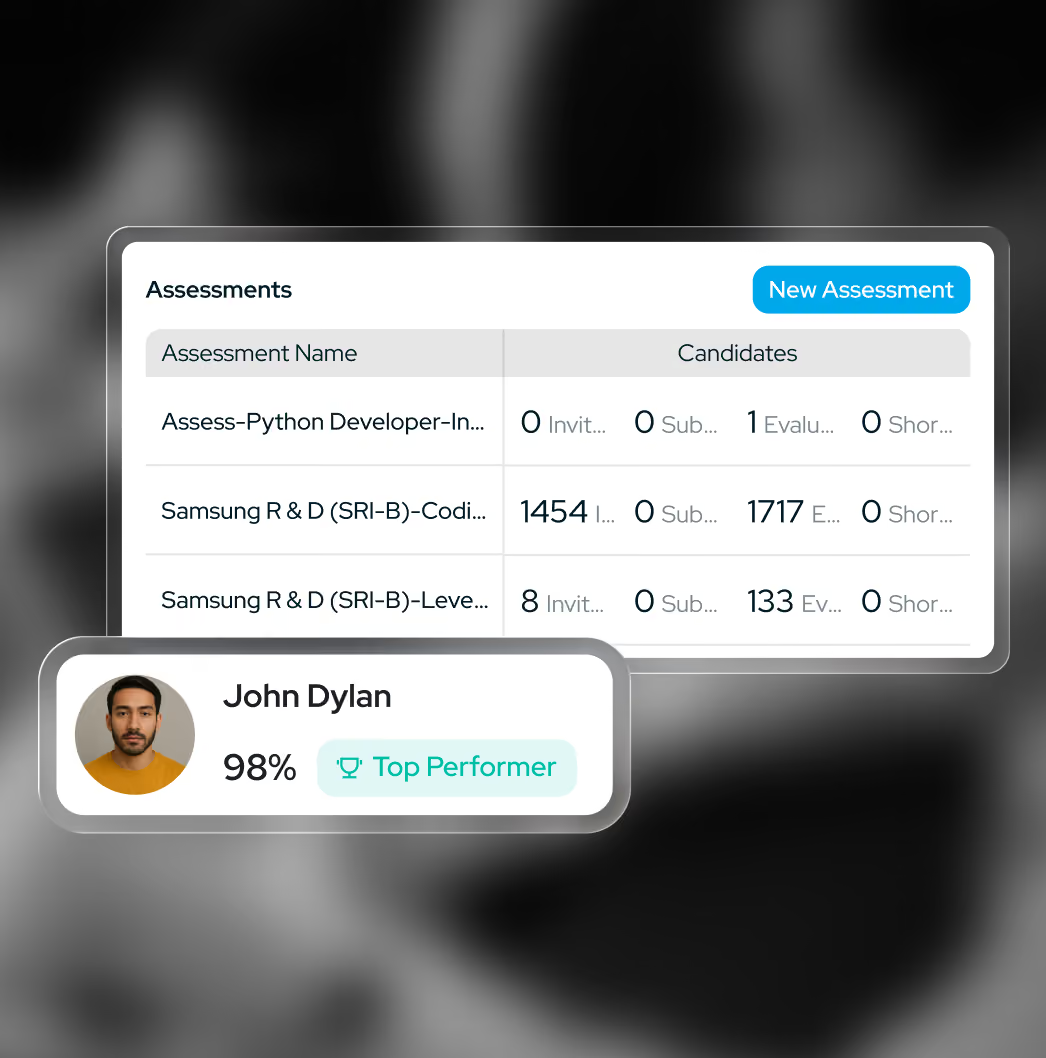
Reports that show the story behind the score.
Every interaction with AI Assessment Assistant is captured and analyzed. The enhanced skill report shows how candidates prompt the AI, whether they apply its guidance or ignore it, how they handle edge cases, and whether the AI assistance improved their solution or became a crutch. That adds a scored dimension — AI fluency — alongside core technical proficiency, problem-solving approach, and work readiness. Hiring teams get a richer, role-relevant picture of each candidate without spending more time in review.
Frequently asked questions.
How does AI Assessment Assistant relate to the broader AI assessment platform?
AI Assessment Assistant is a capability built on top of Findem's AI assessment platform, the same infrastructure that runs technical skill tests, behavioural assessments, and coding simulations. It extends those evaluations with an additional signal: how a candidate thinks and works with AI tools, and how that shapes the quality of what they deliver. All sessions run within the same AI-proctored environment.
Does the AI assessment software work for live interviews as well as recorded assessments?
Yes. AI Assessment Assistant is built into both Technical Skill Assessments and Live Coding Interviews. In assessments, it functions as a candidate-facing support layer. In live interviews, it takes more of a background role, providing nudges and tracking how the candidate responds to feedback in real time without interfering with the interviewer's process.
What does the AI candidate assessment software actually report on?
The enhanced skill report captures how candidates interact with the AI throughout the session: the quality of their prompts, how they respond to feedback, whether they improve their solution based on AI guidance or ignore it, and how they handle edge cases. It surfaces AI fluency as a scored dimension alongside core technical proficiency, problem-solving approach, and real-world readiness, giving hiring teams a complete picture of how a candidate actually works rather than just whether the final output compiled.
Can we turn AI Assessment Assistant off for specific roles?
Yes. You have full control over when AI Assessment Assistant is available — it can be enabled or disabled per assessment and per live interview. If a role requires demonstrating unassisted proficiency, the tool can be turned off entirely while the underlying assessment and proctoring infrastructure remains in place.
Doesn't letting candidates use AI make the assessment easier to pass?
It raises the bar, not lowers it. Anyone can memorize syntax. What matters now is how candidates use every tool available — including AI — to solve problems with judgment, handle edge cases, and deliver something that actually works. AI Assessment Assistant doesn't provide answers; it provides context and feedback, the way a capable colleague would. The report captures how well the candidate used that support, which is its own signal.
See people in higher resolution.