.svg)
Your best recruiter, running interviews around the clock.
Early-stage screening is where recruiter time disappears fastest. AI Video Interviews run autonomously: 24/7, in any language, with structured scoring and fraud detection built in. Your team reviews candidates who've already been evaluated, skipping the scheduling and first-round call entirely.
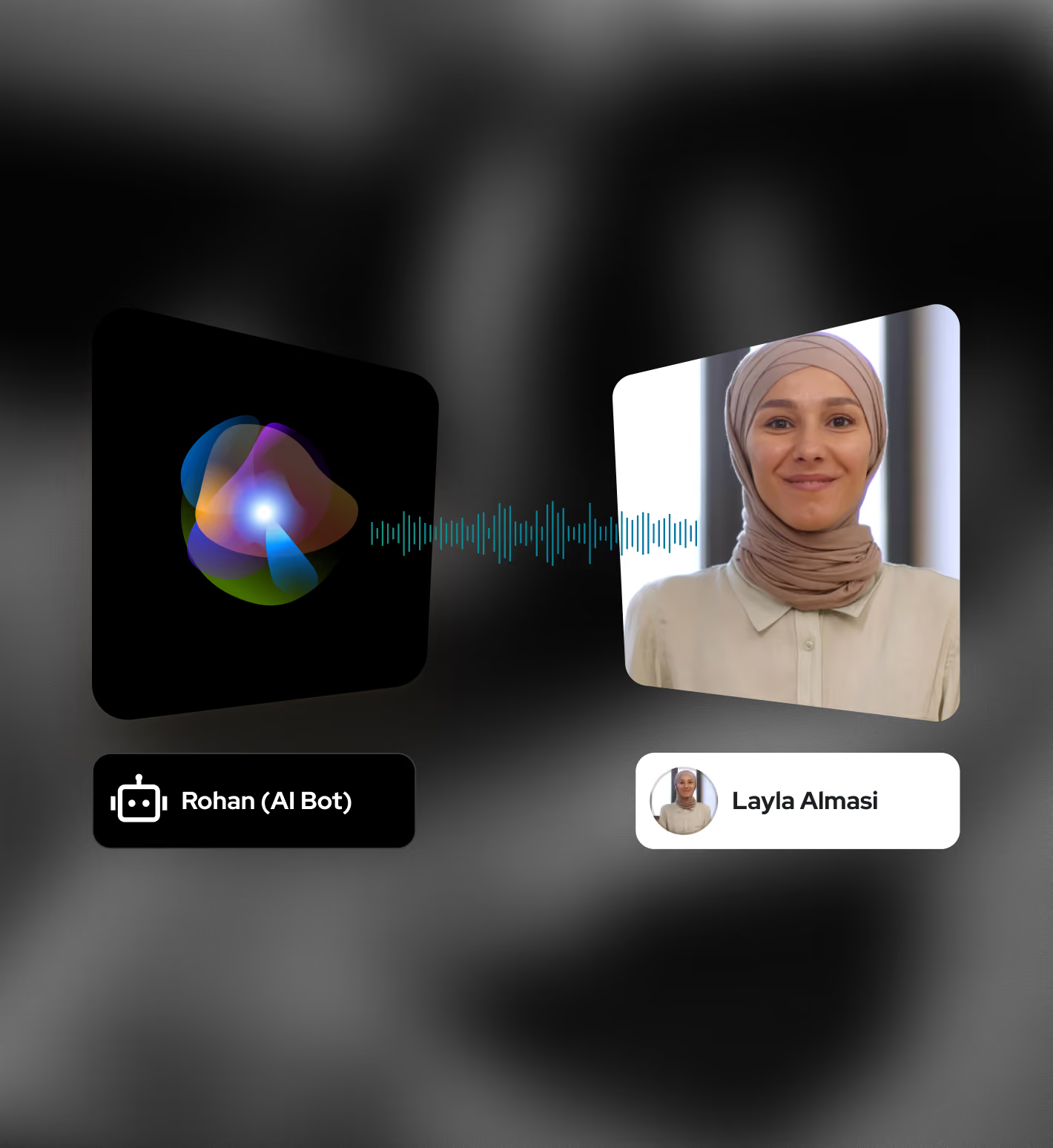
Reduced interview costs. More applicants covered.

Recruiter availability is the bottleneck for screening at scale.
Every first-round screening call requires a recruiter to be available, prepared, and consistent. At high volume, that's not sustainable — the pressure to move fast means some candidates get a thorough conversation while others get a rushed one.
Scheduling friction kills candidate experience.
Coordinating recruiter and candidate availability across time zones, especially for global or high-volume pipelines, adds days to the screening stage. Candidates who have to wait a week for a first interview slot are already considering other options.
Remote interviews without integrity checks are a gap.
An unproctored video interview is an easy target for impersonation and AI-assisted responses. If identity verification and behavioral monitoring aren't built into the interview itself, the screening data your team is relying on may not reflect the candidate who actually shows up.
Shallow signals
Most AI relies on thin inputs like resumes and keywords. It can’t identify warm relationships or trusted connections, which means it’s working with an incomplete picture.
Interview every candidate with the same rigor.
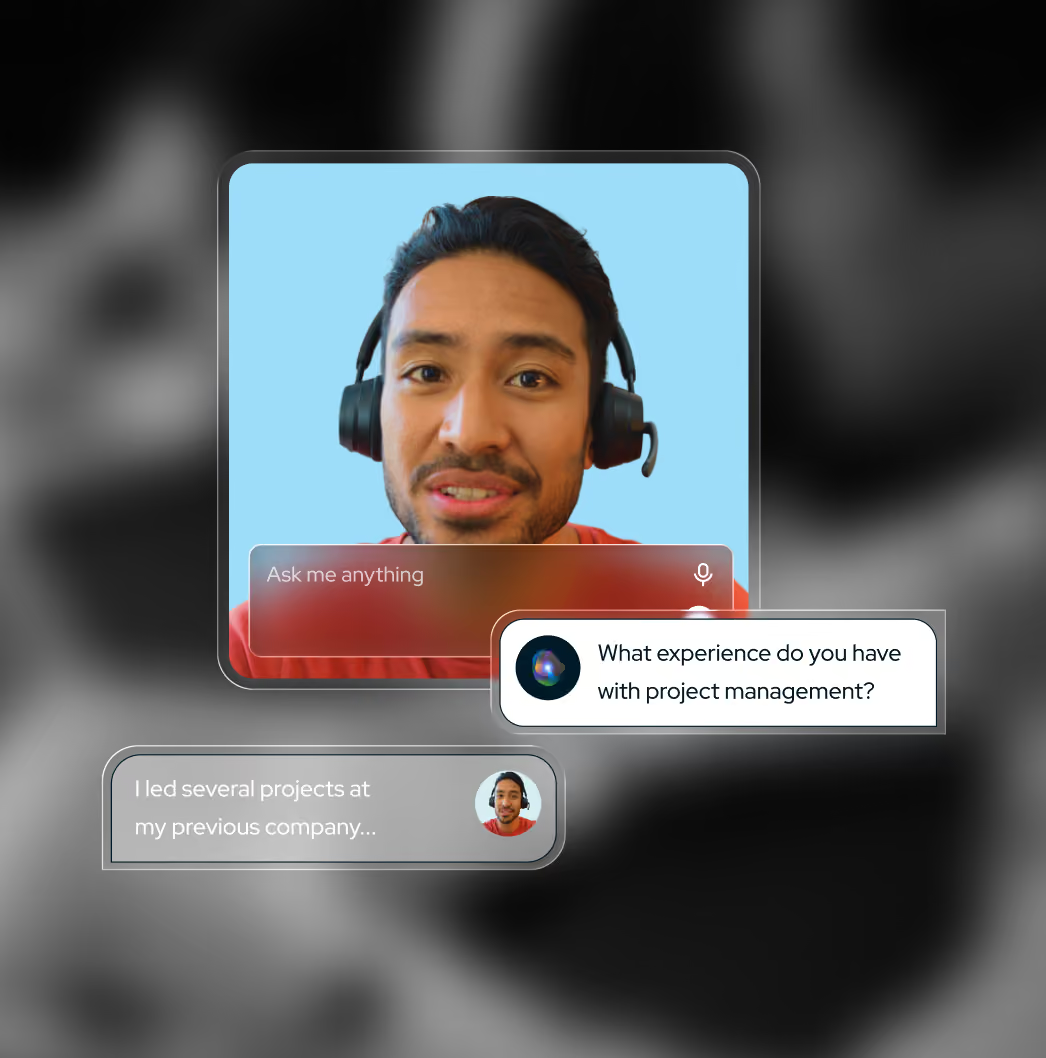
Adaptive conversations, not a fixed Q&A script.
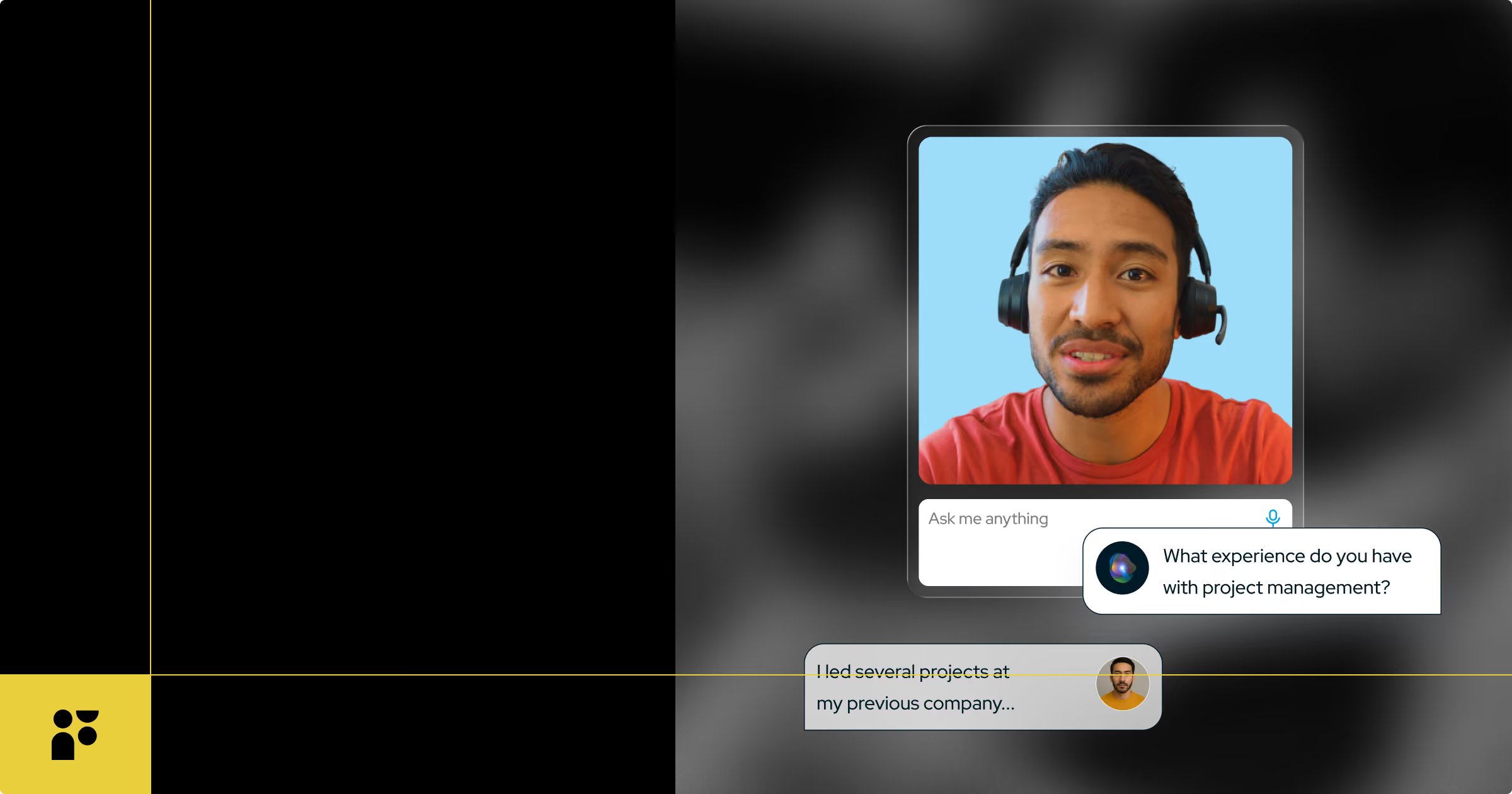
AI Video Interviews go beyond recording answers to a static list of questions. The AI asks context-aware follow-ups based on what the candidate says, probing for depth the way a skilled recruiter would — without requiring one to be present. Questions are generated from the job requirements, tailored by role and seniority level, so every candidate is evaluated against the same relevant criteria. The result: an interview that responds to the candidate, and a signal that a recorded monologue can't produce.
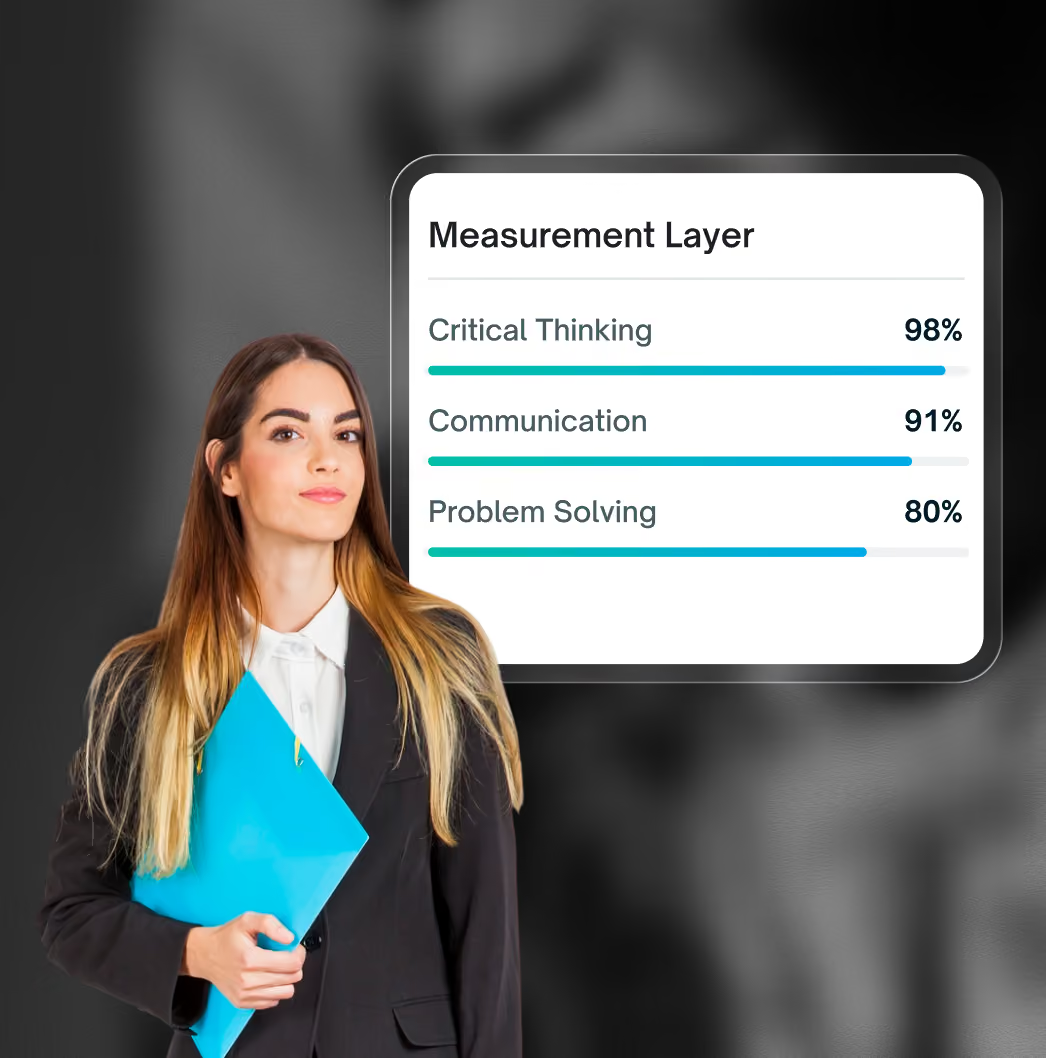
Structured scoring your team can act on immediately.
Every AI Video Interview produces a scored report evaluated against a structured rubric — not a raw recording for someone to watch and interpret. Reports include skill ratings, a fit score, language proficiency assessment, and cognitive ability indicators alongside the session transcript. Scoring is applied identically to every candidate: same questions, same rubric, same criteria whether the session runs at 9am or 11pm. Your team reviews the output and decides who advances. The AI produces the evidence; final decisions stay with your team.
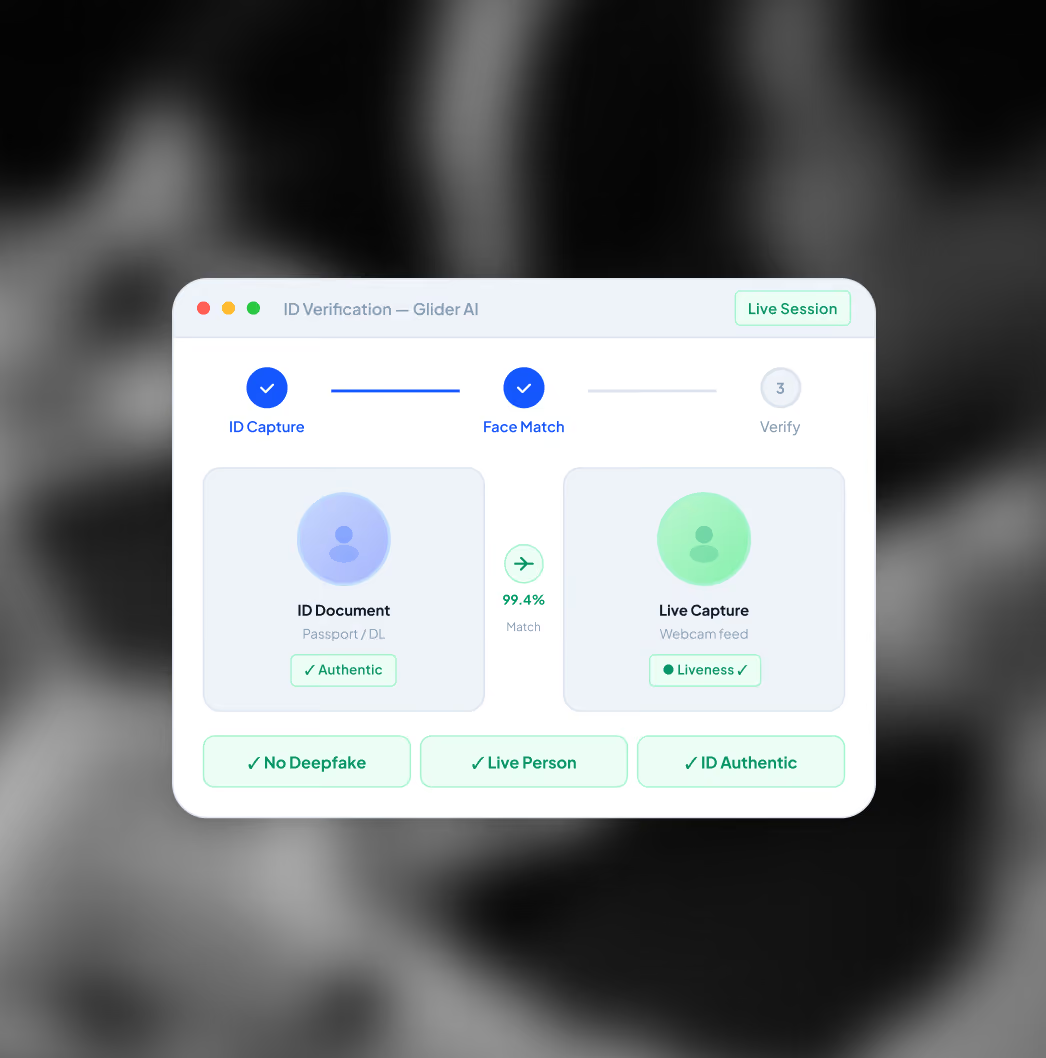
Fraud detection and global scale, built into every session.
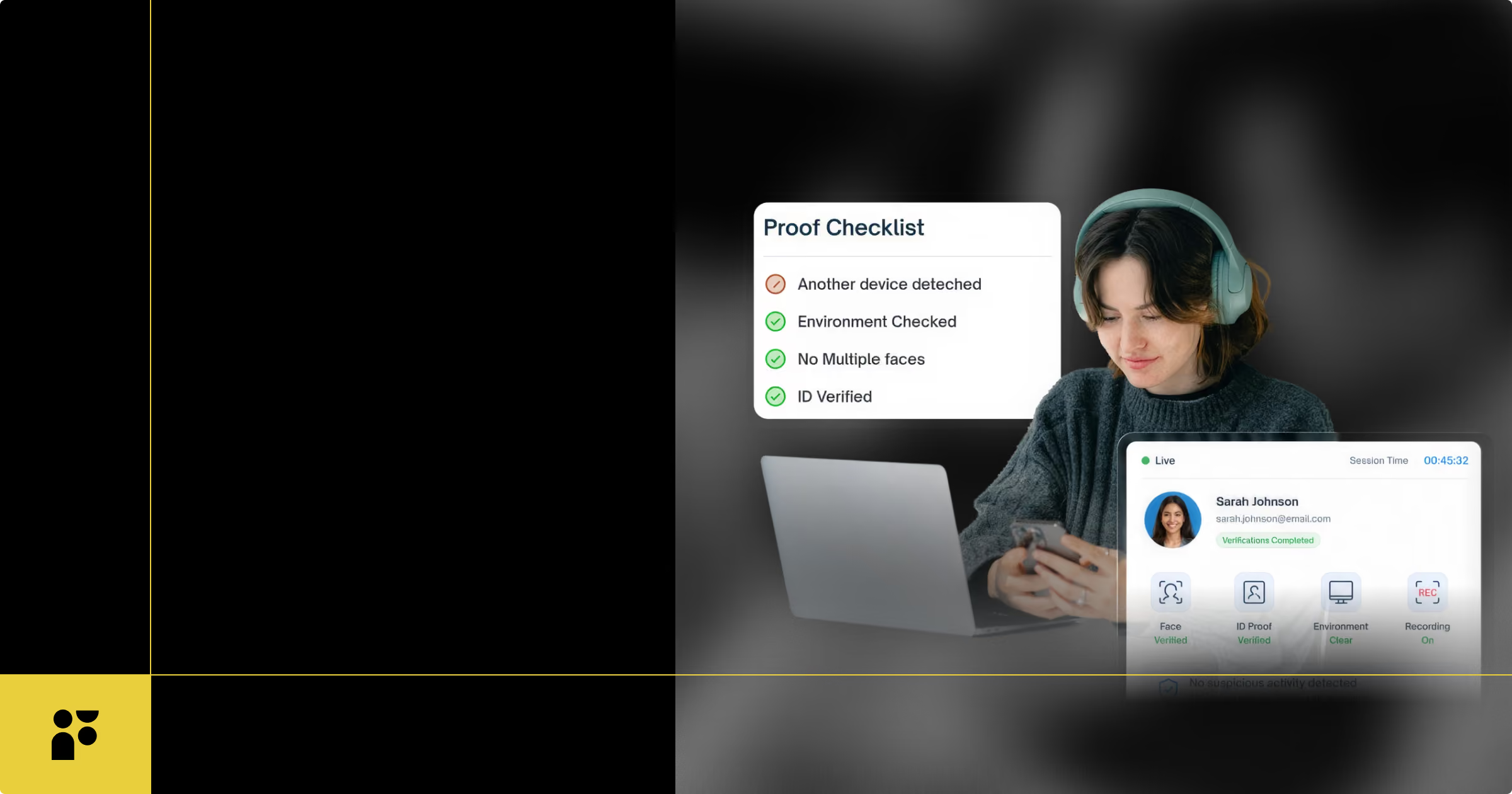
AI proctoring runs throughout every AI Video Interview, detecting impersonation, suspicious behavior, and cheating in real time. ID verification confirms candidate identity before the session starts. Both are native to the interview flow — no separate product to configure — and produce an integrity record alongside the evaluation report. Multilingual support lets candidates complete interviews in their preferred language without additional setup. ATS integrations with SAP SuccessFactors, Workday, and Greenhouse keep candidate records current without manual data entry.
Frequently asked questions.
How do AI Video Interviews work alongside other interview formats?
AI Video Interviews are one format within Findem's broader interview platform. They're typically used for early-stage screening at volume, with candidates who advance moving into Live Coding Interviews, Interviewer Assist sessions, or One-Way Video Interviews depending on the role and stage. Scheduling, ATS integration, and fraud prevention work the same way across all of them.
Which ATS platforms does AI Video Interviews integrate with?
AI Video Interviews integrate with SAP SuccessFactors, Workday, and Greenhouse, among others. Candidate records and scored reports sync automatically, so your team doesn't need to manually transfer data between the interview platform and your ATS.
Are AI video interviews secure against impersonation and cheating?
Yes. AI proctoring monitors behavioural signals throughout every session and flags suspicious behaviour in real time. ID verification confirms candidate identity before the interview starts. Both are native to the product, not an optional add-on, so every AI video interview produces an integrity record alongside the scored evaluation report.
Can the AI video interview assistant reduce bias?
Yes, by design. Standardised scoring frameworks are applied identically to every candidate, the same questions, the same rubric, the same evaluation criteria, regardless of who's being interviewed or who would otherwise be reviewing. That consistency doesn't eliminate all sources of bias, but it removes the variability introduced when different human interviewers apply different standards to different candidates.
What's the difference between AI video interview software and one-way video interviews?
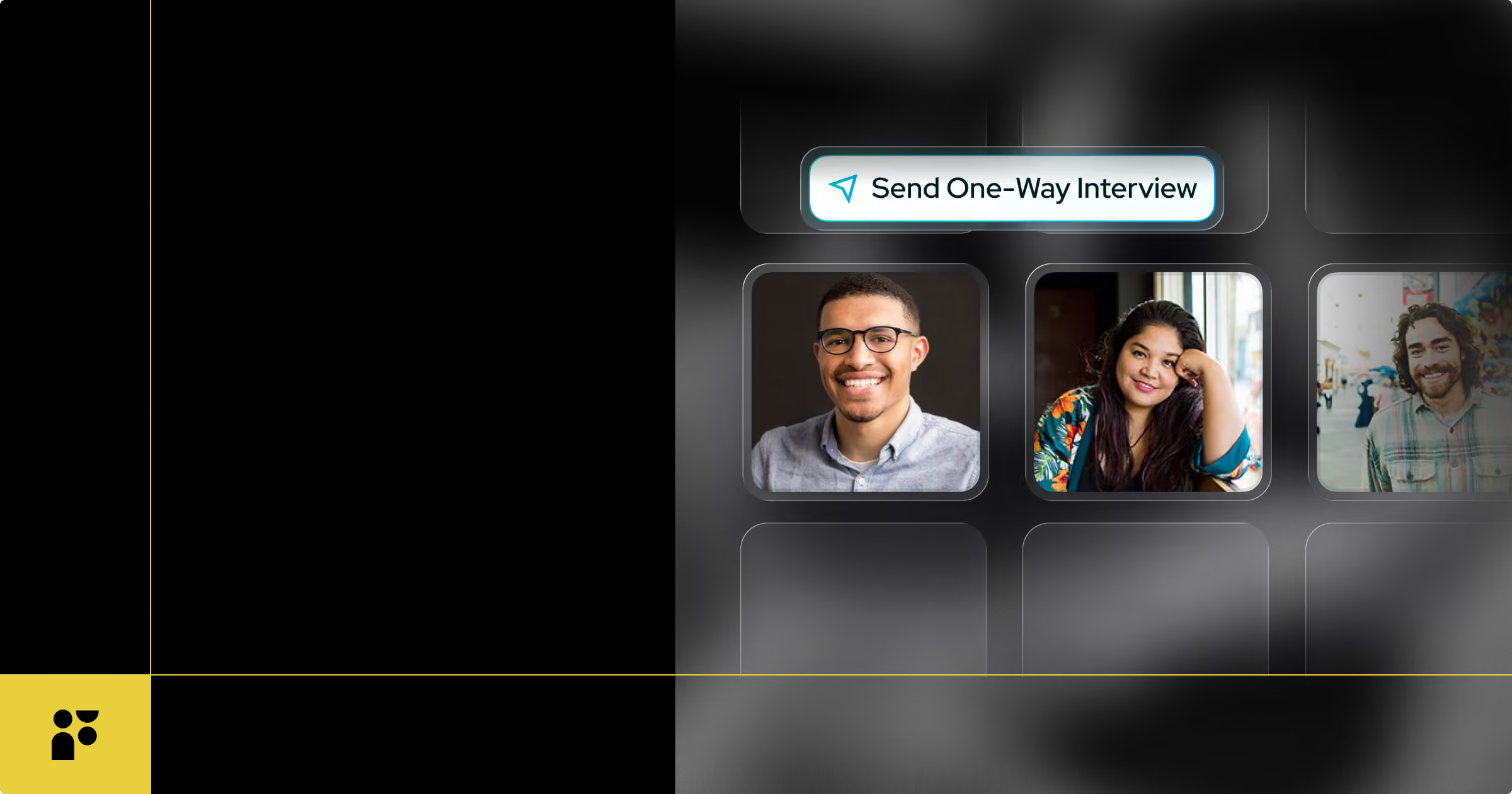
One-Way Video Interviews record candidate responses to a fixed set of questions, which your team reviews asynchronously. AI video interview software like Findem's is autonomous and adaptive: the AI conducts the session in real time, asks context-aware follow-up questions based on the candidate's responses, and evaluates the output against a structured rubric before your team ever sees it. Your team receives a scored report, not a raw recording, and more signal than a static Q&A format can produce.
See people in higher resolution.