


.svg)
You benchmark your product. Why not your team?

August 22, 2026

Companies compare almost everything — product performance against competitors, spend against budget, metrics against industry standards. But the teams responsible for producing those outcomes usually only get compared after something's already gone wrong: a critical role sits open, a transformation stalls, a leader leaves and takes a capability gap with them.
Proactive team comparison flips that. It means understanding how your team's capabilities and experience stack up against teams that have already solved similar problems — before the gap becomes a business constraint. The point isn't to rank employees or copy another company's org chart — it's to replace assumptions with context.
The org chart tells you who's there — not whether the team is ready
Most workforce planning starts with the current org: headcount, open roles, budget variance, reporting lines. Necessary questions, but not sufficient ones.
Two engineering teams can have identical headcount and titles while holding very different capabilities — one battle-tested on enterprise-scale migrations and security programs, the other deep on product but untested on what's next. A headcount comparison makes them look the same. A contextual one doesn't.
The better question isn't "do we have enough engineers?" It's: does our team's experience match the problems the business is about to handle?
Why compare proactively
Without an external reference point, workforce planning tends to just extend the current org — replace who left, add headcount where things feel stretched, respond to whatever's already visible. That's reactive: answering yesterday's org design with tomorrow's hiring budget.
A proactive comparison starts from the destination instead. It looks at teams that navigated a similar challenge, and compares their experience patterns against your own. That can surface:
- Capabilities you'll need sooner than expected
- Experience concentrated in too few people
- Strengths worth protecting as the team scales
- Roles that matter less than the capability behind them
- Development opportunities already sitting inside the team
- Talent markets where the missing experience actually exists
The goal isn't declaring one team "better." It's making differences visible while there's still time to act.
An example: Moving upmarket
Take a growing software company whose next goal is landing larger enterprise customers. The engineering team has delivered a strong product and supported fast growth — by current measures, healthy. Leadership assumes the next phase mostly needs more headcount.
A proactive comparison tests that assumption directly: How much enterprise-scale architecture experience do teams that made this exact transition have? When did they add platform, reliability, and security leadership — and how broadly is that experience distributed? What backgrounds show up repeatedly among the leaders who managed it?
Say the comparison shows strong product-building experience but real gaps in security review, complex integrations, and platform reliability at scale. That's not a verdict on the team — it's a planning signal.
Leadership can now weigh developing existing engineers, bringing in advisors, hiring a few experienced leaders, or resequencing the roadmap. The question shifts from "how many engineers?" to "which capabilities actually make this strategy executable?"
What a useful comparison actually looks at
- Capabilities: What the team can collectively do, and how deep
- Relevant experience: Has it faced these specific conditions before (scaling infrastructure, regulated markets, M&A integration, platform shifts)?
- Trajectory: Hiring momentum, leadership movement, tenure, the order capabilities were added
- Concentration: Is a critical capability spread across the team, or riding on one person?
- Context: The comparison group has to match the actual challenge; a strong consumer team isn't the right benchmark for enterprise infrastructure work
What it shouldn't become
Comparison turns dangerous the moment context becomes a scorecard. It shouldn't be used to auto-judge individual employees, mistake correlation for causation, or treat one company's structure as universally correct — external data is always incomplete, and career history never captures everything someone brings.
Used well, comparison produces hypotheses, not verdicts: which findings point to real risk, which capabilities can be built internally, what's missing from the picture, which gaps are actually intentional trade-offs. Human judgment stays in the loop wherever findings could touch hiring, promotion, or restructuring decisions.
From a one-time deck to continuous readiness
Traditional benchmarking produces a presentation that's reviewed once and goes stale. Teams and markets don't hold still that long. The more useful version is continuous: ask a strategic question, compare the team against the right reference group, and revisit as the business or talent market shifts.
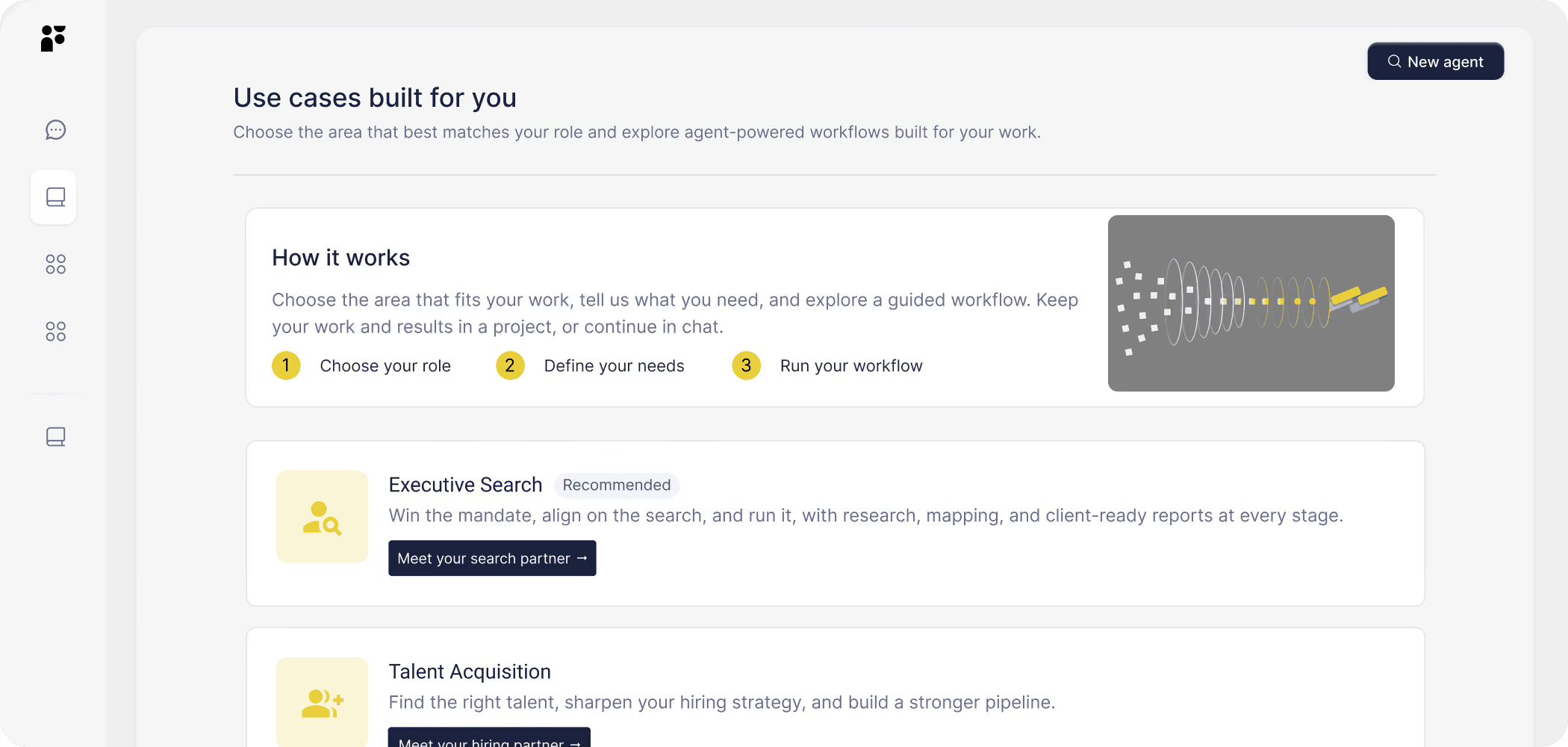
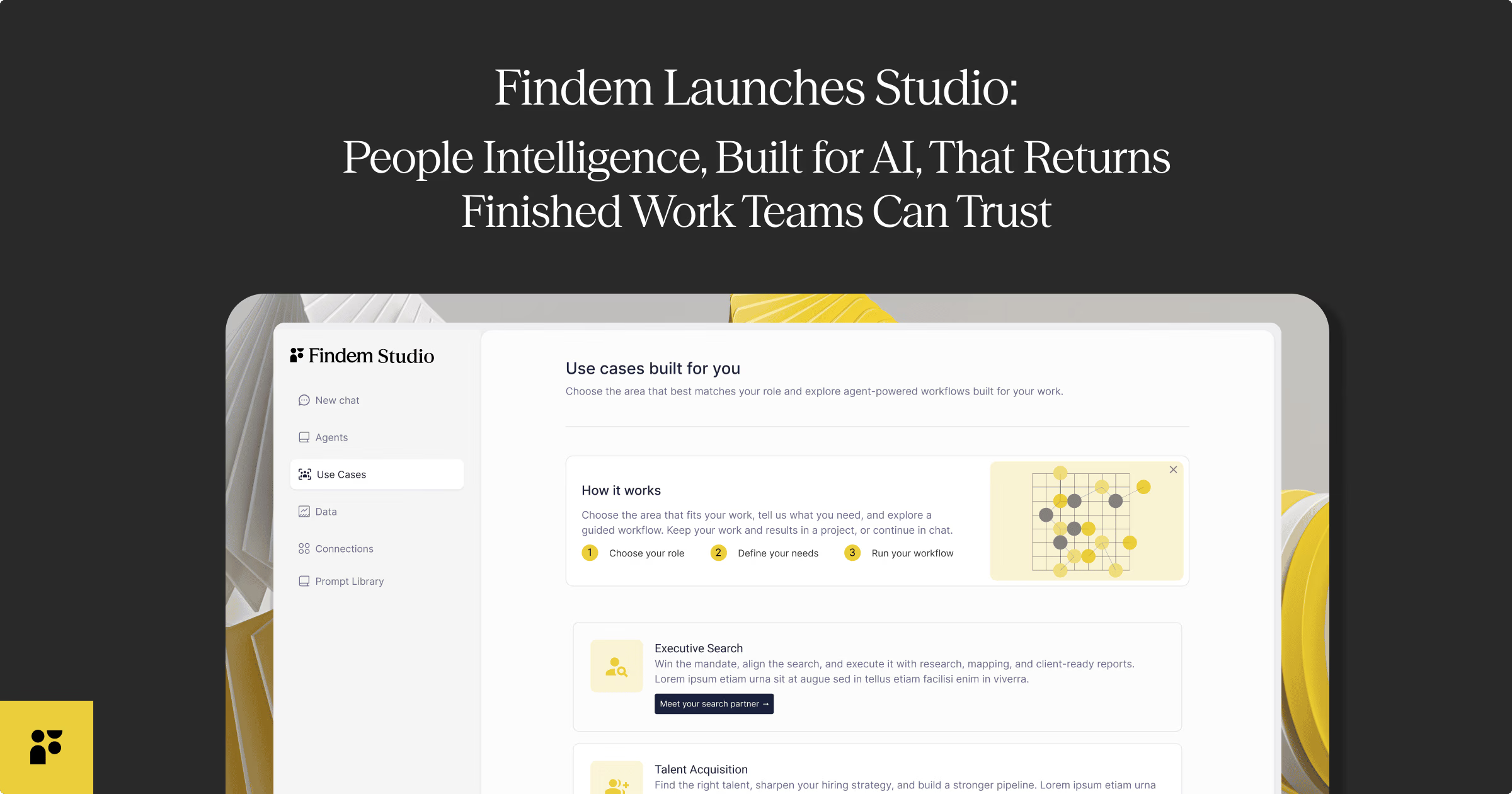
Findem Studio exposes Findem's talent graph — real-time data on people, companies, jobs, and hiring signals — as MCP tools that agents and custom workflows can call directly.
A Team Comparison Agent is one such concept: ask something like "compare our engineering org with teams that moved from midmarket to enterprise — what do we have, what might we be missing, what should we investigate?" and get back not a ranking, but a decision brief: strengths to protect, gaps worth checking, and real options.
The real question
A workforce plan should do more than reconcile headcount against budget — it should show whether the org is building the capabilities the strategy actually needs. Does the team you have today match the business you're trying to become? Waiting until a req opens to find out is already too late.
If this is a question worth asking about your own team, Findem Studio is where that conversation can start.