

.svg)
A leadership departure is not a vacancy. It's a signal.

August 13, 2026

An executive leaves. The company appoints an interim leader, opens a search, and starts writing a replacement profile. That response is understandable. It may also solve the wrong problem.
A leadership departure can redistribute decisions, expose a succession gap, concentrate critical experience in fewer people, and trigger movement below the executive suite. The open role is only the most visible part of the change.
Leadership change analysis asks a more useful question: What changed around this transition, and what should we investigate now?
Leadership change analysis starts beyond the title
A title describes authority. It does not capture everything a leader contributes.
A departing engineering executive may bring experience scaling global infrastructure, navigating enterprise-security requirements, developing senior leaders, or guiding a company through a particular growth stage. They may also connect product, security, sales, and the board in ways an org chart cannot show.
Replacing the title does not automatically replace those capabilities or relationships.
The departure may also change the team around the role. Responsibilities can move to leaders who were not prepared to inherit them. High-potential employees may lose a sponsor. Critical expertise may become concentrated in one remaining person.
The vacancy is visible. The surrounding risk requires context.
Ask three questions before writing the job description
Before recreating the role, leadership should examine three things:
- What capability may have left? Look beyond prior responsibilities to the experience the next stage of the business requires.
- What changed around the team? Review movement before and after the transition, shifts in ownership, and capabilities that have become concentrated or exposed.
- What decision is now more urgent? The answer may involve succession, retention, organizational design, recruiting, or the timing of a strategic initiative.
These questions change the search from “Who resembles the person who left?” to “What does the organization need now?”
The company may still hire an external successor. But the mandate, sequence, and candidate profile become more specific. In other cases, the analysis may support an internal successor, a redesigned structure, interim expertise, or a retention intervention elsewhere on the team.
An engineering transition can become a strategy question
Imagine a software company preparing to move from midmarket customers into complex global enterprises. Its VP of Engineering departs. Leadership begins searching for another VP with similar company-stage experience.
A broader review might reveal that two platform leaders also left in the preceding months. Enterprise-infrastructure experience is now concentrated in one director. The security organization has strong technical depth but limited executive exposure. Meanwhile, recently hired product leaders bring backgrounds in regulated industries.
This is a hypothetical scenario, not customer proof. It shows why context changes the decision.
The problem may not be one vacant position. The company may be losing technical capabilities at the same moment its strategy requires deeper enterprise experience.
That possibility could lead leadership to redefine the executive mandate, accelerate an internal successor’s development, stabilize critical team members before opening a search, add interim expertise, or reconsider the sequence of the enterprise roadmap.
The leadership event becomes an input to strategy, not simply a recruiting request.
An org chart cannot show movement through time
An org chart shows structure. It does not show how experience developed, how a team changed, or what was happening at a company when someone gained that experience.
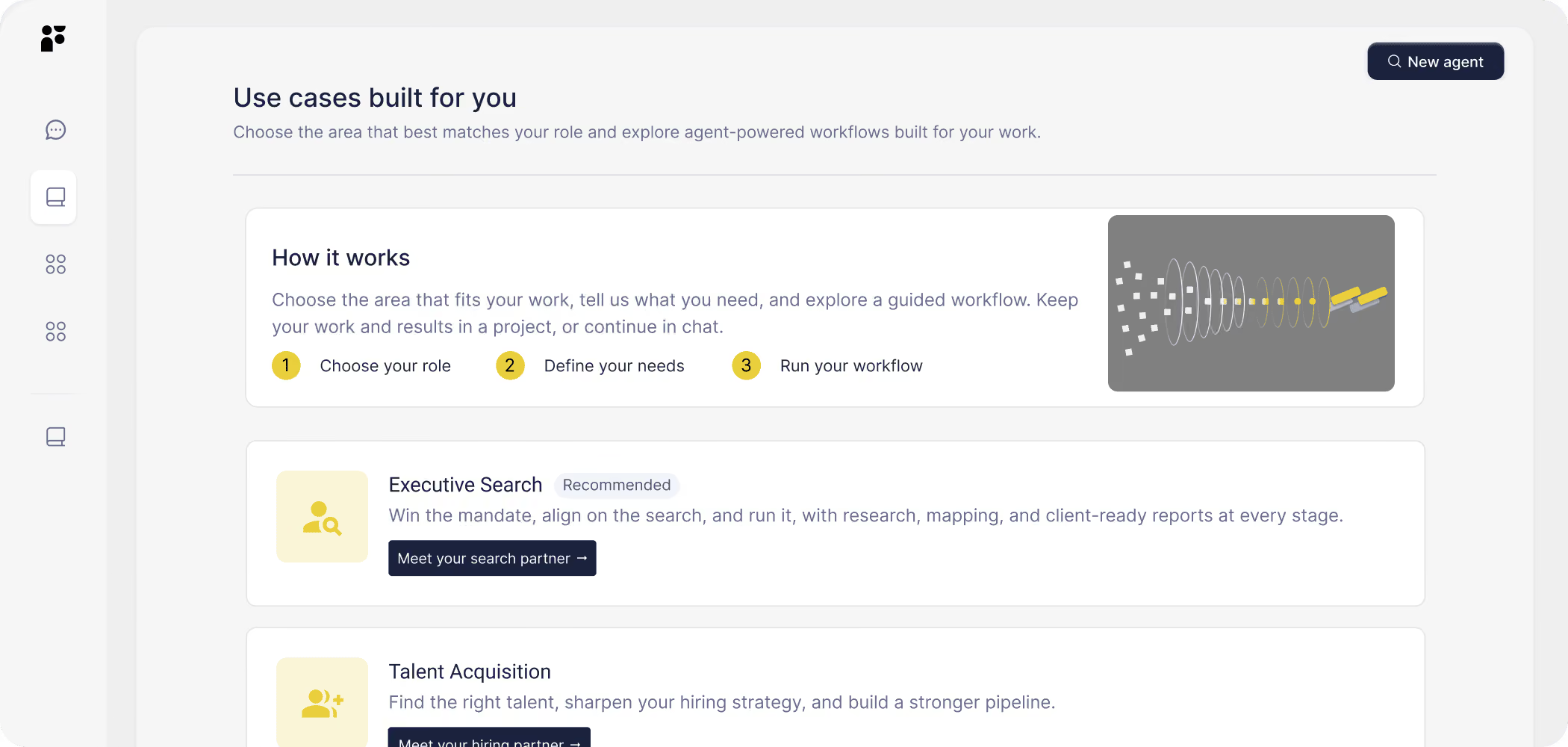
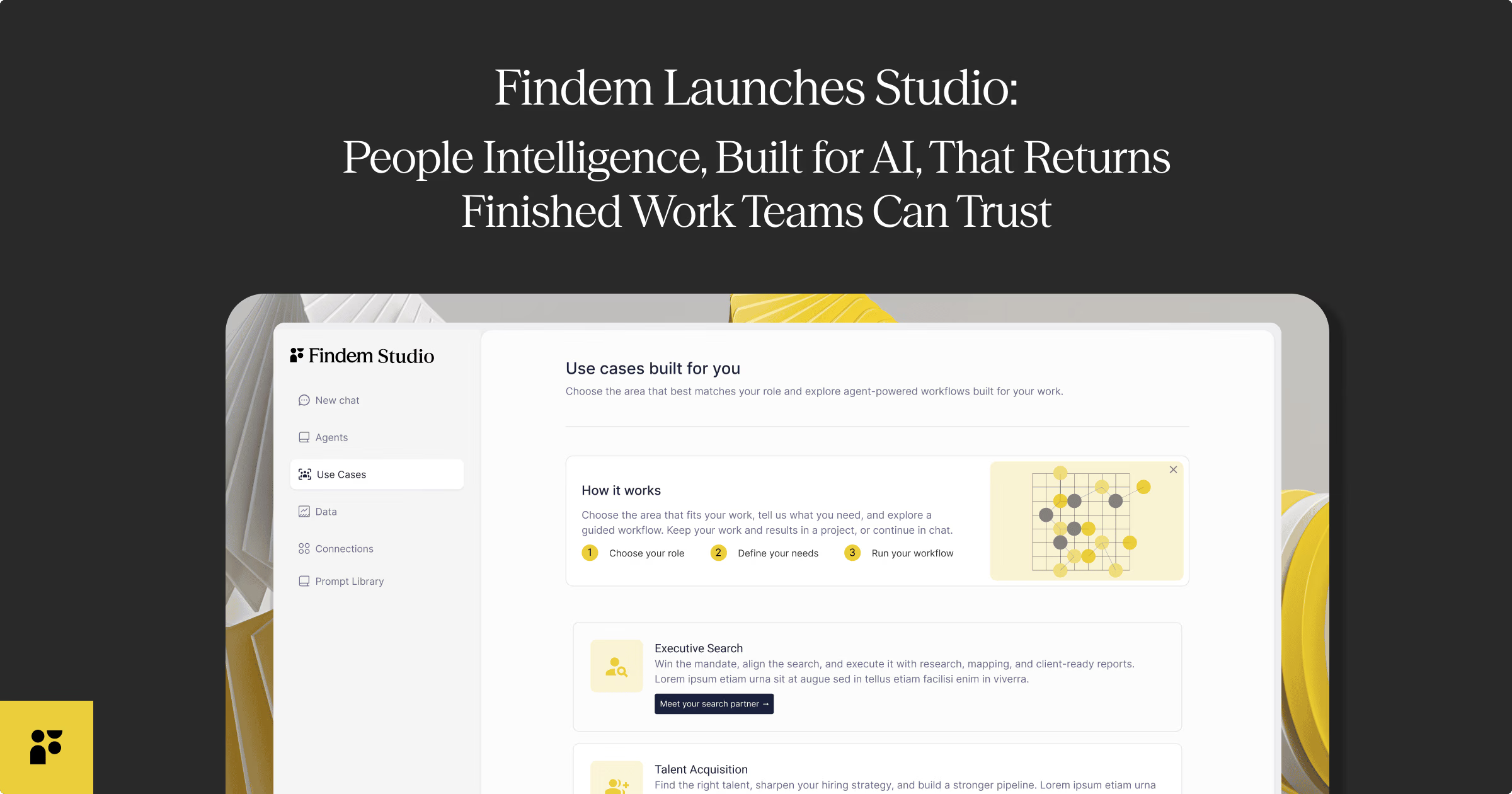
Findem’s 3D data connects people and company information over time so experience can be evaluated in context. Findem Studio combines trusted, expert-labeled intelligence about people, companies, and the broader market with configurable AI agents.
Together, they can support a connected investigation: begin with a leadership event, examine relevant movement and experience patterns, compare the situation with a prior period or peer group, and map internal and external talent questions.
One possible future workflow is a Leadership Change Agent that assembles a leadership-change brief, capability-shift map, and succession or talent watchlist. That agent is a concept only, not a verified or announced Findem Studio capability.
The point is not the proposed output. It is the ability to carry context across decisions that are often handled separately. Succession can inform recruiting. Team movement can inform retention review. External talent mapping can sharpen the executive mandate.
A signal should start an inquiry, not settle one
A cluster of departures does not prove leadership failure. A new executive’s background does not prove that strategy has changed. Public career information cannot capture every contribution, relationship, motivation, or internal decision.
Responsible leadership change analysis separates verified movement from inferred implications, observed experience from assumed capability, and patterns worth investigating from conclusions.
AI can help connect evidence, expose assumptions, and frame questions. It should not score leaders automatically, predict individual behavior, infer sensitive traits, or make employment and succession decisions. Accountable people must validate the context and retain responsibility for every decision.
Do not wait for an empty role to define the problem. Use the transition to understand what the organization needs next.
Explore Findem Studio to investigate leadership movement in context.


%20Paikeday.avif)