

What VC and PE talent leaders are rethinking about portfolio hiring in 2027

November 6, 2026

On this page
Notes from Hunt Scanlon's PE and VC talent summit in San Francisco
Most portfolio hiring problems don't surface until the finish line. A VP finalist asks for an SVP title at close. A CFO search hits day 100. A CRO arrives two years before there's a sales machine to run.
At Hunt Scanlon's PE and VC talent summit in San Francisco on October 28, the talent partners, platform leaders, and search firms in the room kept returning to one question: how do you make leadership calls earlier, before a role turns into a fire? The answers were specific enough to use on Monday. Three of them have stuck with me, and each one changes how fund talent teams and their search partners should work.
Most searches are decided before the spec goes out
The failures people described rarely happened mid-search. They were set up earlier, by a title, a hire made out of order, or a comp decision nobody priced.
Titles are a promise about the next hire
Founding titles work for the first 10 to 15 hires. After that, every title tells the team what happens when someone is hired above, beside, or below that person. The stage map from the room was simple: "Head of" covers Seed through Series A, and VP fits Series B onward. Finance is where companies most often overshoot. An early-stage company usually needs a VP or senior director of finance, not a CFO. Hold the title lower and let the person grow into it.
Mismatches show up late, which is why they're easy to ignore. A search runs cleanly for two months, then stalls because the finalist wants SVP for a VP role. Say yes and you've created a parity problem with every peer on the team, and made it harder to layer someone above them when the company outgrows the role. Settle the title, and what it leaves room for, before the spec goes out.
Bring in help before the founder becomes the recruiter
The trigger is around 40 employees, or the point where the founder spends 35 to 40 percent of their week on hiring. Contingent recruiters are fine from day one for well-defined roles. Retained executive search should wait until the company has mapped the market and the founder has done five or more chemistry chats with potential leaders. Engage search before that and you're paying a firm to help you work out what you want.
Hire the builder before the scaler
A CRO hired too early is a scaling executive with nothing to scale yet. The sequence speakers recommended: RevOps and regional sales leads first, then a VP of Sales to build the machine, then a CRO to scale it.
The hardest search named all day was replacing a founder-CEO with a commercial CEO. A talent leader at a growth equity firm described how her firm handles it: they say it out loud in diligence. In one deal, a husband-and-wife team had built a payments business for in-home workers to $15M in revenue with 19 people. Neither founder was the long-term CEO, and one wanted to stay on the board. The firm hired a new CEO before the deal closed, sourced through a board member's network. Within six months, seven C-suite seats were filled. The hard conversation happened first, so the hiring could move fast.
Every comp decision has an exit price
In a PE-backed company, an extra $25K in salary comes straight out of EBITDA, and EBITDA gets multiplied at exit. At a 10x multiple, that's $250K of enterprise value. Make the same call across a handful of leadership hires and you've given up millions before anyone has started work. Decide which seats deserve the premium before the finalist's counter lands.
Measure the hire, not the search
Speakers shared three benchmarks for leadership hiring in venture- and PE-backed companies. A search that closes in 30 days is strong, and one that runs past 90 days is a problem. Offer acceptance should land at 70% or higher. And first-year attrition for leadership hires runs about 30%, which is the norm, not the exception.
The attrition number is the one I'd put in front of every fund. If three in ten leadership hires don't last a year, even a fast search leaves you refilling a third of your seats. The same growth equity talent leader put it plainly: the stat she wants from search partners is how sticky their placements are, because she's hiring operators she hopes will stay through exit.
Two habits follow. First, track where your best hires came from, not where most of them came from, and put more effort there. Second, hold search partners to the standard she described. What loses her business is a partner who claims to "know everybody," leads with speed, or can't explain why a VC-backed company, a growth equity business, and a mid-market buyout need different operators. What wins it is a partner who can align a multi-headed client (portfolio CEO, talent partner, investment team, sometimes co-sponsors) on one choice, gives a real answer when asked "who do you think is best?", and treats the dozens of candidates who don't get the job as carefully as the one who does.
The bench comes before the role
The biggest shift in the room was from reactive to proactive. When a portfolio CFO resigns, the best fund talent teams already know the eight people they'd call.
They get there with two tools. Chemistry chats give strong operators who aren't looking a way to talk without saying they're "open to work." Bench-building events keep the fund top of mind between searches, and the teams doing this well run 10 to 15 a year. Engineering events can be broad. CFO events work best as small dinners with a hook. Few placements come from the night itself. The return is brand recall: when a role opens 18 months later, the CFO who remembers the dinner takes the call.
This is also where AI is starting to change the job. Some of the talk was cautionary, especially around agent-to-agent interviewing, where a candidate's AI talks to a company's AI and nobody can be sure who or what is on the other end. The bigger change is quieter. The repeatable parts of the talent partner role (mapping a market, benchmarking a leadership team, building a succession slate) are being turned into agents. Her firm hired a dedicated AI lead this year, and its talent team is building tools to code resumes and interview notes against its own talent frameworks.
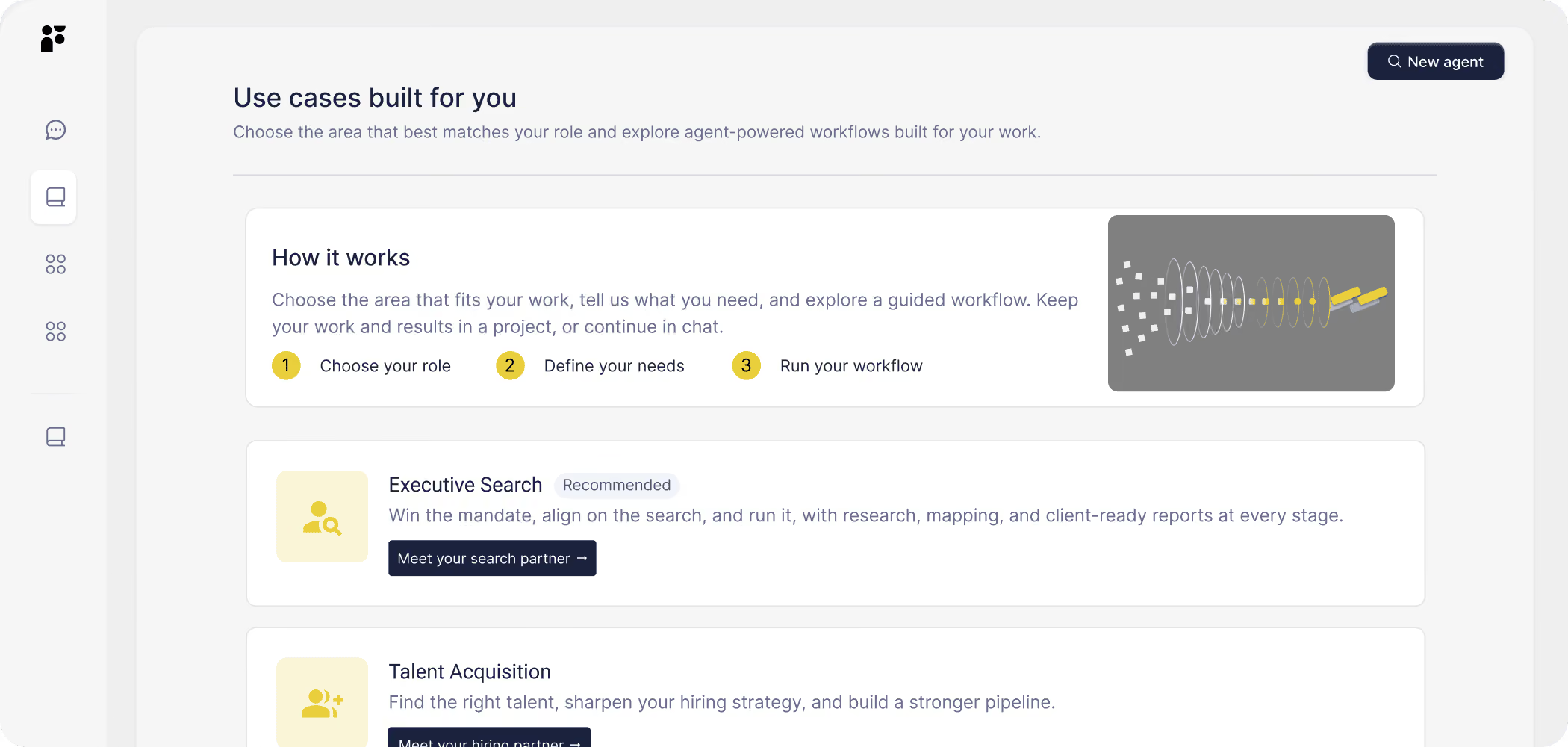
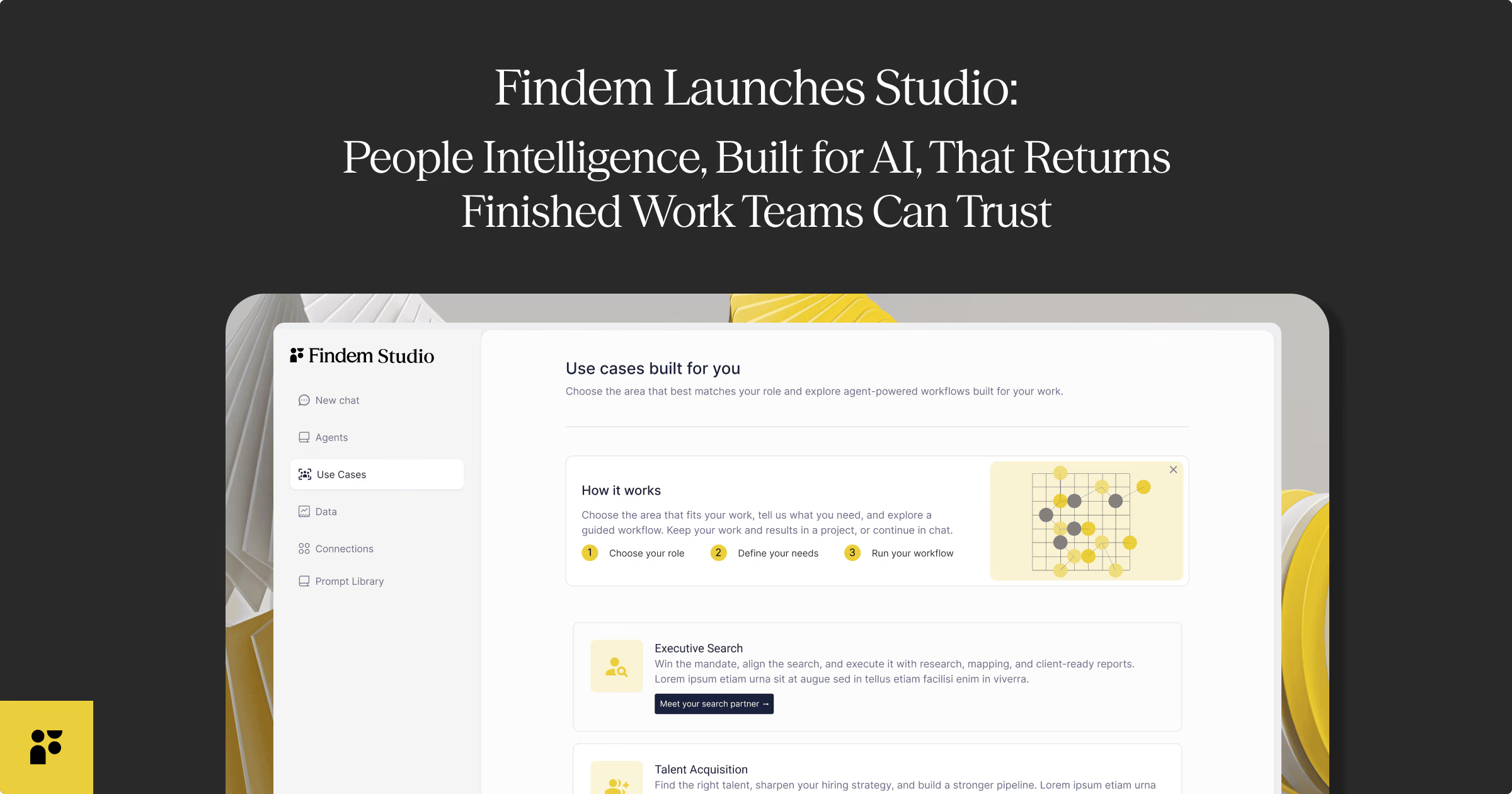
That repeatable work is what we built Findem Studio for. A Studio agent returns a finished market map or a ranked succession slate, built on labeled people data and a named practitioner's method, with the evidence behind each conclusion shown. Our Succession Planning agent follows the methodology of Matthew Guss of Next Horizon Leadership, formerly of Russell Reynolds Associates. A talent partner reviews the work and makes the call.
The half of the job that stays human
The things that talent leader values most can't be handed to an agent: getting five stakeholders behind one hire, having an opinion when the CEO asks who's best, closing the loop with candidates who didn't get the job. Funds that give the mapping and benchmarking to agents get more time for that judgment, and a bench that's ready before the next resignation letter.
For talent partners and search firms heading into 2027, the decision is which half of the job you want to be known for.