



How to hire without a recruiter or an ATS

October 28, 2026

You can hire well without a recruiter or an applicant tracking system (ATS) if you do three things consistently: define what the role needs before you search, judge every candidate against the same criteria, and keep every candidate in one shared list. This guide is for founders and hiring managers at small companies who run hiring themselves. It covers a 7-step process, a phone screen script, a scorecard template, the legal basics, and what a recruiting agency would cost instead.
When you can skip the recruiter and the ATS
Running hiring yourself works best when you have a few roles to fill this year, the hiring manager can set aside a few hours a week for each role, and the role is one you understand well enough to judge. A recruiter or search firm makes more sense for a confidential search, a senior leadership role, or a large batch of hires on a short deadline.
An ATS earns its cost once several people interview for several roles at the same time. Until then, a shared spreadsheet and a consistent process cover most of what an ATS does for a small team.
What a recruiter costs
Agencies are usually paid a percentage of the new hire's pay, so it helps to know the number you are weighing your own time against. In a 2016 SHRM article on working with search firms, contingency recruiters "usually earn a fee in the area of 20 percent to 25 percent of the role's first-year cash compensation," paid only if they fill the job. For retained executive search, used for senior leaders, a recruiting consultant quoted in the article put the standard fee at "about 33 percent" of the role's annual salary, bonus and signing bonus.
| Option | How you pay | Example cost for a $120,000 role |
|---|---|---|
| Contingency recruiter | 20% to 25% of first-year cash compensation, only if they fill the role (SHRM, 2016) | $24,000 to $30,000 on base salary alone |
| Retained search | About 33% of salary, bonus and signing bonus (SHRM, 2016) | About $40,000 on base salary alone |
| Do it yourself | Your team's time, plus any paid job posts | Depends on hours spent and ads bought |
| Self-serve AI recruiting agent | Software or credits | Depends on the product; check current pricing |
Fees vary by role, seniority, and firm, and the SHRM figures are from 2016. Ask any agency for its current rate and its replacement terms if a hire leaves early. To compare the full cost of each route, see how to calculate recruitment cost per hire.
How to hire without a recruiter in 7 steps
1. Write a role scorecard before you write the job post
A role scorecard is a one-page description of what success in the role looks like. Write it with everyone who will interview, before anyone searches. It should list:
- The two or three outcomes the person should deliver in their first 6 to 12 months
- Three to five must-have skills or experiences, each tied to one of those outcomes
- Nice-to-haves you will not screen out on
- Practical requirements, such as location, working hours, and work authorization
- The pay range you can offer
Turn the scorecard into the job post. Several US states and cities require a pay range in job postings, so check the rules where you hire.
2. Set up one shared candidate list
Without an ATS, the biggest risk is losing track of people. Create one shared spreadsheet with a row per candidate and these columns: name, role, source, date added, stage, scorecard ratings, next step, owner, and notes. Limit access to the people involved in hiring.
Keep the list after the role closes. The EEOC's recordkeeping rules require employers covered by federal anti-discrimination laws to keep personnel and employment records, including applications, for one year. Your past applicants are also the first place to look when the next role opens.
3. Source from warm channels first
Start with people who already have a connection to your company: referrals from employees, investors, and advisors, past applicants, former colleagues, and people who have reached out before. Findem's 2025 State of Sourcing Channel Performance report, an analysis of outreach to 300,000 candidates, found that 85% of sourcing efforts still focus on cold outreach, and that a multichannel approach consistently outperforms cold sourcing alone.
Then post the role where your candidates already look, such as LinkedIn, Indeed, or Wellfound for startup roles, and reach out directly to a short list of people who fit. For more channels and outreach tips, see 10 steps to better candidate sourcing.
4. Run the same 15-minute phone screen for everyone
A phone screen checks the basics before you invest interview time. Use the same questions in the same order for every candidate. The U.S. Office of Personnel Management's structured interview guide explains why: structured interviews, where every candidate gets the same questions and a common rating scale, show high reliability and validity, while unstructured interviews have "little value in predicting job performance."
| Question | What a good answer shows |
|---|---|
| Walk me through your current role. What are you responsible for, and how is your work measured? | Clear ownership and results, not only tasks |
| What made you interested in this role? | They read the post and can connect it to their goals |
| Tell me about a recent project close to [main outcome from your scorecard]. What did you do yourself? | Direct experience with the work, in specific terms |
| What are you looking for in your next role that you don't have now? | Whether your role can give them what they want |
| What pay range are you targeting? | Whether you are close enough to keep talking |
| Are there any constraints on start date, location, or working hours we should know about? | Practical fit with the role's requirements |
Ask about pay expectations, not pay history. Many states and cities ban salary history questions. Leave out questions about age, family plans, religion, national origin, health, or disability. EEOC guidance on prohibited practices covers recruiting, job ads, and hiring.
5. Score every candidate on the same scorecard
After each conversation, rate the candidate against the must-haves from step 1 before you talk to anyone else about them. Independent ratings keep one confident interviewer from setting the group's opinion. A simple template:
| Criterion | What strong looks like | Rating (1 to 4) | Evidence from the conversation |
|---|---|---|---|
| Must-have 1 | [Specific, observable example] | ||
| Must-have 2 | [Specific, observable example] | ||
| Must-have 3 | [Specific, observable example] | ||
| Practical fit | Meets location, hours, and pay requirements |
A four-point scale has no middle option, so each interviewer has to lean one way. Write the evidence in a sentence; "seemed great" is not evidence.
6. Keep the interview loop short
Two or three conversations after the phone screen are enough for most roles at a small company: one that goes deep on skills, ideally with a short work sample, one with the people they would work with, and a final conversation with the founder or hiring manager. Give each interviewer different scorecard criteria so you don't ask the same questions three times. If a work sample takes more than a couple of hours, consider paying for it.
7. Check references, decide, and make the offer
Compare scorecards, not impressions. Check references with the candidate's permission, then make a written offer quickly; strong candidates often have other options. After they accept, every US employer must complete Form I-9 for each new hire.
Legal basics for small employers
Federal anti-discrimination laws apply by company size, according to the EEOC's small business requirements:
- With at least one employee, you must provide equal pay for equal work to men and women.
- With 15 or more employees, laws prohibiting discrimination based on race, color, religion, sex (including pregnancy, sexual orientation, or transgender status), national origin, disability, and genetic information also apply.
- With 20 or more employees, the ban on age discrimination (40 or older) also applies.
State and local laws may cover smaller employers or add rules, such as pay range disclosure or salary history bans. This guide is not legal advice; check the rules where you hire.
Where an AI recruiting agent fits
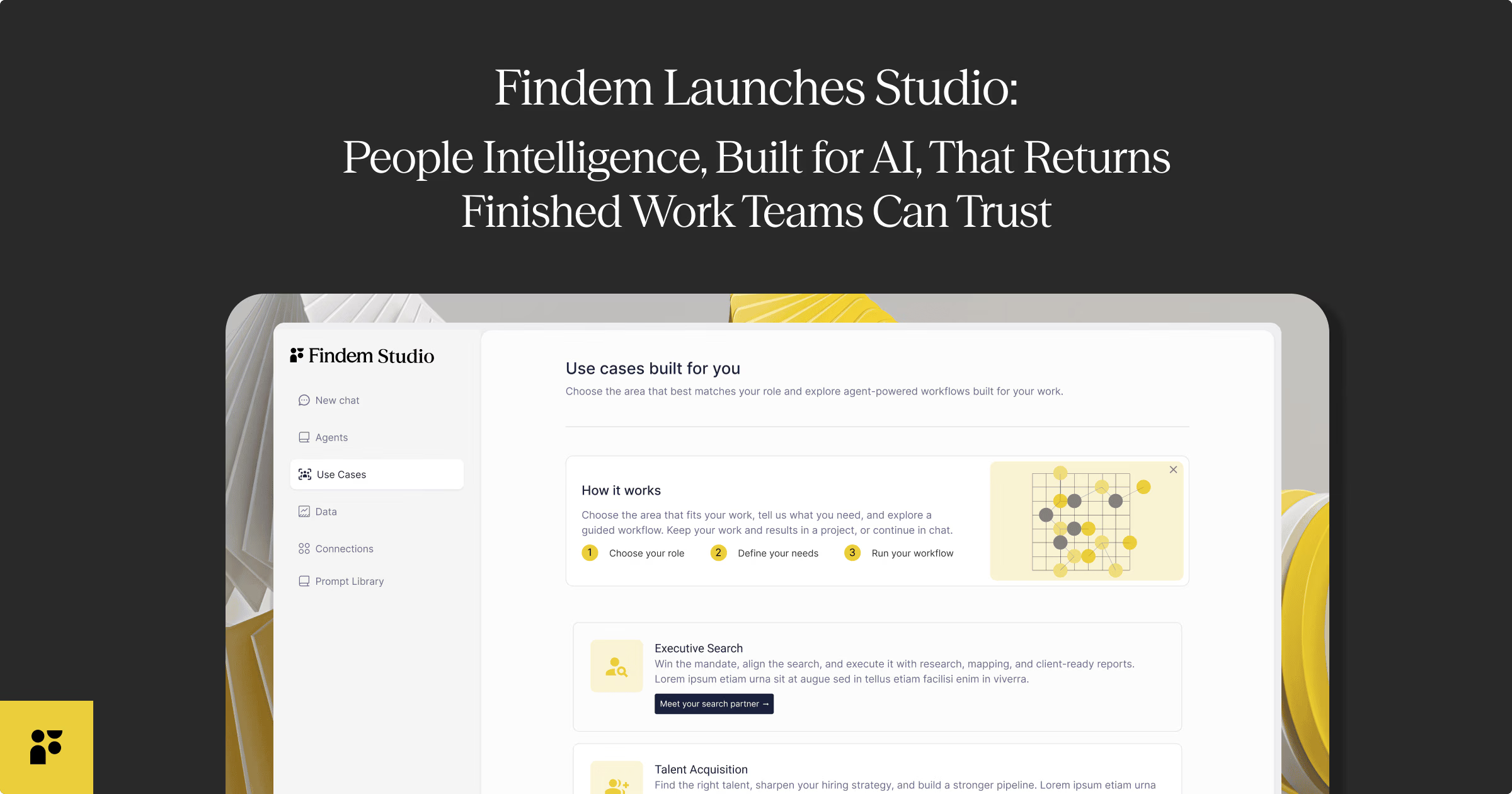
The slowest parts of hiring without a recruiter are usually the search and the first outreach. AI recruiting agents can take on that work while you keep the decisions. ReadySlate Lite in Findem Studio is one option built for teams without a recruiter or an ATS:
- Paste a job posting, and the agent drafts the requirements for you to check.
- It searches Findem's 850M+ profiles and keeps adding people who fit to your long list.
- You pick the shortlist. When you turn those steps on, it emails candidates from your own mailbox and runs a five-minute AI voice screen with the people who say yes.
Findem's AI doesn't reject candidates, decide hiring criteria, or make hiring decisions. Teams that join Findem's small business program get free credits to start. See how ReadySlate Lite works.
If you already have a small talent team running its own searches, see AI candidate sourcing for companies under 300 employees. To measure how your hires work out after they start, see measuring quality of hire.
Hiring without a recruiter FAQ
Can a small business hire without a recruiter?
Yes. Most small companies make their first hires without a recruiter. It works when the hiring manager writes clear requirements before searching, asks every candidate the same screening questions, scores them on the same scorecard, and keeps every candidate in one shared list.
Do I need an ATS for my first hires?
No. A shared spreadsheet with one row per candidate is enough for a few roles a year. Consider an applicant tracking system when several people interview for several roles at once, or when candidates start slipping through the cracks.
How much does a recruiter cost?
Contingency recruiters usually charge a fee in the area of 20% to 25% of the role's first-year cash compensation, paid only if they fill the role. Retained executive search runs about 33%. Both figures come from a 2016 SHRM article; fees vary by role and firm.
What questions should I ask in a phone screen?
Ask about the candidate's current responsibilities, why this role interests them, a recent project close to the role's main outcome, what they want next, their salary expectations, and any start date or location constraints. Ask every candidate the same questions in the same order.
Can AI help me hire without a recruiter or an ATS?
Yes. Self-serve AI recruiting agents can draft requirements from a job posting, search for people who fit, and run first outreach. ReadySlate Lite in Findem Studio is built for teams without a recruiter or an ATS. You still decide who goes on the shortlist and who gets hired.