



.svg)
AI candidate sourcing for companies under 300 employees

October 14, 2026

A one-person talent team can source with AI by running one loop: describe the role, calibrate the criteria with the hiring manager, review a ranked shortlist with the evidence behind each match, and approve outreach. No sourcing pod is required, and every decision stays with the recruiter.
A solo recruiter can lose hours reviewing weak search results while open reqs, hiring manager follow-ups, outreach, and interviews keep moving. Small talent teams need a sourcing workflow that turns a role conversation into an evidence-backed shortlist. It must preserve recruiter judgment without requiring a separate sourcing pod.
This guide explains how that workflow operates from intake through outreach, what recruiters review at each stage, and where human decisions remain essential.
The question most sourcing roundups don't answer
Vendor-neutral roundups from Recruiterflow, People Managing People, Pin, Greenhouse, and Metaview help recruiters scan the market. Feature lists have limits, though. They rarely address the operating reality of one person owning the entire talent function.
A solo recruiter or Head of Talent needs to know what happens after a hiring manager shares a rough role description. The practical questions are:
- How does the conversation become clear search criteria?
- What does the recruiter review before the search begins?
- What evidence appears beside each candidate?
- Who approves the shortlist and outreach?
- How does approved candidate data move into the ATS?
Early-stage teams should evaluate the workflow before comparing feature counts. An early-stage company needs a direct path from role intake to an approved shortlist. Enterprise teams usually place more weight on cross-team governance, broad system integration, and workflows spanning several recruiting functions.
For a lean talent team, the useful output is a shortlist that explains why each person matches the agreed criteria. The recruiter can then approve, reject, refine, or contact candidates.
What's different about sourcing under 300 people
A recruiter at a company with fewer than 300 employees usually plays several roles. The same person may open the req, source candidates, coordinate interviews, maintain ATS records, and advise the hiring manager.
The roles themselves can be difficult to define. A first sales operations hire, security leader, or specialized engineer has no established internal team for comparison. The hiring manager may describe the person through business problems rather than titles, skills, or years of experience.
Every hire is visible at this scale. A weak shortlist consumes hiring manager time and can delay work across a small team. A strong shortlist needs to show more than keyword overlap.
Tool usage also fluctuates with hiring plans. A company may need concentrated sourcing capacity for a set of open reqs, then hire less intensively. A long procurement process for a product used only during occasional searches can be hard to justify.
These conditions change the starting point. Sourcing should begin with a conversation about the role, its expected outcomes, and the experience that could indicate readiness. It should not begin with a saved search that someone must keep adjusting.
How Findem's Candidate Sourcing Agent works
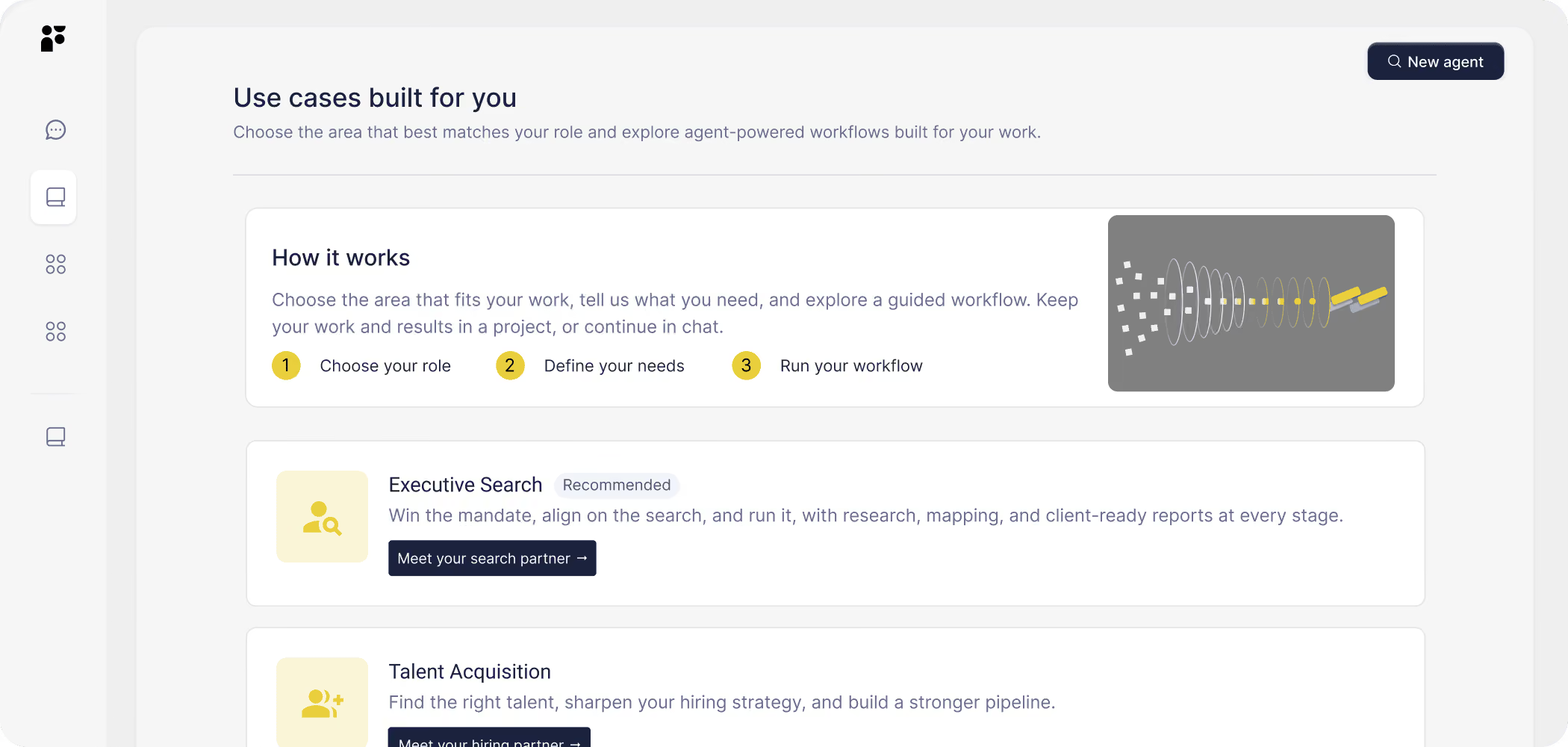
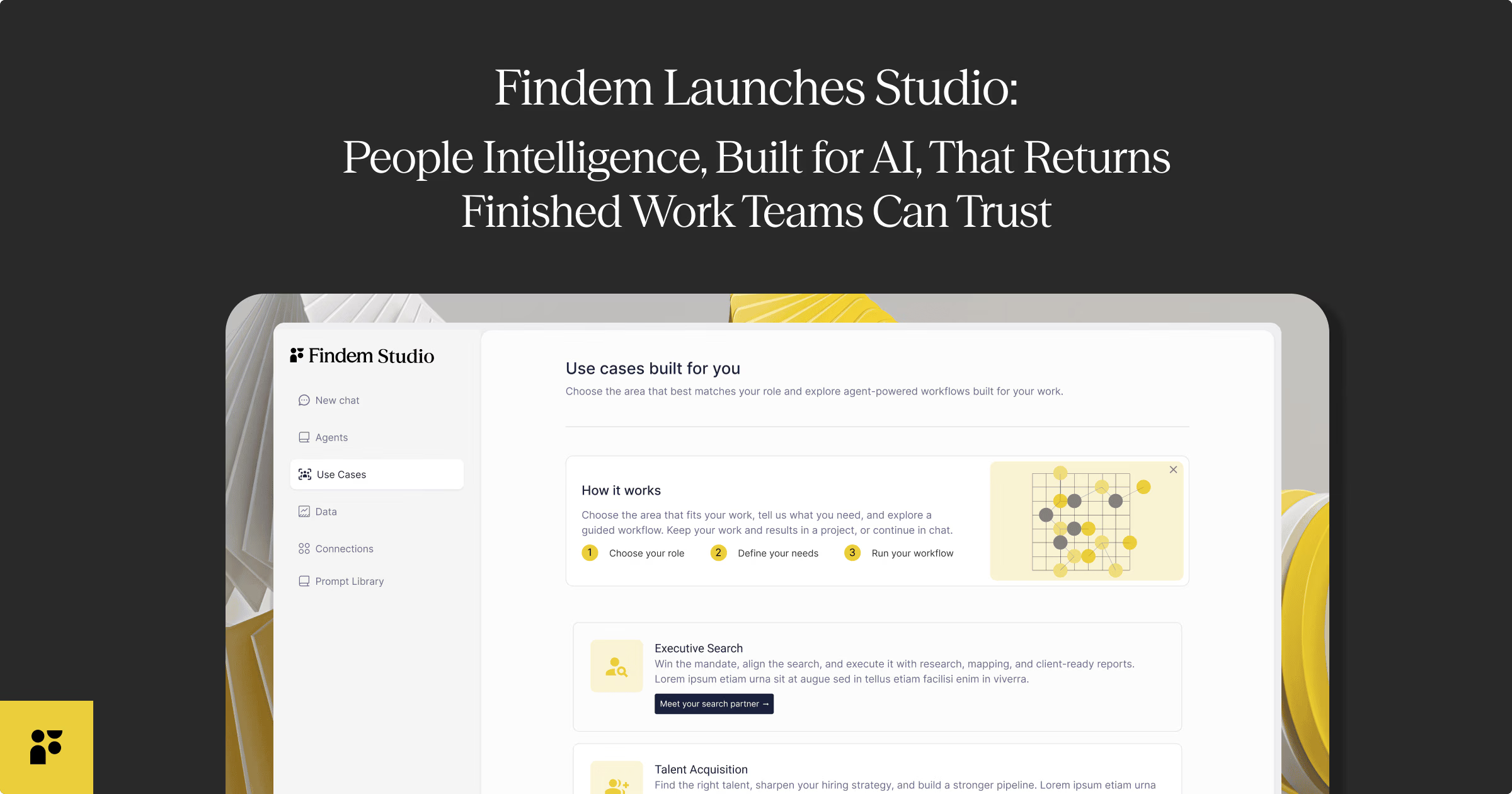
Findem Studio's Agents help small recruiting teams move from role intake to a shortlist without a dedicated sourcing pod. The workflow separates intake, calibration, sourcing, and recruiter review so the criteria remain visible throughout the process.
Findem is a People Intelligence Platform. Its 3D People Graph combines people data, company data, and time to show what a person's experience means in context. A 3D Profile presents fuller talent context than a flat resume by connecting those dimensions.
The exact steps
- Intake: Start with the role description and the hiring manager conversation. Capture the business need, expected work, required experience, acceptable adjacent backgrounds, location constraints, and other role-specific requirements. The recruiter also records which points need clarification before sourcing begins.
- Calibration: Translate the discussion into must-haves, nice-to-haves, and signals. Must-haves define requirements that the shortlist cannot ignore. Nice-to-haves help distinguish strong matches. Signals describe evidence in a person's career history that could indicate fit. The recruiter and hiring manager review these criteria before approving the search.
- Search: The Candidate Sourcing Agent searches the calibrated criteria across more than 800 million people aggregated from over 100,000 sources. It ranks candidates through Success Signals, which are explainable patterns that include career scope, outcomes, and trajectory. The ranking therefore considers the context of a person's experience rather than relying only on keyword overlap.
- Shortlist: The recruiter reviews a ranked list with evidence for each match. That evidence can connect the candidate's experience, company context, career progression, and relevant outcomes to the agreed criteria. The recruiter can identify weak assumptions, reject mismatches, and return to calibration when the list does not reflect the role.
- Hire-readiness pass: The workflow identifies candidates likely receptive and ready to move. This step supports prioritization. The recruiter still decides whom to contact and how to approach them.
- Export or outreach: Approved candidates move into the next recruiting step. Findem integrates with Greenhouse, Lever, Ashby, and other ATS products. The ATS can remain the system of record for reqs, candidate records, approvals, stages, and reporting while Findem supports discovery and prioritization.
Findem doesn't make employment decisions. Agent output is a recommendation a person reviews. The Agent shows its work on the page and doesn't act in bulk without confirmation.
A startup founder quoted on Findem's startup page said sourcing and outreach for a role took about 10 minutes, compared with more than five hours searching LinkedIn manually. That's one founder's account, not a guaranteed completion time.
Nothing in this loop requires a sourcing pod. One person can manage intake, approve the criteria, review the shortlist, and control the next action.
A real shortlist example
A credible shortlist example must connect the original role request to the calibrated criteria and final result. It should also record the hiring manager's assessment rather than treating the ranked list as proof of quality.
The final example should remove candidate names and confidential company information. It should preserve enough detail to show how the criteria changed after calibration, what evidence appeared in the shortlist, and which decisions remained with the recruiter and hiring manager.
What this does not replace
AI-assisted sourcing still depends on the recruiting practices around it.
It does not manage the hiring manager relationship. A vague intake produces vague criteria, even when the search system can interpret natural language. The recruiter must test assumptions, resolve conflicts, and confirm what the role requires.
It does not guarantee candidate replies. Shortlist quality affects whom the recruiter contacts, but availability, timing, compensation, employer reputation, and outreach quality also influence response.
It does not validate every hiring criterion. Recruiters and hiring managers must review whether a requirement relates to the work and whether the available evidence supports the conclusion being drawn.
It does not make final decisions. Recruiters approve the shortlist and outreach. Hiring teams conduct interviews, assess job-related evidence, document decisions, and choose whom to hire.
It also does not remove the need to monitor the workflow. Talent operations and recruiting owners should review search criteria, candidate evidence, outreach actions, ATS records, and user permissions as part of normal governance.
Getting started
Findem Studio is the access point for these agent-based workflows. Your first agent run is free. Start with one active req that has an available hiring manager and a clear business need.
Use this sequence:
- Select a role that is difficult enough to test calibration quality.
- Complete the intake conversation before starting the search.
- Review every must-have, nice-to-have, and signal with the hiring manager.
- Inspect the evidence behind the first shortlist.
- Refine criteria when the results expose an incorrect assumption.
- Approve candidates individually before outreach or ATS export.
- Record the outcome so the next intake can improve.
For current plans and pricing, see Studio. Confirm contract terms and implementation requirements with Findem before selecting a plan.
To automate sourcing with AI agents, automate the movement from approved criteria to recommendations while keeping human review at the decision points. Intake approval, shortlist approval, outreach, screening judgments, and employment decisions remain with people.
FAQ
Can one person source without a team?
Yes. One person can run the sourcing loop when a clear role conversation becomes reviewable criteria and the system returns an evidence-backed shortlist. The recruiter remains responsible for approving candidates, controlling outreach, and supporting hiring decisions. Hiring manager input and recruiter judgment remain necessary throughout the workflow.
Do I need an enterprise contract?
No. Findem Studio is self-serve, and your first agent run is free. Pricing is shown in Studio. Confirm contract terms and implementation requirements with Findem before committing to a plan.
How is this different from Boolean search in LinkedIn Recruiter?
Boolean search requires the recruiter to translate the role into keywords, operators, and filters. The recruiter then reviews profiles manually and decides whether each result represents the experience the hiring manager described.
Findem begins with role intake and calibration. It searches against agreed criteria and returns a ranked shortlist with evidence behind each match. Its Success Signals consider career scope, outcomes, and trajectory instead of ranking candidates only through keyword overlap.
This approach also makes the search logic easier to review with a hiring manager. The discussion centers on must-haves, nice-to-haves, and evidence of relevant work rather than a long search string.
How long does it take to get a first shortlist?
The time depends on the clarity of the role, the availability of the hiring manager, and how much calibration the initial request needs. A recruiter can start the search after the criteria receive human review. Treat the first shortlist as a calibration checkpoint, especially for a first-of-kind role, rather than assuming that the first output is final.
Does it integrate with my ATS?
Yes. Findem integrates with Greenhouse, Lever, Ashby, and other ATS products. The ATS can continue to hold reqs, candidate records, workflow stages, approvals, and reporting while Findem supports sourcing and prioritization.
What company size is this for?
This workflow is designed for talent teams at companies with fewer than 300 employees that need more sourcing capacity without adding a sourcing pod. Company size alone does not determine fit. Hiring volume, role complexity, existing systems, budget, and internal approval requirements should also guide the decision.
What data sources does it search?
The Candidate Sourcing Agent searches Findem's 3D People Graph: more than 800 million people aggregated from over 100,000 sources. It ranks candidates with Success Signals, including career scope, outcomes, and trajectory, rather than relying only on keyword matching.
How is candidate data handled compliantly?
Start with Findem's Trust Center, then request current documentation covering candidate data sources, retention, deletion, access controls, security practices, regional processing, and support for applicable privacy obligations.
Legal, privacy, and security owners should review that evidence against the company's locations, candidate population, and intended workflow.
Profile enrichment and data-quality controls do not establish legal compliance by themselves. Direct unresolved privacy, security, and data-governance questions to Findem before connecting an ATS or processing candidate data.