


.svg)
Findem vs hireEZ vs SeekOut for teams under 300 people

October 14, 2026

A recruiter reviews another weak shortlist while open reqs continue to rise. The sourcing tool returned plenty of profiles, but the hiring manager has changed the brief twice, and no one has time to rebuild the search.
For companies with fewer than 300 employees, that operational gap matters more than the size of a candidate database. Heads of Talent, TA leads, and recruiters need to know who defines the role, who sources candidates, how the shortlist improves, and how much human review the process requires.
This comparison covers where Findem Studio, hireEZ, and SeekOut each fit, including the situations where hireEZ or SeekOut is the better buy.
Findem Studio is the self-serve workspace of Findem, the People Intelligence Platform, where agents return finished, evidence-backed work. hireEZ fits teams whose gap is outbound volume. SeekOut fits teams hiring into specialist populations. Studio fits small teams that need the role defined and the first-pass work done.
Why we wrote this
Most comparisons of these products come from companies that sell none of them. Pin publishes a hireEZ versus SeekOut breakdown and a Findem pricing explainer. People Managing People ranks SeekOut competitors, while 100hires lists hireEZ alternatives.
Those pages shape what a small team expects on contracts, seats, pricing, and onboarding before Findem gets a word in. They're useful starting points, but you still need to test each product on live reqs and confirm current terms.
This is Findem's side of it. It explains how Studio works, where the operating model differs, and when another product fits better. For hireEZ and SeekOut pricing and contract terms, confirm directly with each vendor. You can also run a live role through Findem Studio and judge the output yourself.
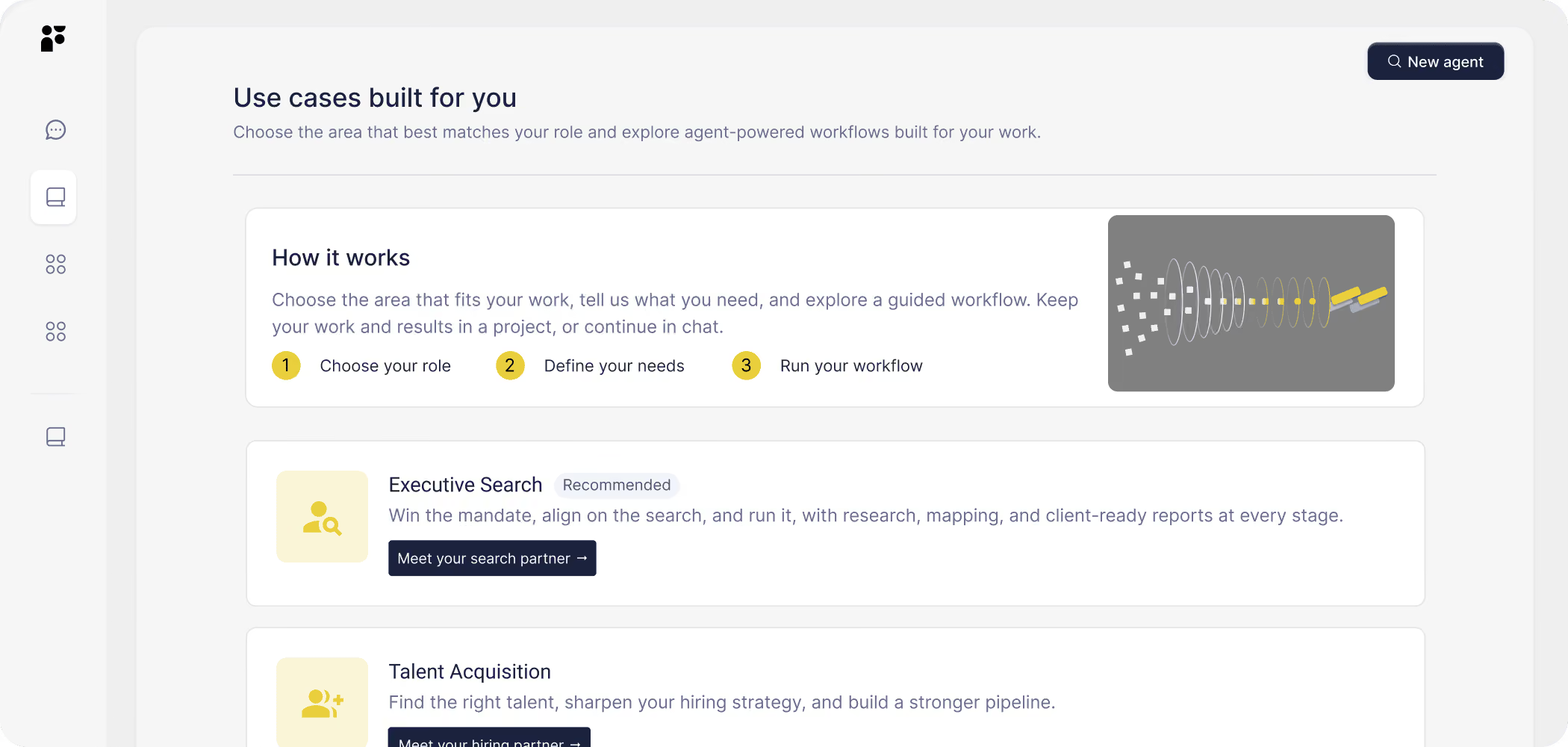
What a team under 300 people gets in Findem Studio
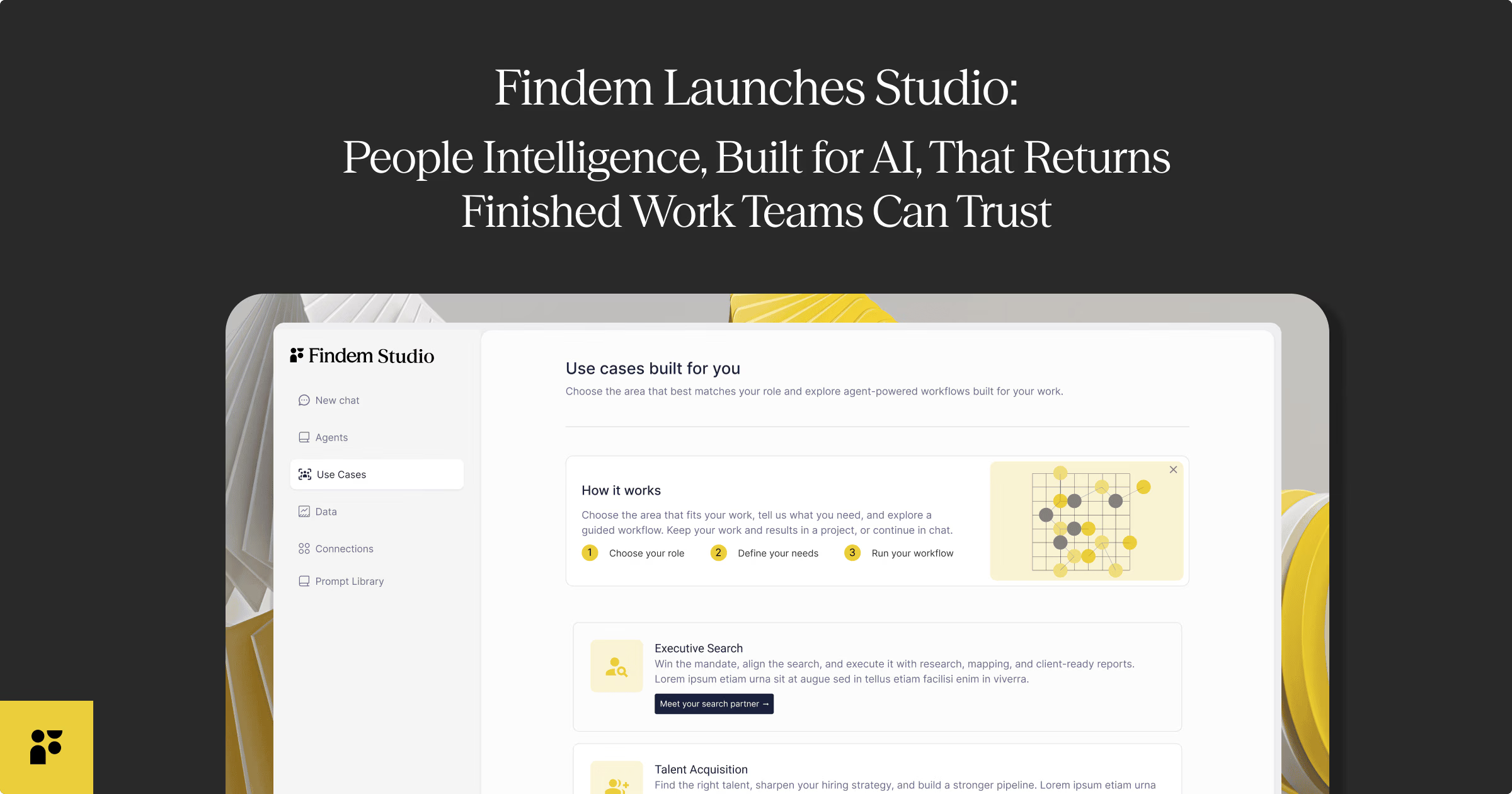
Findem Studio is a people intelligence system, not a chatbot. A user describes a role in plain language and receives finished, evidence-backed work: a ranked shortlist with the reasoning attached.
Studio builds this work from Findem's 3D People Graph, which spans more than 800 million people across 100,000+ sources. A 3D Profile combines people data, company data, and time. That structure helps recruiters understand what a person's experience means rather than treating a resume as a flat set of keywords.
Three named agents matter most when a company lacks a dedicated sourcing function.
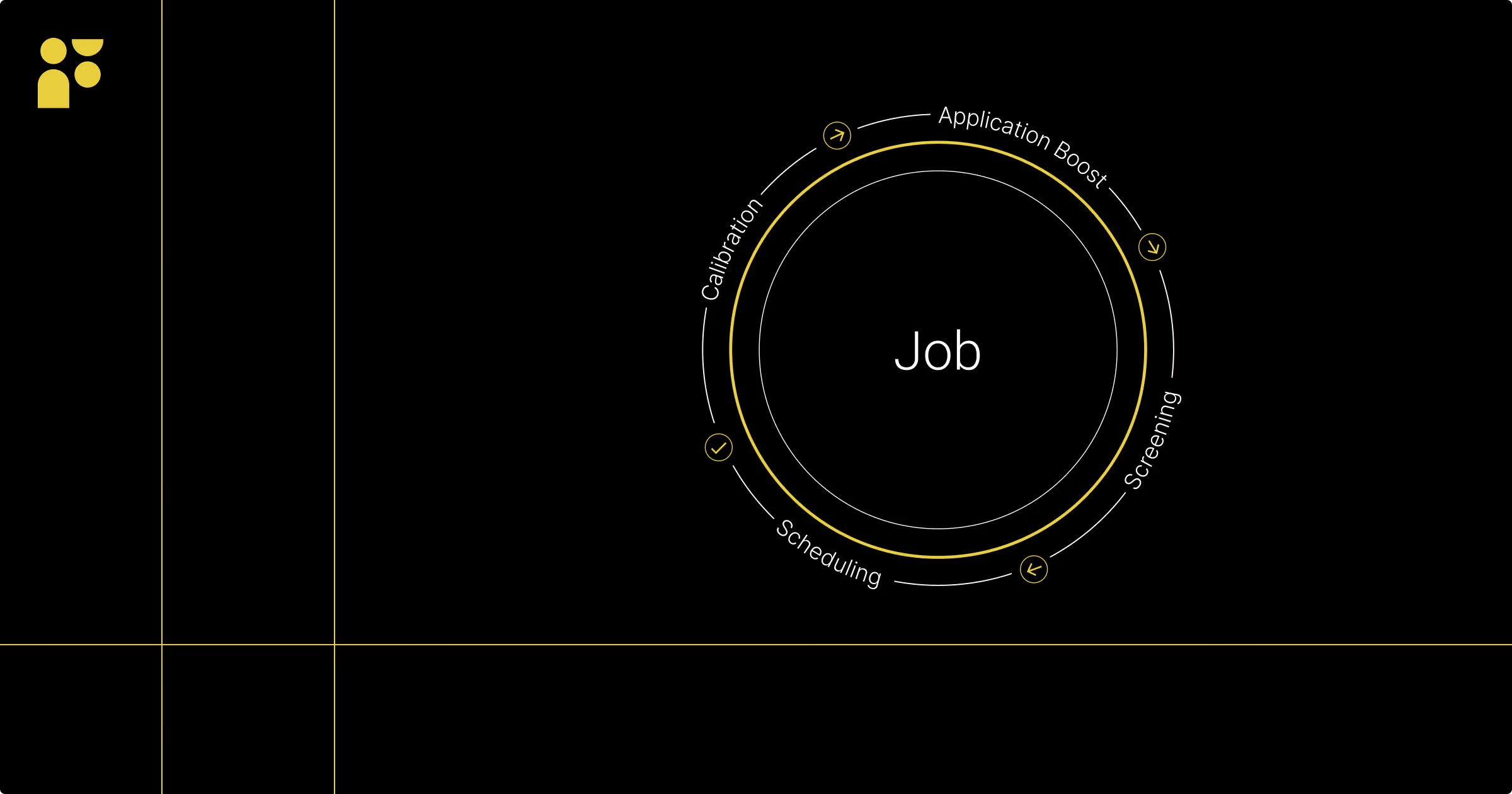
Role Calibration Agent defines the role before sourcing starts
Role Calibration Agent turns a hiring conversation into an agreed, reviewable Findem search. It runs a structured interview with the hiring manager and drafts a weighted scorecard.
The scorecard separates must-haves, trainable criteria, and ranking signals. The hiring manager reviews and approves it before the Agent builds a live Findem search.
The Agent then sizes the matching pool and ranks a five-person calibration sample. The hiring manager reviews that sample before the search is locked.
The resulting project includes:
- A saved Findem search
- Screening questions
- An approved scorecard
- A handshake brief that the sourcing team can use without reinterpreting the role
Small teams compress intake when req volume rises, and they pay for it later: recruiters and hiring managers apply different definitions of a qualified candidate. Calibration sets one definition before sourcing eats the time.
Candidate Sourcing Agent works the approved search in rounds
Candidate Sourcing Agent builds and works a search against the calibrated role. Nobody has to maintain a keyword string by hand.
Every run anchors to a completed Role Calibration scorecard. If the user has not supplied one, Role Calibration Agent runs within the workflow first.
Candidate Sourcing Agent then:
- Sources candidates in rounds
- Refines the search between rounds
- Retains the strongest candidates found across all rounds
- Suppresses candidates previously surfaced for that role by default
- Keeps candidates removed by an owner from reappearing
Its output is a ranked roster spreadsheet tied to the approved scorecard criteria. Studio files that roster in the role's project and shortlists the candidates into its search project.
The recruiter's job changes. They review candidates against an agreed brief instead of rebuilding the query after every hiring manager comment.
Identify Hire-Ready Candidates focuses the next review
Identify Hire-Ready Candidates assesses an existing or newly sourced pool against the role requirements, readiness criteria, and hiring timeline.
It produces a Candidate Slate with Readiness Checkpoints and Validation Gaps. Recruiters can see who appears ready for the next step and what still needs validation. They can then focus their review instead of reassessing every profile from the beginning.
Findem doesn't make employment decisions. Agent output is a recommendation a person reviews. Each Agent shows its work on the page and doesn't act in bulk without confirmation. Scorecard approval, calibration-sample review, and every advancement and hiring decision stay with people.
How this looks different from a standard search tool
A search tool returns matches to the query a recruiter types. Studio starts from a calibrated role and works against an approved scorecard.
The role is the unit of work
The recruiter can trace the ranked roster back to the role definition, and the hiring manager can see which criteria drove each recommendation. Every later step inherits that trail.
It's also the question to settle when choosing between Findem and hireEZ: is the bottleneck executing more outreach, or establishing and applying a shared role definition?
Calibration happens before the search is locked
The hiring manager reviews a five-person calibration sample before the search becomes final, so the team never starts from a raw export it has to filter after the fact.
Expect to disagree with some candidates in that early sample. The disagreement is evidence about the brief. The hiring manager and recruiter recalibrate, tighten the criteria, and review the next pass.
Sourcing continues across several rounds
Candidate Sourcing Agent works in rounds and refines the search between them, keeping the strongest candidates from earlier rounds. It suppresses profiles already surfaced or removed for the role, which cuts repeat review and keeps the roster tied to the latest approved criteria.
If you're weighing Findem against SeekOut on sourcing, this is the workflow difference to test: calibration, iterative sourcing, and ranked output in one role project.
The final output identifies remaining validation work
Identify Hire-Ready Candidates narrows an existing or newly sourced pool into a Candidate Slate. Readiness Checkpoints show how candidates line up with the next step. Validation Gaps show what the recruiter or hiring manager still needs to confirm.
The slate supports recruiter judgment. It doesn't replace interviews, assessments, reference checks, or hiring decisions.
When hireEZ is the better choice
hireEZ is the stronger fit when the main bottleneck is outbound volume and sequence management. This applies when the team already knows which candidate profiles to reach and needs a more efficient way to move them into engagement.
It also fits teams with established sourcing habits built around EZ Agent and ATS rediscovery. Those teams can improve an existing process without changing the role intake and calibration model.
That stack-specific point should carry real weight in the evaluation. If recruiters spend most of their day rediscovering known profiles and managing outreach sequences, test hireEZ against those exact tasks.
When SeekOut is the better choice
SeekOut is a strong candidate when hiring centers on specialist or hard-to-index populations. Technical and cleared roles can depend on filter-based signals such as GitHub activity, patents, and publications.
If the question is whether SeekOut can find candidates without leaning on LinkedIn, test it on a specialist live req. Check whether it surfaces relevant evidence from those sources and whether recruiters can turn it into a defensible shortlist.
SeekOut also fits teams that need workforce and talent-market analytics for planning conversations beyond current reqs. A central talent intelligence function can use Recruit's talent insights for broader planning questions. Internal mobility sits in a separate product, SeekOut Grow.
For technical hiring, SeekOut deserves close consideration when specialist data and technical filters decide whether a candidate enters the pipeline at all.
When Findem is the better choice
Findem fits teams with fewer recruiters than open roles, especially when sourcing and first-pass screening must continue without a dedicated sourcer.
It also fits organizations where hiring managers keep changing the brief. Role Calibration Agent turns intake into a formal review step, captures the agreed criteria, and tests those criteria through a calibration sample.
Studio's self-serve start means a team can put a live req through it without a procurement cycle, though SeekOut now offers a self-serve start too. The difference to judge is the work itself: the quality of the finished shortlist, the clarity of the reasoning, and the amount of recruiter review required.
Findem is the better choice when the operating problem spans role definition, candidate sourcing, and shortlist review. The decision should still rest on the team's own reqs rather than a feature checklist.
How to run a fair evaluation in just a few weeks
- Choose two live reqs. Use one role the team has filled before and one it has struggled to fill. The familiar req tests accuracy because the team already recognizes a strong candidate. The hard req tests reach.
- Run intake and calibration properly. Complete this step for both roles in every product that supports it. Give each tool the same hiring manager input and document any criteria added during the process.
- Compare shortlists rather than candidate counts. Ask how many candidates a recruiter would call. A large result set creates little value when the team still has to identify the credible prospects manually.
- Time the full review loop. Measure recruiter hours per usable shortlist, rather than only time to first result. Include query work, duplicate review, hiring manager feedback, and shortlist revision.
- Reject one shortlist deliberately. Explain why the candidates missed the mark and observe how each product handles the correction. Assess whether the next output improves, whether removed candidates return, and how much work the recruiter must repeat.
Keep the evidence at the req level. The useful comparison is the amount of recruiter work required to produce a shortlist that a hiring manager accepts.
Start with one role
Run a single req through Findem Studio before starting a broader buying process. Start with intake and scorecard approval, review the calibration sample, and let Candidate Sourcing Agent build the shortlist.
The first req gives the team concrete evidence about role calibration, candidate quality, review time, and required human judgment. It also reveals whether the hiring manager can explain disagreements in terms that improve the next pass.
FAQ
Is Findem built for small teams, or is Studio a reduced version of an enterprise product?
Studio is the self-serve environment where Role Calibration Agent, Candidate Sourcing Agent, Identify Hire-Ready Candidates, and Findem's other agents run. It runs the full role workflow, from intake through shortlist.
For plan, seat, and team-size details: https://studio.findem.ai/pricing
What does Findem cost for a team under 300 people?
Pay as you go has no subscription. Each new Studio account receives 1,250 starter credits, a $50 value, once at signup in its Personal wallet. Further top-ups have a $100 minimum and come in $100 increments. A $100 payment buys $100 of agent work.
For ongoing work, Studio costs $249 per seat per month when billed monthly and includes 6,250 credits each month. The annual plan costs $2,999 per seat and includes 75,000 credits per year plus discounted agent pricing.
Studio + Platform costs $599 per seat per month and includes 6,250 monthly credits. It is sales-led, and Findem sets the final scope with the team.
Agent work is credit-metered. Each Agent displays its credit cost before it runs, so total cost depends on the work requested as well as the seat fee.
Is there a seat minimum or an annual contract?
Findem states no seat minimum for Studio, which is priced per seat. Customers can choose monthly or annual billing, and Findem states no multi-year lock-in for self-serve Studio.
Studio + Platform requires a sales conversation because the team sets its scope with Findem.
Do I need a sourcer on staff to get value from Findem Studio agents?
No. Role Calibration Agent, Candidate Sourcing Agent, and Identify Hire-Ready Candidates support teams without a dedicated sourcing function.
A person still approves the scorecard, reviews the calibration sample and shortlists, and makes every advancement and hiring decision.
How is this different from running a good Boolean search in hireEZ or SeekOut?
A Boolean search returns candidates who match the query. Its quality depends on the terms and logic that the recruiter creates and maintains.
Findem Studio works from a calibrated role definition and approved scorecard. Role Calibration Agent creates and validates the search before the team locks it. Candidate Sourcing Agent then works that search in rounds and returns a ranked roster tied to the approved criteria.
Can I use Findem alongside hireEZ or SeekOut?
Yes. Teams can run more than one product, especially where one covers specialist search and another supports role calibration or candidate review.
Does it work with my ATS?
Findem integrates with ATSs including Greenhouse, Lever, and Ashby. It sits on top of your ATS and doesn't replace it.
How long before I see candidates on a live role?
We'd rather point to the results from your first req than quote an average that ignores role difficulty, calibration, and review time.
Where do the candidate profiles come from?
Findem's 3D People Graph combines people data, company data, and time across more than 100,000 sources. This structured context gives recruiters a fuller view than a flat resume.
What happens if the shortlist is wrong?
The recruiter rejects the shortlist and recalibrates the role. This can happen on the first pass for a new role type, particularly when the hiring team has not yet made its preferences explicit.
The correction tightens the role definition. The next sourcing pass works against the revised, approved criteria instead of repeating the original search.