

What is a structured interview?
A structured interview is a job interview in which every candidate for a role answers the same job-related questions in the same order and is rated on a common scale. Interviewers agree on what good answers look like before interviews begin and usually record ratings on an interview scorecard, so candidates can be compared on the same evidence.
How a structured interview works
The US Office of Personnel Management's guide, Structured Interviews: A Practical Guide, sets out the difference between the two kinds of interview. In a structured interview, all candidates are asked the same questions in the same order, everyone is evaluated on a common rating scale, and interviewers agree on acceptable answers. In an unstructured interview, candidates may get different questions, no standard rating scale is required, and interviewers don't need to agree on what a good answer is.
Building one starts with the job. OPM's guide begins with a job analysis that identifies the tasks of the role and the competencies needed to perform them, then picks the competencies the interview will assess. It notes that a structured interview typically covers four to six competencies, unless the job is unique or at a high level.
Questions usually take one of two forms:
- Behavioral questions: Ask about what the candidate actually did in a past situation, on the premise that past behavior under similar circumstances predicts future behavior.
- Situational questions: Give the candidate a realistic job scenario and ask how they would handle it.
OPM's guide then covers rating scales with example answers for each level, planned follow-up probes, a pilot test of the questions, an interviewer's guide, and documentation of how the interview was built.
An interview scorecard is where that structure becomes a record. It lists the competencies being assessed, the rating scale for each, and space for the evidence behind each rating, and OPM's guide includes sample individual and group rating forms for this purpose. Having each interviewer submit scores before the group discusses a candidate keeps one strong opinion from setting the result.
Why structured interviews matter for talent teams
- They predict performance better than most methods: A 2022 reanalysis of personnel selection research by Sackett, Zhang, Berry, and Lievens in the Journal of Applied Psychology (vol. 107, no. 11) found that earlier studies had overestimated the validity of many selection procedures, and structured interviews emerged as the top-ranked procedure.
- They hold up better under review: OPM's guide says structured interviews have demonstrated a high degree of reliability, validity, and legal defensibility, while unstructured interviews have little value in predicting job performance. OPM's assessment FAQ adds that well-designed structured interviews predict performance with relatively low adverse impact compared with other assessment tools.
- Structure can be added in steps: A review by Campion, Palmer, and Campion in Personnel Psychology (vol. 50, no. 3) identified 15 components of structure that improve either the content of the interview or how answers are evaluated.
- The results feed quality of hire: Findem's guide to measuring quality of hire lists structured interview results alongside assessment scores as early signals of hiring quality.
How Findem approaches structured interviews
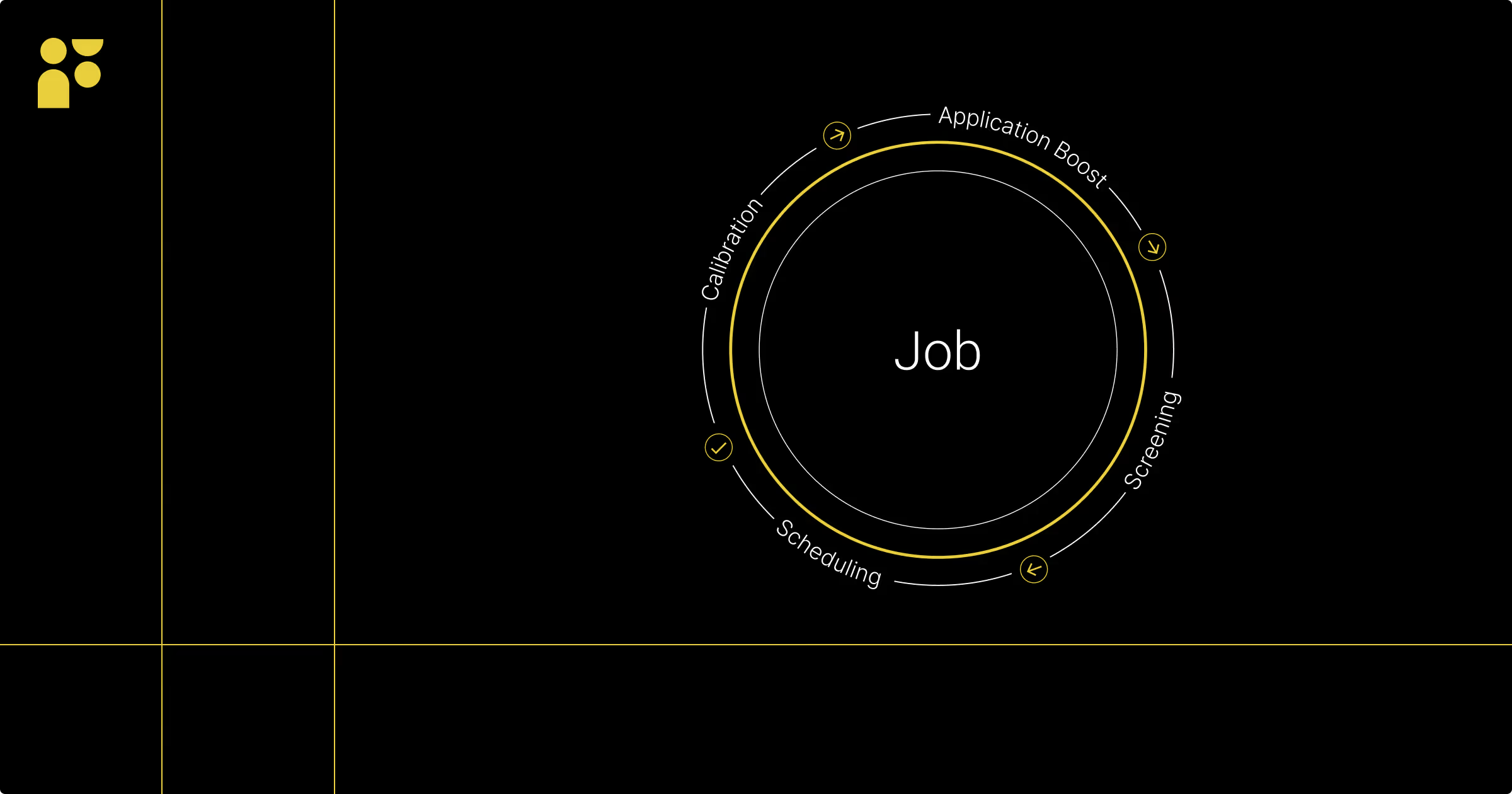
Structure starts before the first interview. In Findem's Intelligent Job Post, a guided intake captures what a job description leaves out, such as must-haves, nice-to-haves, and screening criteria, and turns it into a scorecard. Findem previews real, vetted candidates so the team can confirm or adjust the bar before the search starts. Each candidate then arrives with a candidate presentation that shows how they measure up against each must-have skill, and the team makes the call on who advances.
Findem's assessments give hiring teams a structured way to evaluate what doesn't show up in a coding test, through behavioral, cognitive, and role-based assessments developed with input from psychologists and data scientists. Findem's guide to hiring without a recruiter applies the same idea to small teams, with a role scorecard written before the job post and the same phone screen questions, in the same order, for every candidate.
Further reading
Sources
- Structured Interviews: A Practical GuideUS Office of Personnel Management, September 2008
- Should agencies use structured interviews in the employee selection process?US Office of Personnel Management, assessment policy FAQ
- Sackett, Zhang, Berry, and Lievens, Revisiting meta-analytic estimates of validity in personnel selectionJournal of Applied Psychology, vol. 107, no. 11, 2022
- Campion, Palmer, and Campion, A review of structure in the selection interviewPersonnel Psychology, vol. 50, no. 3, 1997
- Intelligent Job Post
- Findem assessments
- Measuring quality of hire
- How to hire without a recruiter or an ATS