



.svg)
Your network is your firm's edge. Findem Studio turns it into warm intro paths.

October 2, 2026

Almost every investment firm has the same routine. A partner wants a way into a company, a portfolio founder needs a VP of Sales, or an LP meeting is coming up. Someone asks in the team chat whether anyone knows the person. A few people check LinkedIn. Someone thinks they overlapped with the CFO years ago but can't say whether that still counts. A couple of days later, maybe, there's an intro.
Venture and private equity are people businesses, and much of a firm's edge is access. The network behind that access, though, sits in partners' heads, personal inboxes and phones. The firm owns the reputation but rarely owns the map. And even when a map exists, someone still has to dig through it by hand to use it.
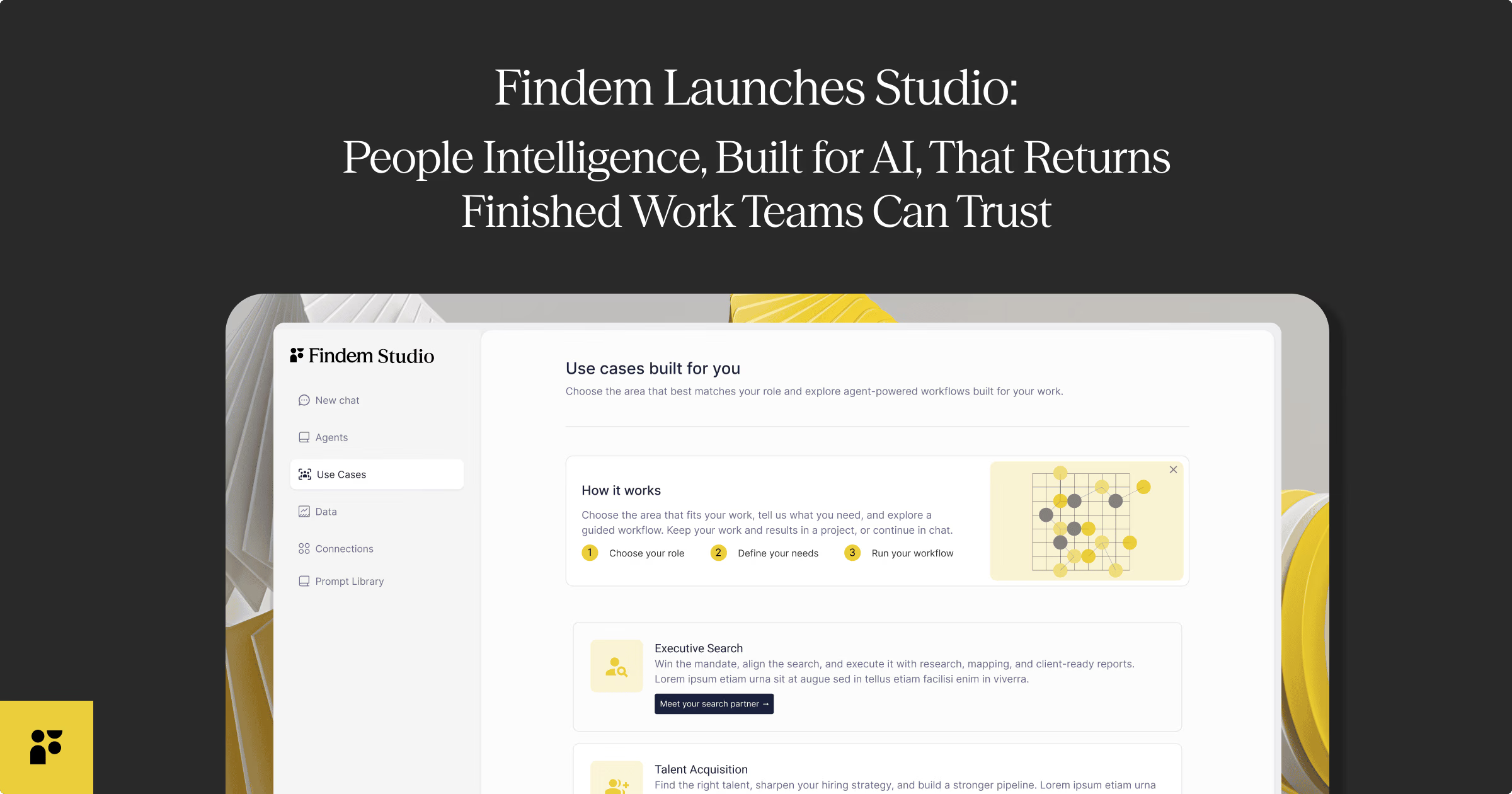
Relationship intelligence solves the first problem: knowing who the firm knows. Findem Studio and the Findem MCP solve the second: turning that knowledge into finished work. That might be a ranked set of intro paths into a target list, a weekly brief on the job moves that matter, or a talent slate that shows the warm route to each candidate.
Why relationship data alone doesn't get the intro made
Relationship intelligence is a structured record of who your firm knows and how well. Relationships show up in three ways:
- Inferred: two people worked at the same company, went to the same school or sat on the same board.
- Declared: they're connected on LinkedIn, or one of them says they know the other.
- Observed: there's real email or calendar history between them.
Each carries a different level of confidence, and none of them is complete. People won't share every private channel. Messaging apps in particular stay off limits, because people keep those contacts separate for a reason.
Strength scores are educated guesses. And the map decays on its own, since people change jobs all the time. A one-time export of everyone's LinkedIn connections into a spreadsheet starts going stale the week it's made.
Then comes the part most tools skip. Connecting an AI assistant to a contact list is easy now; nearly every vendor offers some kind of access. What comes back, though, is raw material: a list of mutual connections, with no sense of which ones matter or why, and no view on whether this is the right moment to ask. A partner still has to do the real work, and an open chat box that can answer anything often leaves people unsure what to ask in the first place.
What Studio adds on top of the map
Studio is built for AI to do the work, and that changes what has to come with it. Three things make the output something a partner can trust.
The first is the right intelligence before the work starts. Findem's 3D People Graph adds context about companies and time to each connection. Two people who were at the same 40-person startup, in the same office, in the same years, almost certainly know each other. Two people who spent a decade at a global tech company in different offices probably don't. That context lets inferred relationships count as real paths rather than guesses.
Your firm's own declared and observed connections sit alongside them. Through Getro, reach extends across 850+ private, permissioned networks, so your portfolio companies' and partners' relationships become paths too.
The second is the right method while the work runs. Your firm has rules, even if nobody has written them down: how much weight recency gets, when a loose connection is enough for an intro and when a confidential reference needs someone who knows the person well, and who shouldn't be asked twice in a quarter. Studio lets you encode those rules once. Every partner then works from the same method, and each can still use the output in their own way.
The third is the right checks before anyone acts. Every recommended path shows its evidence: the connection type, the overlap, the dates, when the two people last spoke. The agent drafts the ask, and a person decides whether to send it. Findem finds and explains the path. The call belongs to the person who owns the relationship.
Three ways to put it to work
You can run a pre-built agent. The Company & Talent Intelligence Brief, Single-Company Executive Mapping, Executive Leadership Changes and Candidate Sourcing agents each return a finished artifact rather than a list you still have to work through.
You can build your own agent. Encode your firm's sourcing rules, ask rules and cooldown periods into a workflow that runs on Findem intelligence and verification.
You can also build anywhere through the Findem MCP. Use Findem inside Claude or inside the tools your data team already runs.
Workflows worth building first
Warm paths into a target list
Start with a list of companies: a partner's thesis list, a portfolio company's target accounts, or a founder's wish list from a pitch meeting. The workflow maps who in your firm and wider network connects into each company. It ranks those paths by strength, recency and purpose.
What comes back is a brief for each company with the best few paths, the evidence behind each one and a draft ask addressed to the person who holds the relationship.
It also works as a pitch tool. When a founder names their top target accounts, being able to send back real paths into most of them the same day tells them more about your network than any slide.
The monthly network ask
Once a month, each relationship holder who has opted in gets one short email with a handful of intro requests matched to who they know. That group can include portfolio founders, executives, advisors and LPs. They reply with the intros they can make. The agent logs the responses, rotates the targets and enforces cooldown periods and a suppression list, so no one gets asked too often. The firm gets intros at scale without wearing out anyone's goodwill.
A weekly job-move brief
Studio tracks movement across your network contacts and target companies, then sends the moves worth acting on:
- A buyer at one of your portfolio company's customers moves to a new company.
- A technical leader you rated highly leaves and goes quiet.
- A target company hires someone a partner worked with.
Each item shows who at the firm knows the person, how well, when they last spoke and a suggested reason to reach out. For public companies, pair it with the Executive Leadership Changes agent to track formal appointments and departures.
Portfolio executive search with warm routes
When a portfolio company needs a CRO, the platform team runs Hiring Manager Intake with the founder to agree on the role. Candidate Sourcing then builds the slate. Finally, the workflow maps a warm path to each candidate. The finished artifact is a slate in which every candidate comes with evidence of fit and the best person to make the introduction. There's no spreadsheet to assemble and no week of LinkedIn searches.
Round mapping for a competitive deal
To get into a hot round, the workflow finds who invested in the company's earlier rounds. It separates the partners who led or took a board seat from everyone else at those funds, then maps your firm's relationships to each of them. That leaves a short list of people who can actually vouch for you, in place of a long list of names at the same funds.
Network proof for LPs
For a fundraise, the workflow builds a report on your relationship coverage in your target sectors. It pairs that coverage with outcomes: intros that led to placements, and introductions that brought deals into the pipeline. In the meeting itself, an LP can name any company and Studio returns your paths into it on the spot.
Lists to keep live
The workflows above rely on a small set of lists that update as your network data changes:
- Relationship holders: partners, portfolio founders and executives, advisors, LPs, alumni and co-investors, tagged by relationship type.
- Target accounts with paths: thesis companies and your portfolio customers' target accounts, each showing its current best path.
- A job-move watch list: executives, operators and technical leaders you want to hear about the moment they change roles.
- A co-investor map: the funds you invest alongside, and the specific partners who lead rounds with you.
- Portfolio talent pools: operators you'd place again and strong runners-up from past searches.
- An ask log: who was asked for what, when, and what came of it.
The ask log gets the least attention, and it protects your most valuable relationships. If your last ten interactions with someone were all requests, the log shows it, and you can give them something useful before you ask again.
What stays human
Studio finds the path, explains it, drafts the ask and flags the moment to act. The person who holds the relationship decides whether to ask, what to say and whether the relationship can take the request. A top-ranked path is still only a recommendation until that person agrees to use it. And the common-sense test still applies: would you be glad to get this request yourself?
Start with two workflows: warm paths into a target list, and the weekly job-move brief. Those two alone move the firm from asking who knows someone to getting paths and prompts before anyone asks. When an LP asks what your edge is, you can show them live.
Your first agent run is free at studio.findem.ai.