

.svg)
Everyone's more productive with AI. So why isn't it showing up where it matters?

September 30, 2026

On a recent episode of Truth Works, host Jessica Neal named a challenge so many talent leaders face today. Teams say they're more productive with AI. Leaders believe them. And yet, they still can't point to where that productivity shows up: not in product output, not in revenue, not anywhere a CFO would call proof.
That gap is the real subject of the episode, even though we covered a lot of ground: our sponsorship announcement, two guests' career paths, and a walkthrough of Findem Studio. Strip away the podcast format and one argument sits underneath it: most AI adoption right now produces activity, not outcomes, and the reason is structural.
Most AI initiatives start in the wrong place
Shane Driggers, who spent years as Chief Talent Officer at T-Mobile before moving into advisory work, put the failure mode plainly:
"Oftentimes what I've experienced in the companies I've worked for is that tech wags the tail of strategy. There's this cool piece of tech, and it's, how are we going to use it, instead of: we have this problem, we built the strategy, what do we need to enable it. Anytime you start in that place, you're on a fool's errand, because you're going to drift so far from where you want to land, and then you'll declare that it didn't work."
Nate Sokolic, who joined Findem after leading AI strategy at Russell Reynolds, framed the same problem from the vendor side. Traditional software sells access and the hope of ROI: a tool, a workflow, and a bet that your team learns it well enough to extract value. That bet has a ceiling. Change management at scale is slow, uneven, and hard to attribute.
People can report feeling more productive while the business sees nothing, because "more productive" was never the metric that mattered. Defensible outcomes were.
What actually makes AI work defensible
The clearest example in the episode is a CFO search. Building a market map for that kind of role used to take weeks: pulling data from scattered sources, cross-referencing it by hand, assembling something a hiring manager could act on. Done in Findem Studio, the same work takes minutes to hours. But Sokolic put the weight on what happens after the speed:
"It's not just going to give you the output on our data. It's going to show all the work. It's going to give you the dossier."
That distinction, between an answer and a defensible answer, is the whole argument. Driggers extended it to what happens next inside the organization: the recruiter isn't presenting a spreadsheet they hope holds up. They're bringing something they can stand behind in front of the C-suite.
"Now you have something you can go back and have a conversation with the CEO to say, here's what we found, here's the data, do we trust the data, let's debate the things we have questions about. That creates a launch pad that's so different from: I did some Google searching, put it in a spreadsheet, and that took four and a half hours of my time."
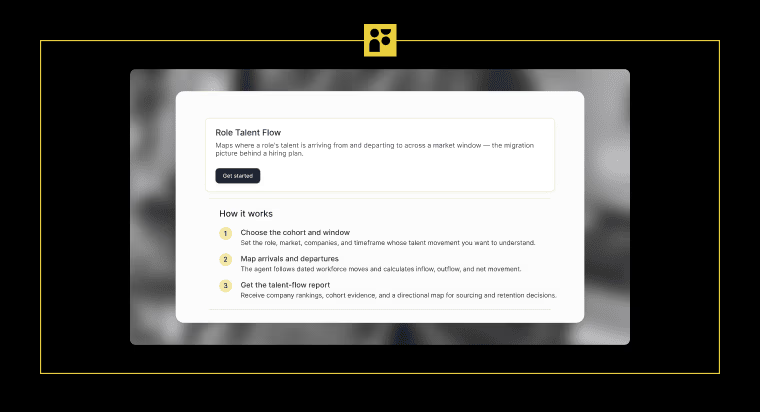
Driggers isn't a Findem employee. He's the practitioner whose methodology sits behind our Role Talent Flow agent, which maps where a role's talent is arriving from and departing to, and that's a meaningfully different kind of endorsement than a testimonial.
The methodology behind that agent has a name and a track record attached to it, where a model alone would be guessing at how the work should be done. (The agent still returns a recommendation. A person still makes the call.)
An assistant answers questions. A delivery system finishes the job
The shift Sokolic describes, from SaaS to agents, tracks a distinction most people building software already understand. An engineer asking an AI for code feedback is doing roughly what AI connected through the Model Context Protocol (MCP) has been able to do since 2025: giving a model access to context and getting an answer back.
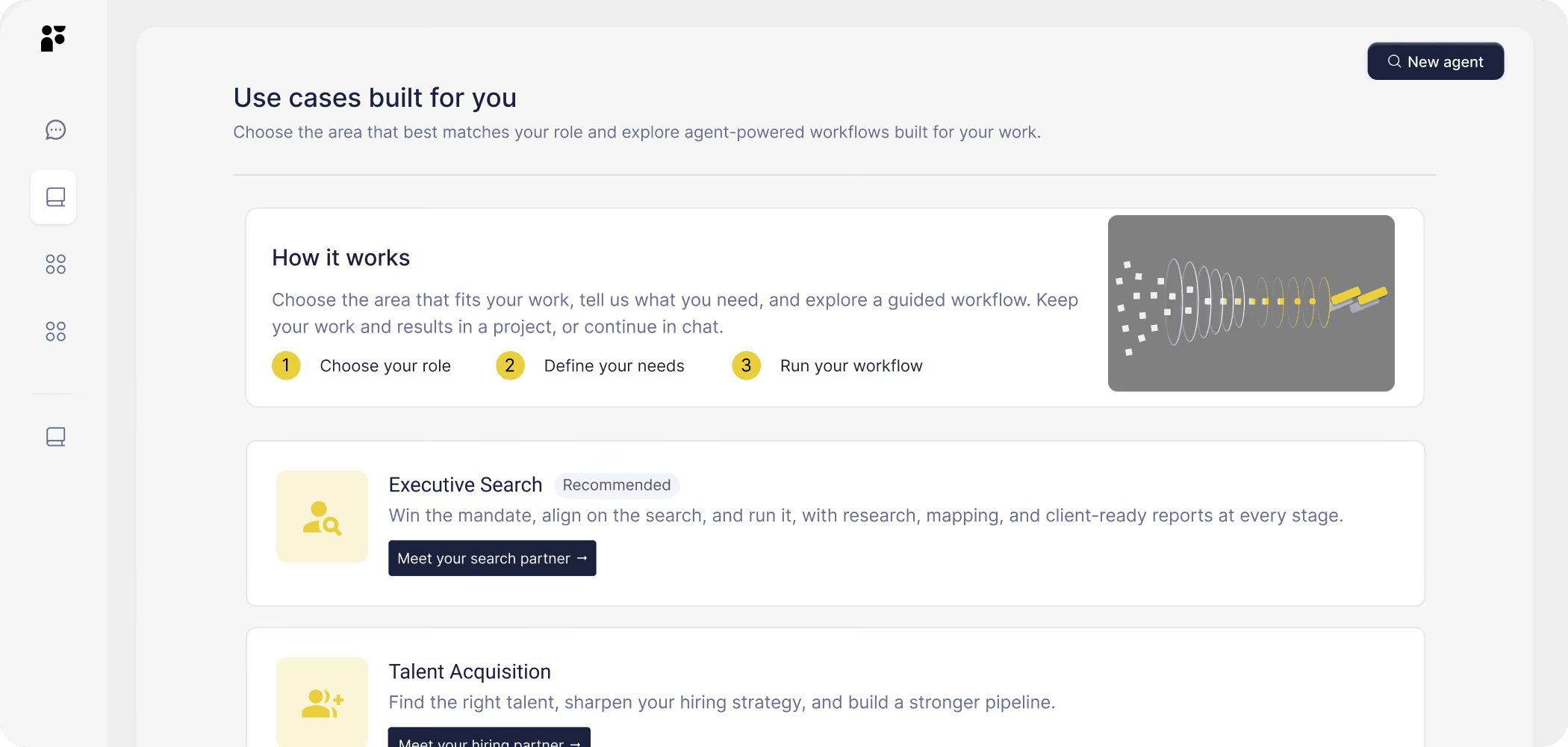
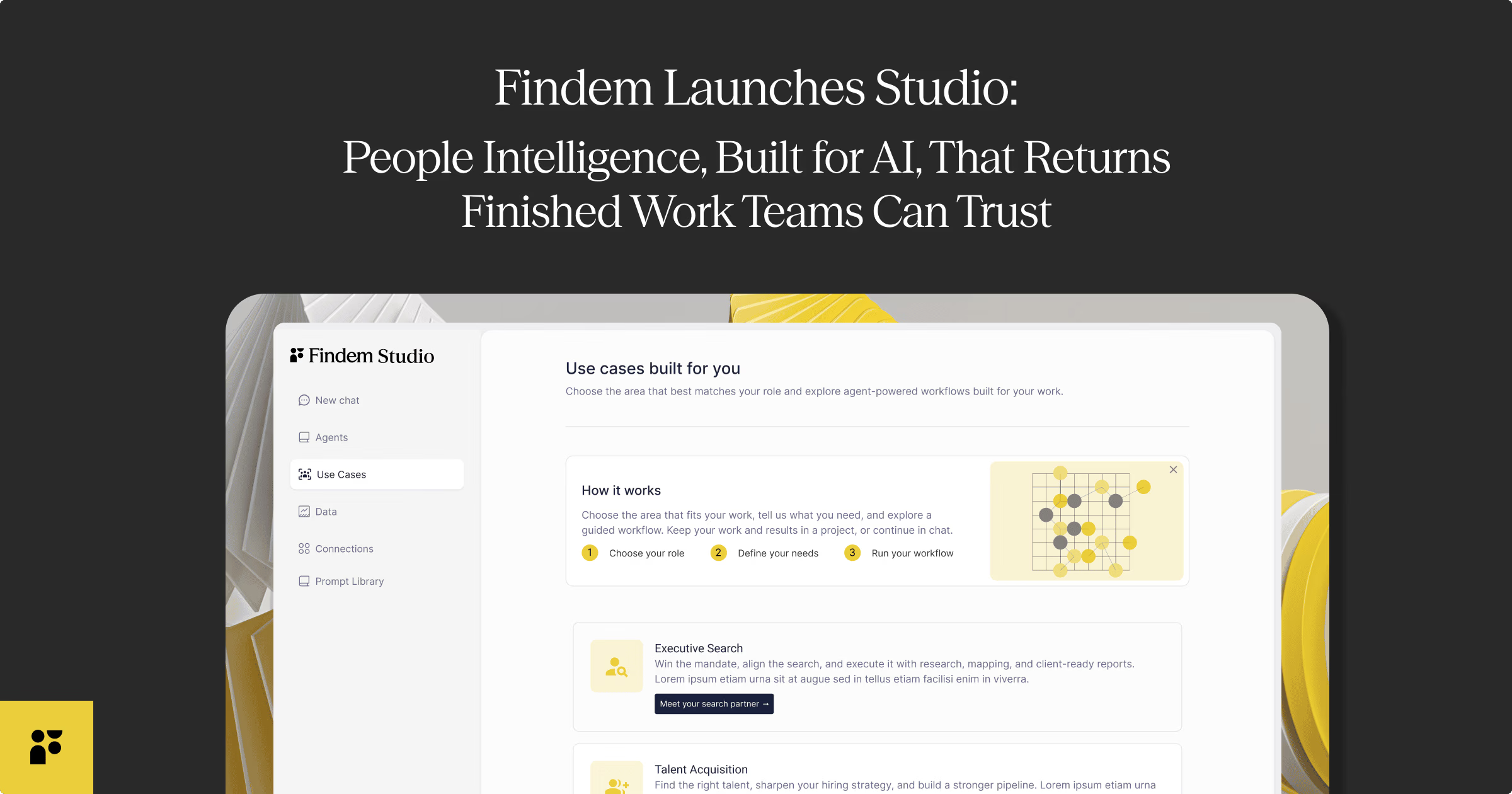
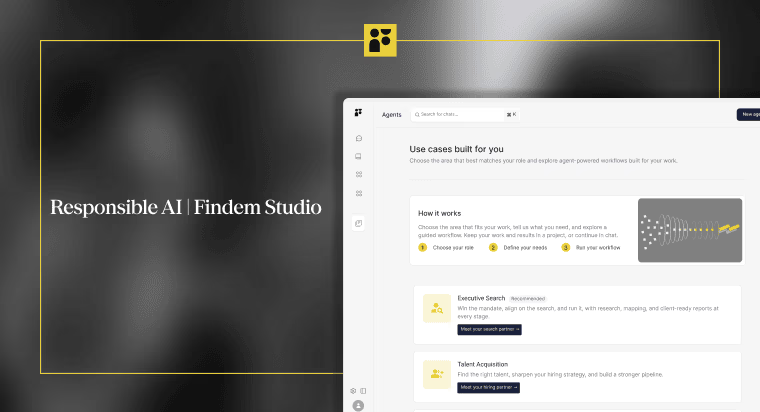
An engineer asking for working code they can ship is doing something else. Findem Studio, which we took to general availability on September 22, is built for the second kind of request. Findem Studio is people intelligence, built for AI.
Ask Studio for a succession plan, a market map, a benchmark, or an intake, and it returns the finished artifact, not a list you still have to process. Every vendor opened an MCP last year, so access alone stopped being a differentiator a while ago.
What makes finished work possible is the combination of our labeled, structured intelligence, a defined methodology behind the work rather than one the model invented on the spot, and a verification pass before the output ever reaches a person.
Run a pre-built agent, build a custom one on your own methodology, or reach the same intelligence headlessly through MCP inside whatever you're already building. The structure is the same either way.
The actual question to ask
Neal's opening frustration, that reported productivity and real outcomes don't line up, is a signal that most AI work being produced right now can't survive the question "how do you know?" A board asks that question. So does a client. The CFO in that market map example was, implicitly, always going to ask it.
The useful reframe: what work do we need to defend, and can we show where it came from if someone asks? We built Findem Studio around that question. Learn more at studio.findem.ai.

%20Paikeday.avif)