


What is headcount planning?
Headcount planning is the process of deciding how many people an organization needs, in which roles, teams, and locations, and when, within an approved budget. It turns business plans and financial forecasts into targets for new hires, backfills, and reductions, and it is usually shared between finance, HR, and the business leaders who own the work.
How headcount planning works
Headcount planning is the numbers and budget side of workforce planning. OPM's Workforce Planning Guide describes workforce planning as a systematic and continuous process for identifying the size and composition of a workforce needed to achieve an organization's goals, carried out in coordination with Chief Human Capital Officers, Chief Financial Officers, and other stakeholders. Headcount planning concentrates on size: how many positions, where, at what cost, and on what timeline.
A headcount plan usually draws on four inputs:
- Current workforce: Filled positions, open requisitions, and contractors by team and location.
- Expected departures: Exits that will need backfills. The BLS Job Openings and Labor Turnover Survey splits separations into quits, layoffs and discharges, and other separations such as retirements, a breakdown that is also useful for internal forecasts.
- Business demand: New roles tied to revenue targets, product plans, or expansion.
- Budget: The cost of each position, which finance approves.
Plans often count people in two units. Headcount is the number of people. Full-time equivalent (FTE) measures hours worked. OMB Circular A-11, section 85, defines FTE employment as the total regular straight-time hours worked divided by the compensable hours in the fiscal year, and its pay period method divides by 2,080 hours. Two employees who each work 20 hours a week equal one FTE (Congressional Research Service). ISO 30414:2025, the international standard for human capital reporting, also uses FTE as its unit of workload.
Why headcount planning matters for talent teams
- Recruiting capacity follows the plan: The number and timing of approved roles set how much recruiting work a team takes on, and when.
- Hiring ties to the budget: OPM points to OMB Circular A-11, section 85, which links workforce planning to budgets and requires agency budget submissions to justify the resources behind strategic human capital management.
- Gaps show up early: OPM's guide says effective workforce planning gives organizations a comprehensive picture of staffing level gaps alongside current and future competency gaps.
How Findem approaches headcount planning
Findem does not set budgets or run financial planning, so teams keep their financial planning software for budget decisions. Findem adds evidence about people and talent markets to the plan, and its predictive analytics can inform headcount planning.
Findem's talent workforce planning page makes the case that headcount shows who is there, not who is ready. Two teams can share the same size and titles while holding very different experience, and a headcount comparison makes them look the same. Findem market intelligence shows where talent is concentrated and how it moves over time, so teams can test role feasibility, weigh expansion or relocation, and align hiring plans to real market conditions.
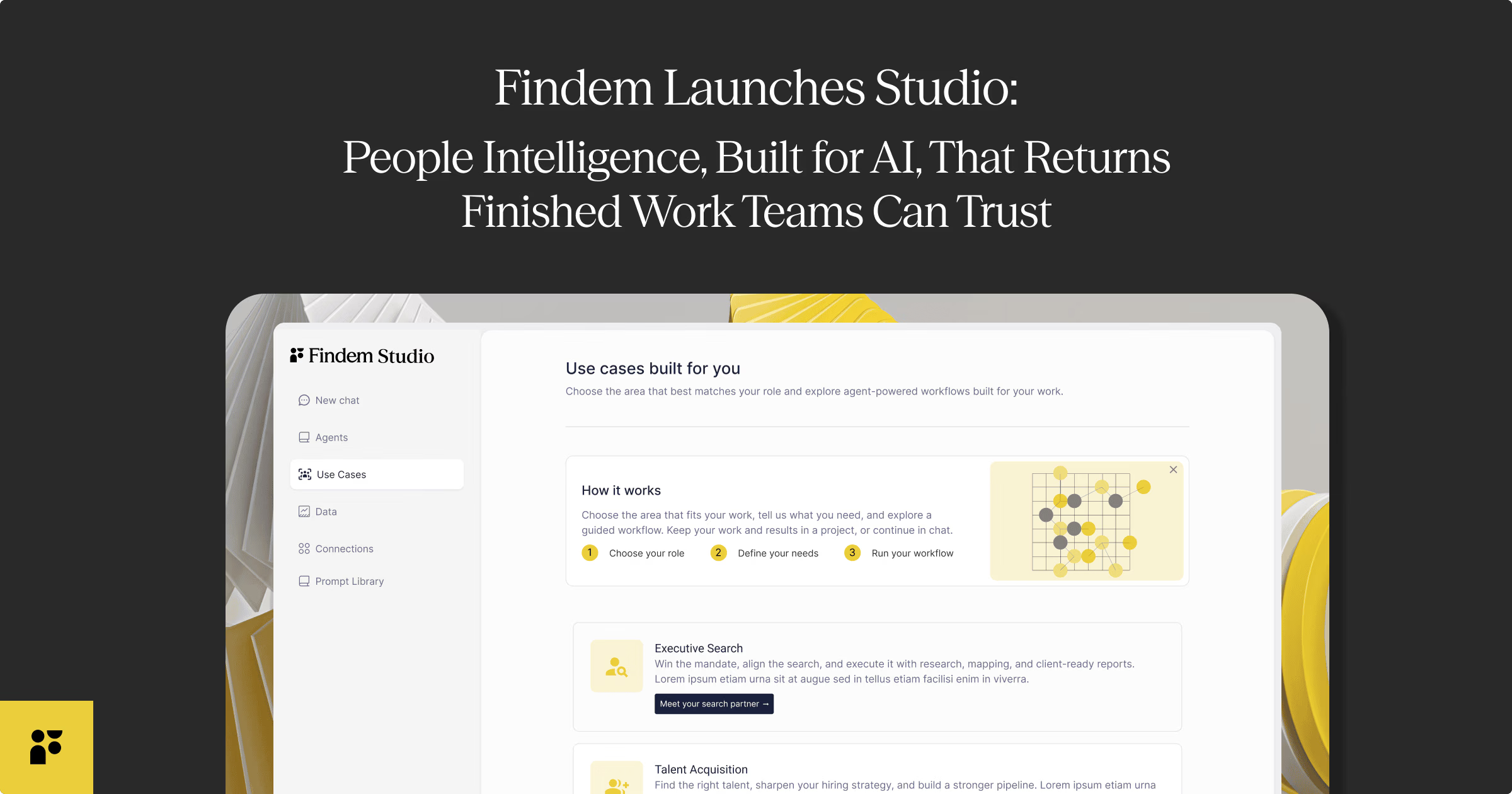
For critical roles, the Succession Planning Agent in Findem Studio scores internal successors and relevant external leaders against the same criteria, so teams can see who is ready, who to develop, and where to recruit. It does not make promotion or hiring decisions.
Further reading
Sources
- Workforce Planning GuideU.S. Office of Personnel Management, November 2022
- OMB Circular A-11, section 85: Estimating employment levels and the employment summaryOffice of Management and Budget, 2025
- Measuring full-time equivalent employment (R43590)Congressional Research Service
- JOLTS data definitionsU.S. Bureau of Labor Statistics
- ISO 30414:2025 Human capital reporting and disclosureInternational Organization for Standardization, August 2025
- Talent workforce planning
- Findem market intelligence
- Succession Planning Agent