

What is an agentic workflow?
An agentic workflow is a multi-step process in which an AI agent plans, carries out, and refines tasks toward a defined outcome, using tools and data along the way. The agent handles the sequencing and execution. People set the goal and limits, review the output at set points, and make the final call.
How an agentic workflow works
In a standard automation, a person or a fixed script decides every step in advance. In an agentic workflow, the AI system decides some of the steps itself, within limits people set. NIST's Center for AI Standards and Innovation describes AI agent systems as "capable of planning and taking autonomous actions that impact real-world systems or environments." They consist of "at least one generative AI model and scaffolding software that equips the model with tools to take a range of discretionary actions" (Federal Register, January 8, 2026).
An agentic workflow usually has these parts:
- Goal and limits: A person defines the outcome, the data the agent may use, and the actions it may take.
- Planning: The agent breaks the goal into steps and decides the order.
- Tool use: The agent calls tools, such as a search, a database, or another application, to gather information or take an action. Open protocols such as the Model Context Protocol connect agents to those tools.
- Checking and refining: The agent looks at intermediate results and adjusts its plan.
- Review points: People approve, correct, or reject the output before it takes effect.
Research on this pattern predates the current wave of agent products. The ReAct method (Yao et al., ICLR 2023) had a language model interleave reasoning with actions. The reasoning helps the model "induce, track, and update action plans as well as handle exceptions," and the actions let it gather information from external sources such as knowledge bases. Larger systems may coordinate several agents. NIST notes they can contain "multiple sub-agents with software that orchestrates their interactions."
Why agentic workflows matter for talent teams
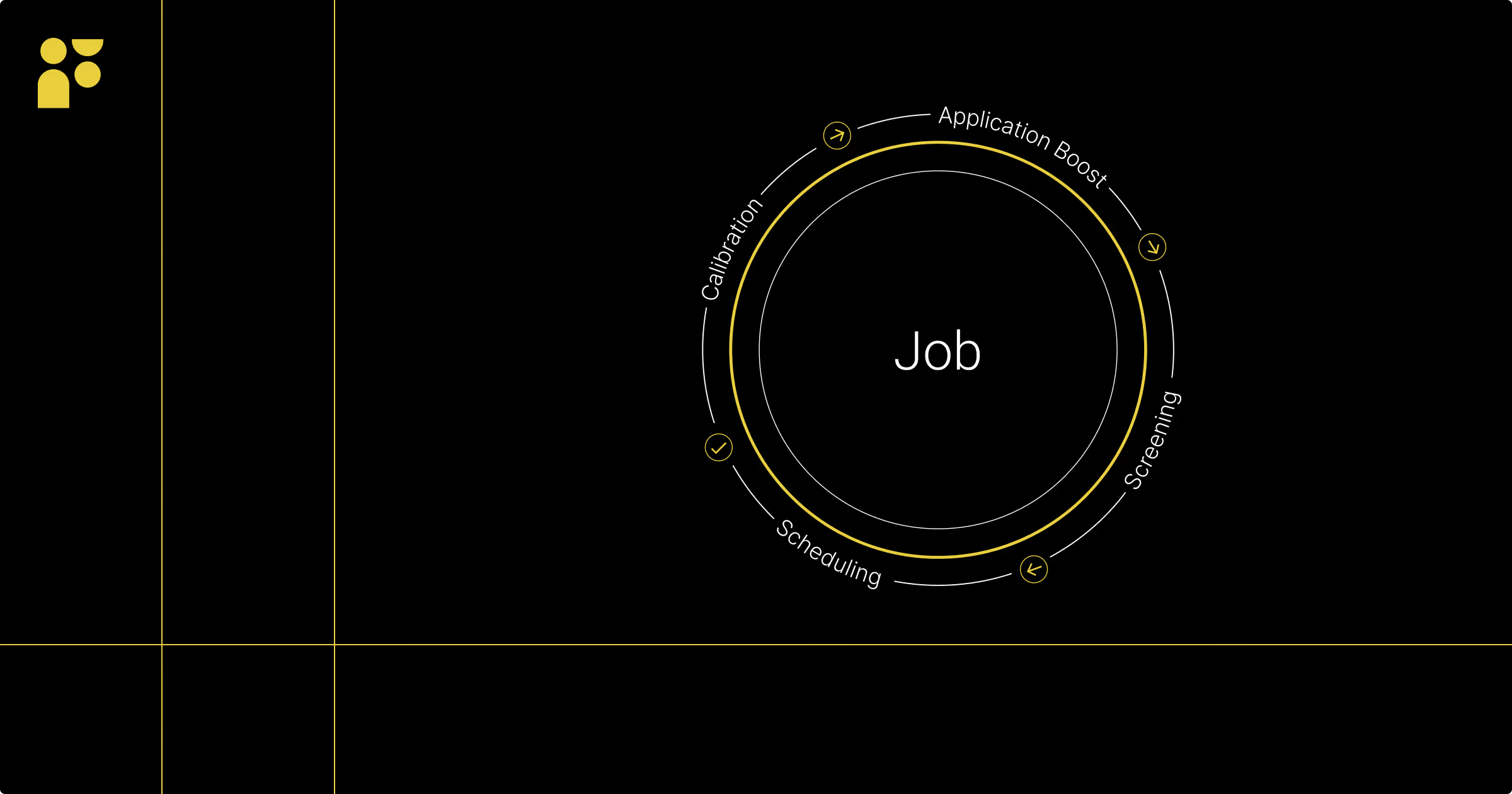
Much talent work is a chain of steps: understanding a role, searching, screening, reaching out, and scheduling. An AI recruiting agent can run several of those steps as one agentic workflow. In talent acquisition, the output is usually a slate of interview-ready candidates or a finished piece of people work, such as a market map.
Because the agent chooses some steps on its own, where people review its work matters as much as what it can do. NIST notes that agent systems "can be deployed with little to no human oversight" and studies risks such as indirect prompt injection and models that pursue misaligned objectives. For high-risk AI systems, which include AI used to recruit or select people (Annex III, point 4), the EU AI Act requires design that lets them "be effectively overseen by natural persons during the period in which they are in use" (Article 14). This page is a general overview, not legal advice. Human in the loop explains common ways to build that review in.
When evaluating an agentic workflow for talent work, teams can ask:
- What the agent does on its own: Which actions run without approval, and which wait for a person.
- What it works from: Which data and tools it can use, and who granted that access.
- Where people review: Which outputs a person checks before they affect a candidate or employee.
- What the record shows: Whether each step and the evidence behind it can be reviewed later.
How Findem approaches agentic workflows
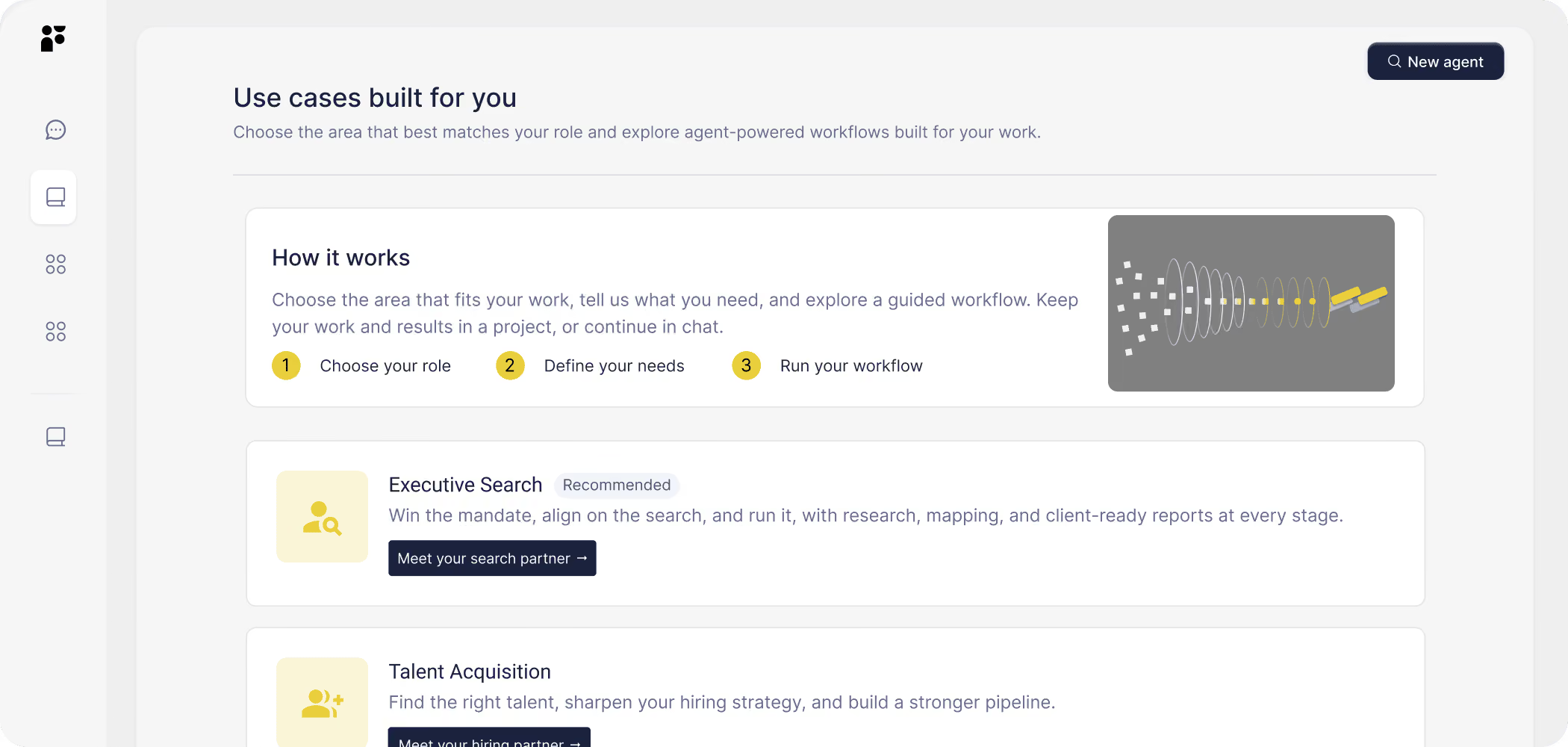
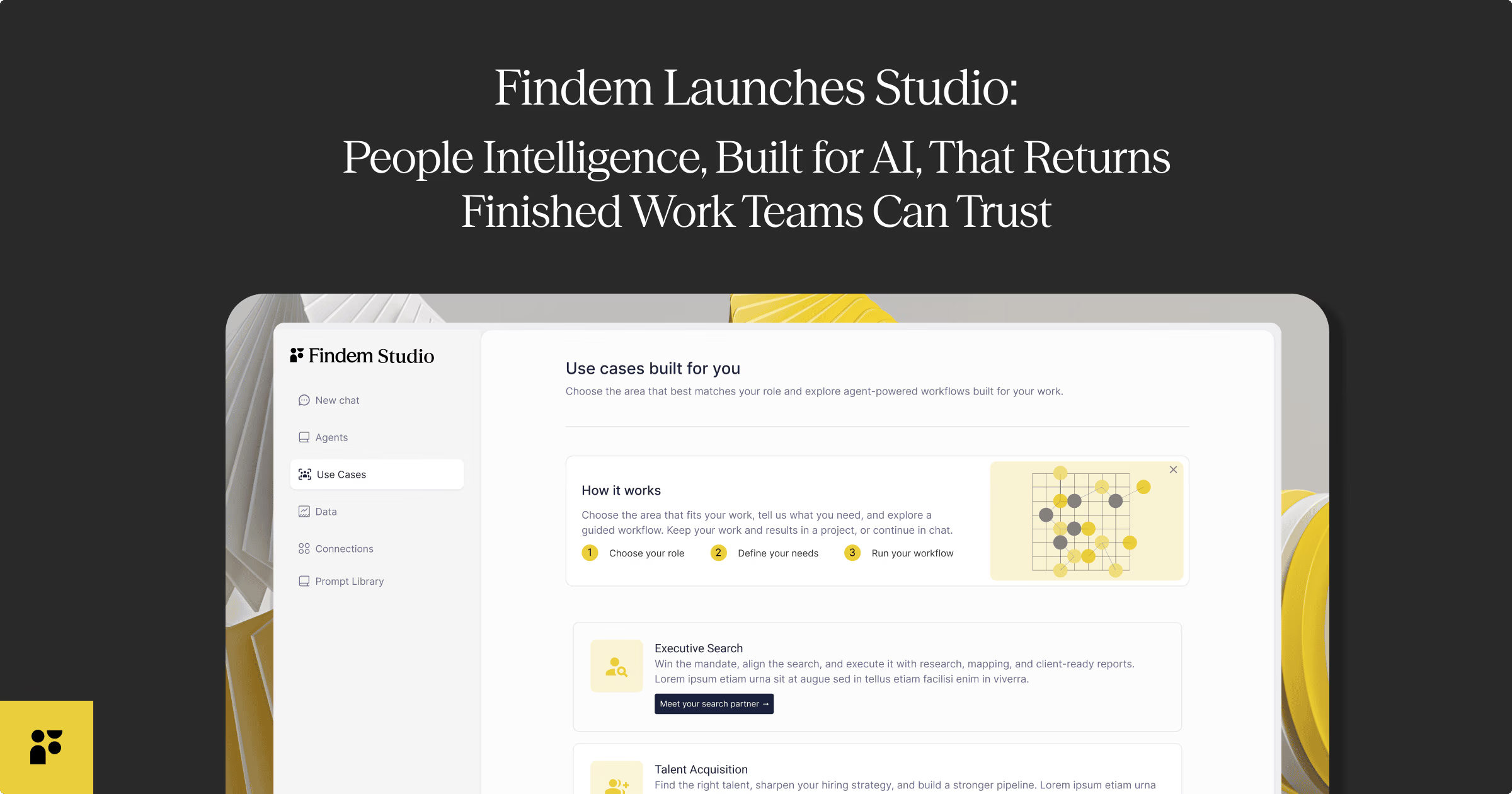
Findem Studio is Findem's agentic work environment. Studio agents run on the 3D People Graph, which holds trillions of expert-labeled data points, and each returns a finished deliverable, such as a succession plan, a market map, a benchmark, or an intake. Studio describes its checks in three stages: labeled people data before the work starts, a defined method while it works (a named expert's, your organization's, or your own), and checks before anyone acts, with evidence checked, conclusions validated, and reasoning shown.
Studio agents are available now. Teams can run them in Studio, use them inside the Findem platform, or call them through MCP from the AI they already use. With Build an agent, a team can encode its own method into a workflow powered by Findem intelligence and verification. In Findem's talent solutions, agents surface a slate of candidates who are interested, screened, and ready to interview, and agent output is a recommendation subject to human review. Findem's AI does not reject candidates or make hiring decisions, and people review results before they influence hiring decisions. Read more in Responsible AI at Findem.
Further reading
Related terms
Sources
- Request for Information Regarding Security Considerations for Artificial Intelligence AgentsNIST Center for AI Standards and Innovation, Federal Register, January 8, 2026
- ReAct: Synergizing Reasoning and Acting in Language ModelsYao et al., ICLR 2023
- EU AI Act, Article 14: Human oversightEuropean Commission AI Act Service Desk
- EU AI Act, Annex III: High-risk AI systemsEuropean Commission AI Act Service Desk
- Findem Studio
- The People Intelligence Platform
- Agentic orchestration: A guide for HR departments