What 400 VC leaders taught us about the AI moment we're all in

April 20, 2026
The 2026 VC Platform Summit has wrapped. Here's what stood out.
Every year, the VC Platform Summit brings together the operators who quietly make venture work. Not the GPs who close deals, but the people who help portfolio companies hire, the talent leaders connecting founders to executives, the platform professionals building the infrastructure that turns capital into outcomes.
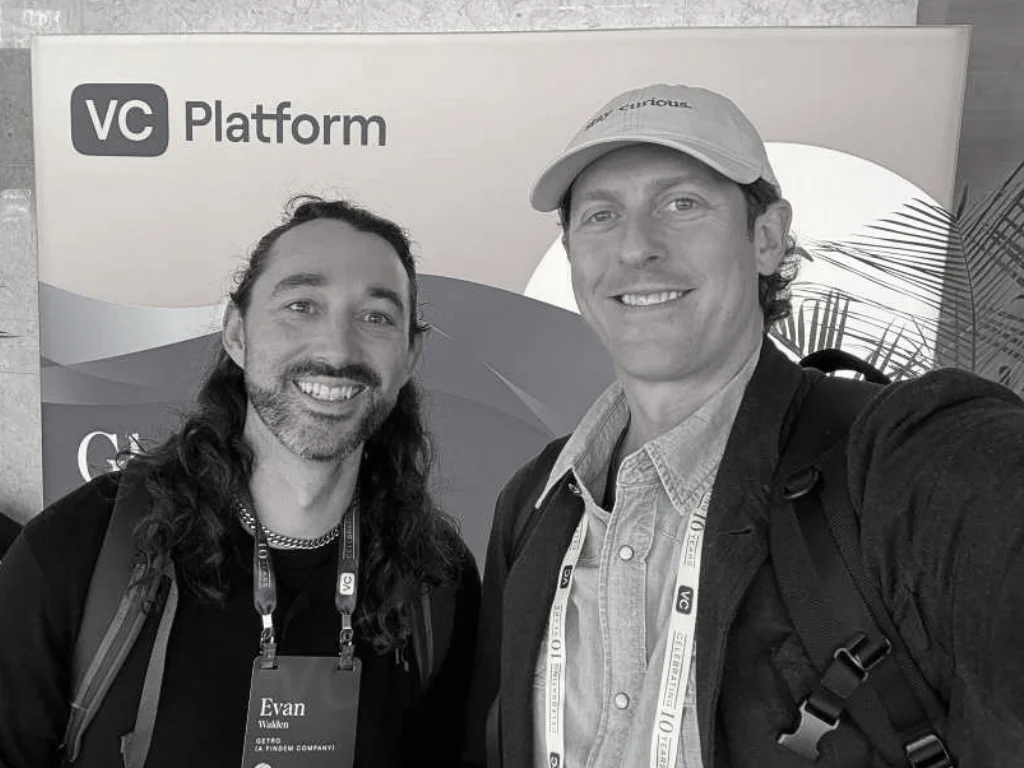
In 2026, for the 10th anniversary of the summit, roughly 400 of those operators gathered in San Diego. Our team was there, including Evan Walden, CEO of Getro, Maveric Ohm, our CTO, and Manish Nageet, GM of our VC product at Findem. And every conversation, every panel, every side-of-the-room exchange pointed at the same thing: AI is not a future consideration for VC platform teams. It's the current reality they're all navigating in real time.
Here's what we heard.
The panel that got real about talent tech stacks
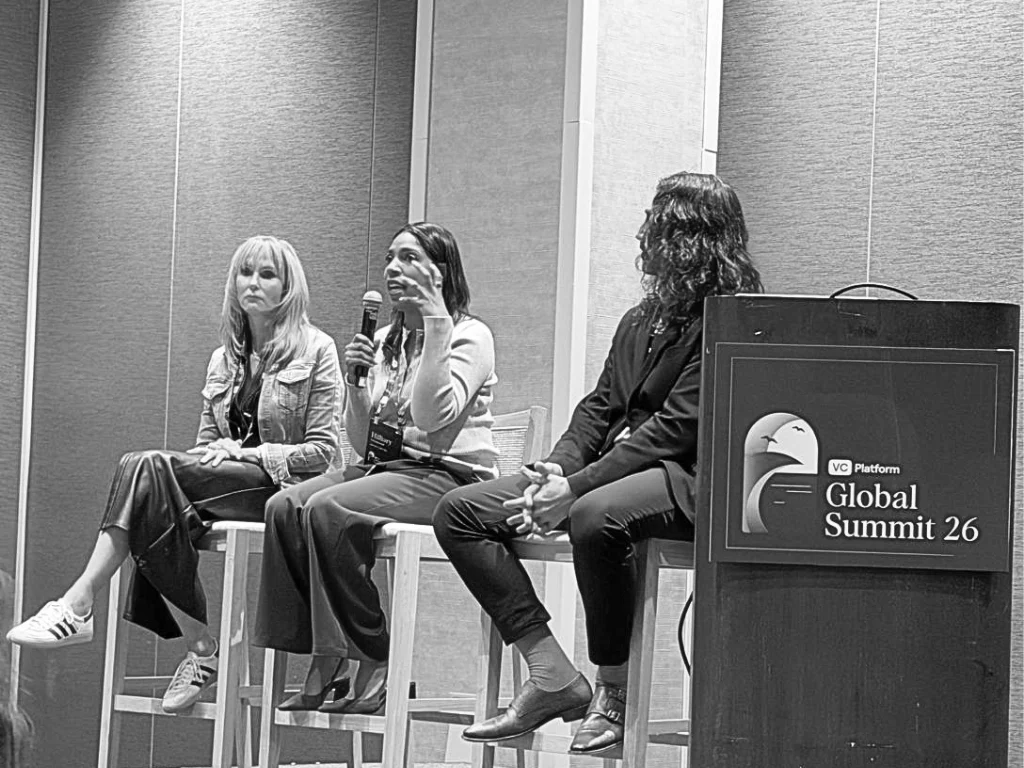
One of the most grounded sessions of the summit was a panel on talent tech stacks featuring Hilliary Turnipseed from Kapor Capital and Carolyn Capeneti from Peterson Partners.
These aren't practitioners theorizing from the outside. They're the operators who actually live inside these workflows, evaluating tools, building processes, and trying to generate ROI on platform investments that can be notoriously hard to quantify.
What made the conversation valuable wasn't the product names that came up. It was the honesty about the gap between what vendors promise and what teams actually need. The challenges that came up repeatedly: finding and engaging the right talent for portfolio companies quickly, making warm introductions that actually convert, and proving to fund leadership that the platform function is worth the investment.
Those are the problems Findem is directly built to solve. Seeing our customers articulate them on stage, with candor and specificity, made the product direction feel even more grounded.
400 people. One conversation.

Manish Nageet came to the summit with a unique vantage point. Before joining Findem as GM of the VC product, he was a talent leader at Insight Partners, responsible for helping 80+ portfolio companies hire faster and better.
He described what it felt like being back in the room:
"The conversations, the people, the energy in that room... there's something about being around 200+ VC operators who are all wrestling with the same questions around talent that just hits different. A few years ago, I was on the other side of these conversations. I was the person talking to vendors, running the RFPs, wishing someone would just build the thing I actually needed. Now I'm at Findem, building exactly that product. The role swap is genuinely surreal. Every time someone at the Summit described a problem, I knew it viscerally. Not because I read the research. Because I lived it."
That context matters. The questions Manish keeps coming back to aren't abstract: what does a VC talent leader actually need at 8am on a Monday? How do portfolio companies experience the support they're getting? What does ROI on the platform relationship actually mean to a fund?
When you've sat in both chairs, you ask better questions.
AI is eating everything (and that's the point)
Evan Walden has been attending the VC Platform Summit for eight years. He said this was the year AI stopped being a topic on the agenda and started being the undercurrent of every conversation.
The tools getting mentioned weren't just AI in the abstract. Platform teams were specifically talking about Granola, Affinity, Harmonic, Visible, and Claude. Many are using Claude CoWork to automate their own workflows. Some are using Claude Code to build new applications that connect systems. A few are moving faster than their fund's IT policies technically allow.
But Evan noticed something more interesting than the tool list:
"Sometimes these solutions are as simple as putting one prompt into Claude, but coming up with the idea is the hardest part. Facilitating the sharing of ideas at the summit was exciting."
That's the real divide right now in VC platform teams. It's not between AI users and non-users. It's between operators who have developed the instinct to identify where AI can help, and those still figuring out where to start. The summit, at its best, is where those ideas spread.
Evan also flagged a shift in how funds are thinking about building vs. buying. The classic calculus has changed. With LLMs making it cheaper and faster to develop software, more GPs are telling their teams to at least attempt to build before buying. Vendors that can't integrate, don't expose APIs, and can't plug into an MCP-driven workflow are going to find it harder to get in the door.
His take: "Vendors that can prove they deliver quality outcomes are the ones that will win, not ones that just have a new shiny feature."
Ten years of Getro. And a new chapter.
For Maveric Ohm, who founded Getro a decade ago, the summit carried a different kind of weight. He spent the week with the operators who shaped the product over years, the talent leaders who gave honest feedback when the product was rough around the edges, the platform professionals who described what they actually needed.
His reflection after:
"There's something meaningful about building a product for ten years and finally feeling like the market, the technology, and the team are all in the same place at the same time."
What Findem's Funds & Networks business is building now is what Maveric describes as the best people, jobs, and relationship data layer in venture. Relationship graphs that don't just store connections, but surface insights. Which person in your network is the right warm intro for this founder? Which portfolio company is about to have a hiring need before they even know it? What signals are hiding in the relationships a fund has built over a decade?
Beyond a database to query. A platform for action.
What we launched (and why it matters)
The summit also gave the Findem team a moment to share what we've been building since the acquisition.
Evan put it directly: "We spent the last few months heads-down building the future of people intelligence for funds. At the summit, we got to share it live with customers like Carolyn Capeneti and Hilliary Turnipseed, brainstorming real use cases together, seeing their reactions as we walked through what had been built."
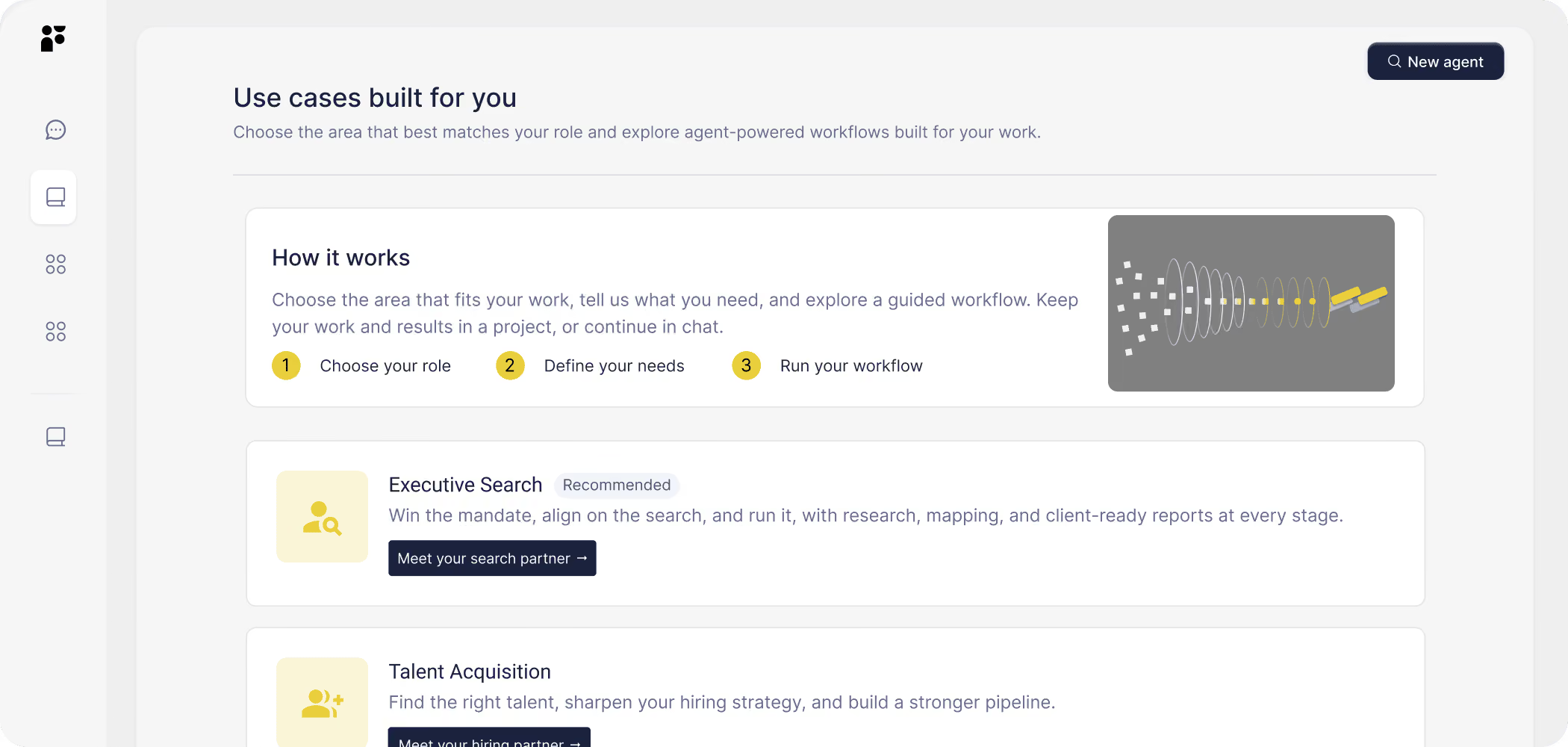
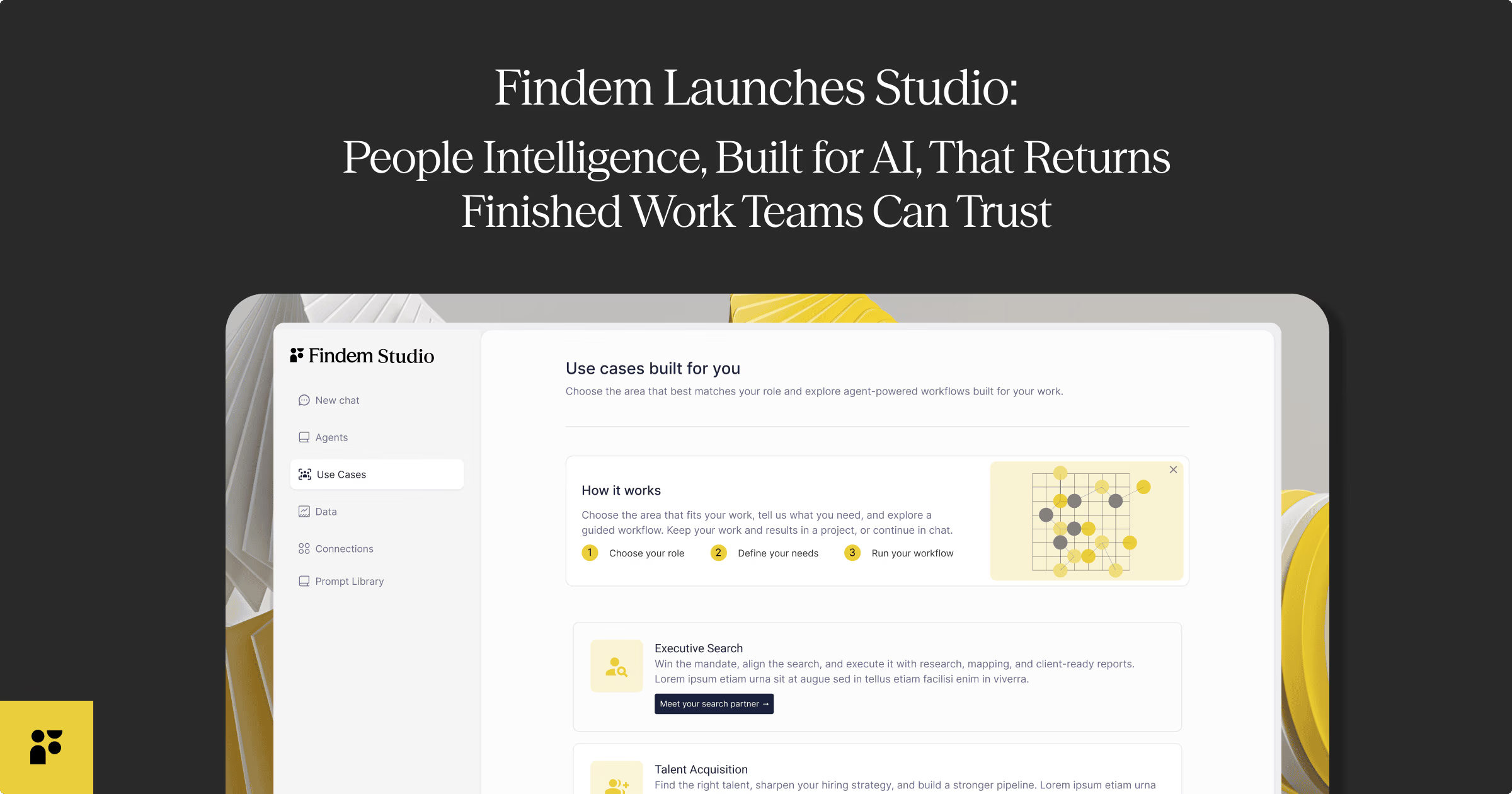
The unified platform brings together three things at once: job market data, portfolio talent data, and global people intelligence, with attributes from hundreds of sources. And it pairs that with engagement tools built around relationship signals and warm introductions, so teams can move faster than cold outreach.
"We showed up in person to prove that we're here and delivering more value than ever."
The role is still figuring itself out
One thing the summit made clear is how much work remains on a fundamental aspect: standardizing the platform function itself.
Ten years in, VC platform teams still don't operate from a common playbook. Each fund shapes the role around what the sponsoring GP values most. That means there's no consistent set of responsibilities, no shared success metrics, and no common benchmark to measure against.
As Evan observed, this limits the function's ability to demonstrate ROI, which in turn limits how much funds invest in it.
But there's reason for optimism here. As LLMs make outcome tracking less time-intensive, the conditions for more consistent measurement are better than they've ever been. If platform teams can get cleaner on metrics in 2026, the ROI conversation with fund leadership gets a lot easier.
The room, after ten years
There's something specific about the VC Platform Summit that doesn't happen at most conferences. It's a room of operators who don't often get to talk to each other, because the work they do is inside-out, fund to fund, portfolio company to portfolio company, without much public surface area.
When you put 400 of them in a room, ideas move fast.
In 2026, those ideas were mostly about AI. Not AI as a theme to put on a slide, but AI as a daily operational reality that's changing what it means to do this job well. What tools to trust. What to build vs. buy. What problems are actually solvable now that weren't solvable 18 months ago.
We came to the summit with a product. We left with a clearer picture of the community we're building it for.
Findem is the unified people intelligence platform for VC and PE funds, combining job market data, portfolio talent intelligence, and global people data with engagement tools built around warm introductions and relationship signals. If you're a VC platform or talent leader who wants to see what it looks like in practice, book a demo today.