


What is a talent marketplace?
A talent marketplace, or internal talent marketplace, is a platform that matches an organization's current employees with internal opportunities such as open roles, short-term projects, gigs, stretch assignments, and mentoring. Matches are usually based on skills, experience, and career interests, so people can find their next opportunity inside the company before managers look outside.
How a talent marketplace works
Talent marketplace software is worker-facing. It uses skills data to match employees with opportunities such as gigs, projects, stretch assignments, mentoring, and full-time roles. Most platforms include:
- Skills profiles: Automated employee profiles that show skills, availability, adjacencies, and gaps.
- Skills inference: Capabilities that detect, categorize, and infer skills, supported by skills taxonomies and ontologies.
- An open marketplace: A place where workers and managers can search for, add, and apply to opportunities.
- Personalized matching: Curated matches based on each worker's skills, preferences, and interests.
- Skills reporting: Insight for the organization into skills gaps, availability, and adjacencies.
The idea is older than the software. Management research describes internal talent markets as markets created when firms post open jobs and invite current employees to apply (Dlugos and Keller, Academy of Management Journal). Talent marketplaces extend that model to part-time and short-term work.
The US federal government runs one example. Open Opportunities, which OPM hosts as an extension of USAJOBS, lets federal employees search and apply for full-time and part-time details, job shadowing, coaching, and mentoring experiences (OPM, 2022).
Why talent marketplaces matter for talent teams
- Faster coverage for short-term needs: OPM describes Open Opportunities as a way for agencies to quickly connect with federal employees who can close immediate, short-term personnel gaps.
- Visibility for employees: Employees can see openings, projects, and mentoring they might not hear about through their own network.
- Measurable mobility: ISO 30414:2025, the international standard for human capital reporting, lists mobility and succession planning as a core reporting area, next to recruitment and workforce turnover.
How a marketplace treats the people it does not match also matters. Internal talent markets generate more rejections than matches, because not every internal applicant is hired. In a study of 9,355 internal rejections at one firm over five years, Dlugos and Keller found that rejected employees were significantly less likely to leave when the hiring manager interviewed them, and when they lost the role to another internal candidate rather than an external one.
How Findem approaches talent marketplaces
Findem is a People Intelligence Platform, not a talent marketplace. Its role in internal mobility is to help talent teams see the people they already employ with the same depth as the external market.
Findem's guide to internal mobility notes that employee databases are rarely updated with the skills and experience people have gained since they were hired, so recruiters default to external hiring. The guide recommends unified talent sourcing that lets recruiters and hiring managers find qualified internal and external candidates in one place, with enriched skills and experience data that goes beyond static resumes.
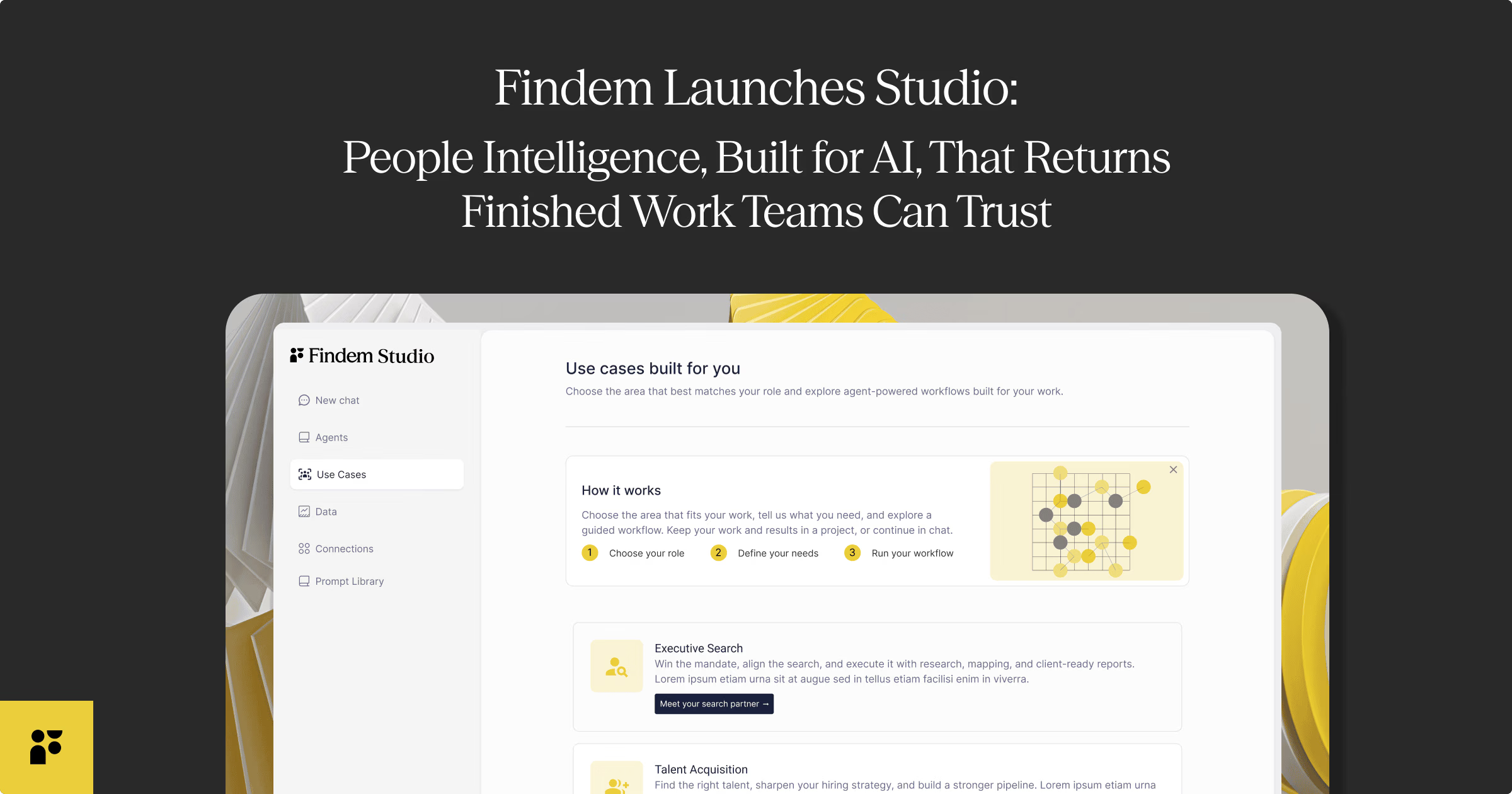
For senior and critical roles, internal mobility and succession planning meet. The Succession Planning Agent in Findem Studio scores internal successors against what a role needs next and benchmarks relevant external leaders on the same criteria, so teams can see whether to develop, recruit, or both. It does not make promotion or hiring decisions. Those decisions stay with your team.
Further reading
Related terms
Sources
- Turned down and taking off? Rejection and turnover in internal talent marketsDlugos and Keller, Academy of Management Journal, 2021
- OPM responses to questions for the record, House Subcommittee on Government OperationsU.S. Office of Personnel Management, July 2022 hearing
- ISO 30414:2025 Human capital reporting and disclosureInternational Organization for Standardization, August 2025
- Internal mobility strategies
- Succession Planning Agent