

.svg)
Findem’s year in review: 2025

December 22, 2025

No matter the industry, AI dominated leadership conversations in 2024. After a year of pilots, experiments, and mixed results, decision-makers entered 2025 asking tougher questions: where does AI actually help, and what breaks when the foundation underneath it is weak?
For talent teams, those questions landed amid rising hiring expectations, flat budgets, and increasingly fragmented tech stacks. Tools promised speed but often delivered noise. AI was everywhere, but those using it were under pressure to start proving its value.
When generative AI took hold last year, few would have predicted that 95% of enterprise pilots would fail. So instead of forecasting what comes next, it’s worth looking back at what actually changed over the past 12 months, and what those changes revealed about the work of hiring.
AI moved from novelty to scrutiny
“ChatGPT can fix that email for you.”
At first, AI showed up as a helper, something to make individual tasks like editing and research easier. But as hiring volume increased and recruiter headcount didn’t, the expectations shifted. More resumes to review. More profiles to screen. More coordination required, with no extra time to do it.
At the same time, teams were still carrying years of tech debt. Platforms overlapped. Integrations existed in name but synchronized little usable data. Dashboards looked polished while leaving leaders unsure where work was stalling or which channels were actually converting.
AI was supposed to fix this. Instead, many teams ran into a familiar trap: automation layered on top of broken data and broken processes. When that happens, you actually scale friction instead of eliminating it.
By the end of 2025, leaders cared less about features and more about where work was breaking down. Where handoffs failed. Where data decayed. Where automation helped, and where it quietly made things worse.
In conversations with industry leaders and experts, what emerged was clarity about where humans still matter most:
- Building trust with candidates and preparing them for interviews
- Coaching hiring managers
- Shaping how roles are positioned and marketed
- Allocating sourcing effort to channels with real ROI
Data stopped being “nice to have”
None of that optimization is possible without confidence in the data behind it. And AI is only as good as the information it’s trained on. So conversations shifted away from model comparisons and toward something more fundamental: Can we trust our own data?
Is it current? Is it curated? Did it reflect real experience, or just resumes and self-reported profiles?
The symptoms were familiar. ATSs filled up while pipelines stalled. Applicant volume climbed while qualified candidates remained hard to find. Dashboard views multiplied without changing how teams staffed roles or allocated effort. The issue wasn’t access to information, but confidence in what that information actually meant.
This year, we spent time helping leaders learn more about those gaps. We analyzed promotion patterns across Fortune 500 tech companies, examined the growing importance of government affairs hires, and explored why expert-labeled data matters when decisions about who to hire carry real consequences for the business.
We partnered with RecruitMilitary to better understand how veterans navigate the civilian workforce. We collaborated with the Josh Bersin Company to examine how the CHRO role itself is evolving. The conclusion was consistent: teams don’t need more data — they need data with context, embedded directly into the workflows where decisions get made.
Candidate experience stopped being a side note
As automation scaled, so did its impact on candidates. When outreach volume increased, mistakes became harder to hide. Generic messages. Mistimed follow-ups. Personalization that didn’t survive the handoff.
Candidates noticed. They could tell when outreach reflected real knowledge of their background, and more importantly, when it didn’t. Trust became harder to earn and easier to lose.
That’s why we launched Auto-Personalization: to help teams stay specific and relevant at scale, anchored in verified career details rather than templates or guesswork.
Efficiency still mattered. It just couldn’t come at the cost of making candidates feel processed instead of recruited and seen.
Sourcing became strategic again
The same shift — from volume to signal — showed up in sourcing. After years of over-indexing on outbound, organizations took a harder look at what they already had: past applicants, silver medalists, alumni, referrals, and internal talent.
Rediscovery stopped feeling like a fallback and started looking like a faster, more reliable path to hires. Candidates from warm channels replied more often, moved faster, and showed stronger intent than cold outreach.
Yet teams still defaulted to cold search, largely because warm data was fragmented, outdated, or difficult to activate. Recruiters chased new leads while stronger ones sat untouched across existing systems.
Hari wrote about this talent data trap early in the year, and it’s shaped how we're thinking about the future at Findem. Sourcing became less about expanding volume and more about reallocating effort toward channels already signaling interest.
A year that clarified company direction
2025 was a year of growth and evolution for Findem. We raised a Series C and further committed to one of our founding principles: AI for talent decisions only works when it’s grounded in trusted data and delivered through workflows people actually use.
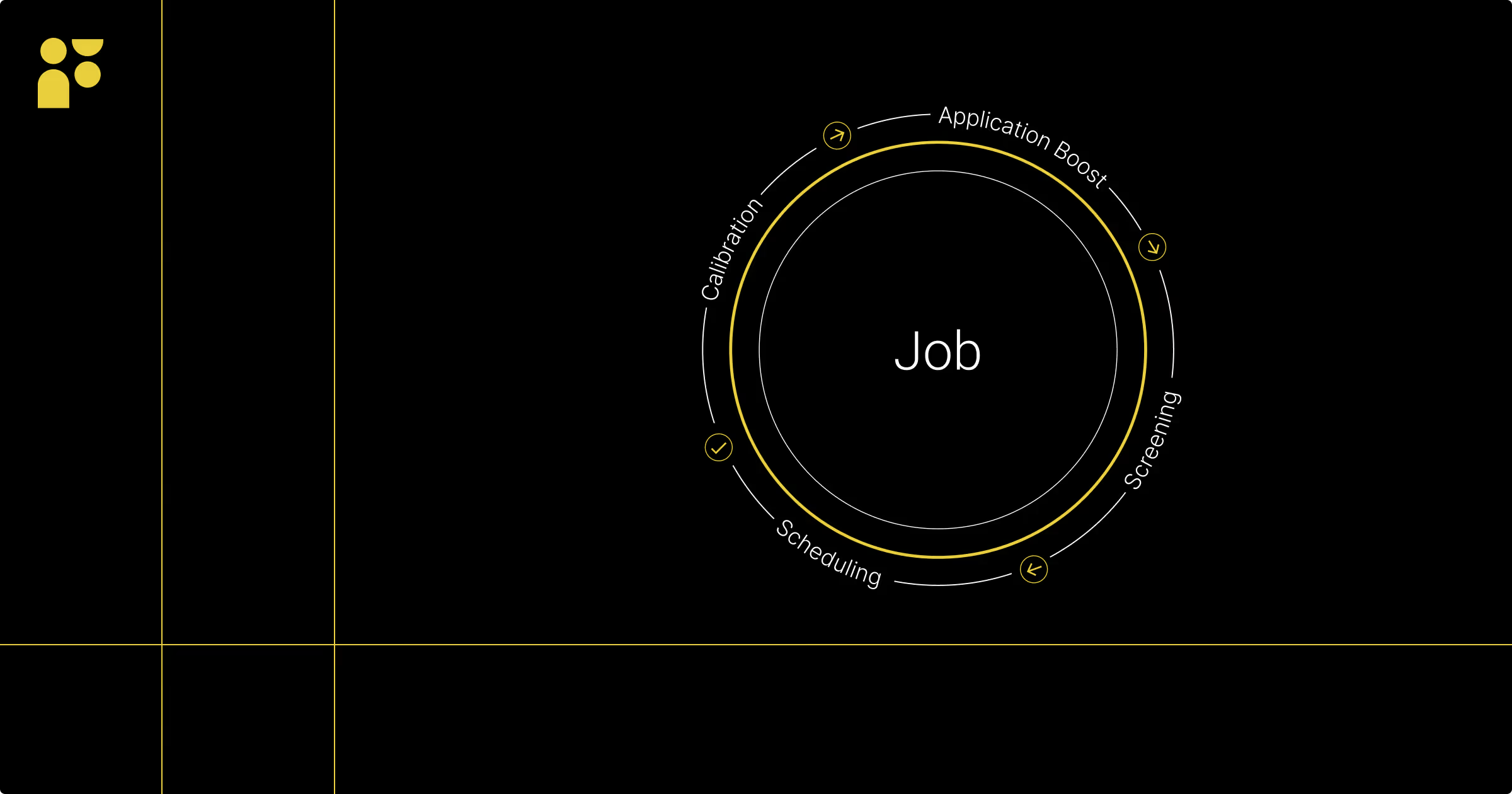
We continued these efforts with the acquisition of Getro and the launch of the Intelligent Job Post. Traditional job posts generate volume and leave teams to sort it out. The Intelligent Job Post takes a different approach, attaching autonomous agents to each role to source, engage, and qualify candidates using verified career data and relationship context.
Integrations with SAP, a new partnership with Glider, continued work with RecruitMilitary, and new network-based initiatives with organizations like AnitaB.org all reflected a shift toward activating trusted communities instead of relying solely on cold inbound.
Looking ahead to 2026
By the end of 2025, progress for talent teams was measured differently. AI mattered less as a headline and more as an input into everyday decisions. Leaders paid closer attention to where their data came from, how candidates actually moved through their systems, and whether automation reduced friction (or quietly added more of it).
The gap heading into 2026 will be between teams that treat AI as an accelerant — built on clear signals and coherent workflows — and teams that expect it to compensate for gaps underneath.
Thank you to the customers, partners, and talent leaders who helped us challenge assumptions, surface real barriers to change, and push the work forward. The bar moved in 2025. The responsibility now is to keep progress moving with it.