.svg)
Company DNA and the rise of non-traditional engineers

January 23, 2026

Findem’s market intelligence unlocks labor market insights from the world’s largest, multidimensional talent dataset.
In today’s most innovative companies, engineering excellence is no longer defined by credentials or traditional pedigrees. Increasingly, the engineers delivering the greatest impact are those who arrived from unexpected backgrounds such as support specialists, analysts, and product specialists. These individuals weren't promoted because of resumes, but because of how they operated within the company’s unique context.
Our data shows that 8% of software engineers promoted in the past year did not previously hold a software engineering title.
This signals a meaningful shift in how organizations identify and reward capability. Companies are beginning to view performance, contextual understanding, and adaptability as stronger predictors of success than past titles or academic pathways.
These emerging career paths show contextual fit is becoming as important as core skills.
When company DNA becomes the differentiator
Every organization operates with its own success DNA. These are the validated patterns in behavior, judgment, and outcomes that define what “great” looks like in its environment.
For some companies, success means shipping reliably under pressure. For others, it is curiosity, cross functional influence, or customer empathy. These patterns are rarely written down, but are consistently rewarded.
The engineers who advanced without traditional engineering backgrounds were not exceptions to the rule. They were evidence of alignment between individual strengths and organizational context who:
- Absorbed institutional knowledge quickly
- Internalized product and customer needs
- Demonstrated ownership, persistence, and growth agility
- Earned trust long before they earned a title
These are the Success Signals that generic AI and resume filters cannot recognize.
Success Signals over surface-level skills
In an environment where AI can already generate functional code, the differentiator is no longer what someone can do in isolation, but how they operate inside a specific system.
Success Signals such as post-project promotions, measurable improvements in performance, and peer recognition reveal the underlying behaviors that drive business outcomes.
A resume may claim: “I worked on the data platform.” A Success Signal confirms: “I owned the core service, improved latency, mentored peers, and earned a promotion.”
The rise of non-traditional engineers affirms that company-aligned competencies now outweigh textbook credentials.
Finding 1: Analytical experience as a launchpad

28% of promoted engineers previously held analyst titles, and 6 of the top 10 feeder roles include the term “Analyst”.
These roles included:
- Data Analyst
- Technology Analyst
- Business Analyst
- Programmer Analyst
- Senior Business Analyst
- Systems Analyst.
Analytical and data-oriented backgrounds create fluency in structured problem solving and quantitative reasoning. These professionals often enter engineering with a deep understanding of system behavior, data pipelines, and customer impact.
Analytical fluency became a repeatable on-ramp to engineering success, proving that understanding how data moves through a business can be just as valuable as knowing how code moves through a system.
Finding 2: Leadership competencies define success
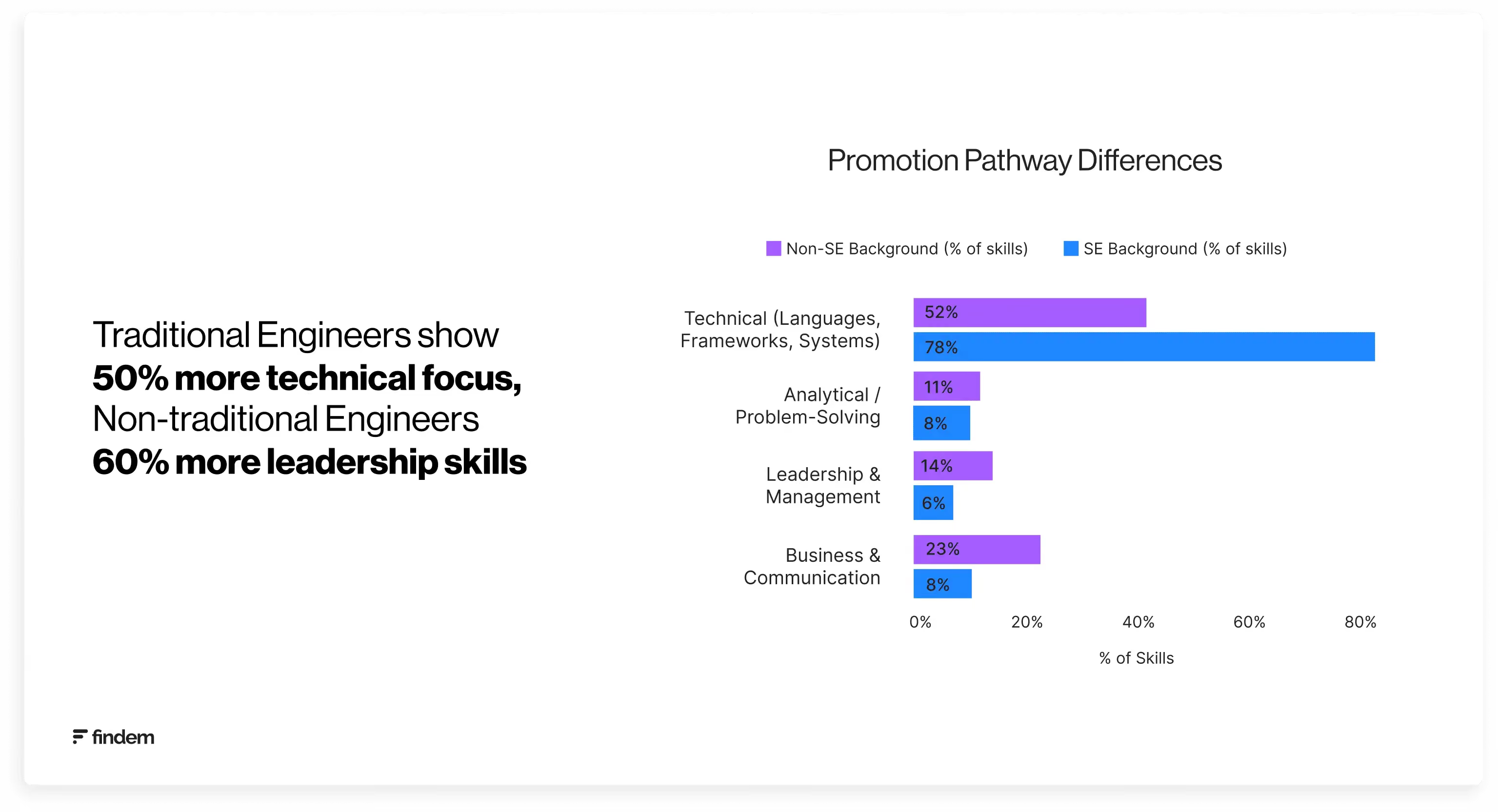
Non-traditional engineers promoted in the past year demonstrated 60% more leadership and cross-functional skills than traditionally trained engineers promoted in the same period.
They also shared 67 out of 100 total skill categories with traditional engineers, accounting for 54% of total skill weight.
This overlap highlights a balanced competency mix. Non-traditional engineers bring organizational insight, communication strength, and mentorship experience that elevate overall team performance.
Their ability to influence outcomes beyond technical execution positions them as catalysts for stronger collaboration and innovation across engineering and product teams.
Finding 3: Promotion pathways concentrate around core roles
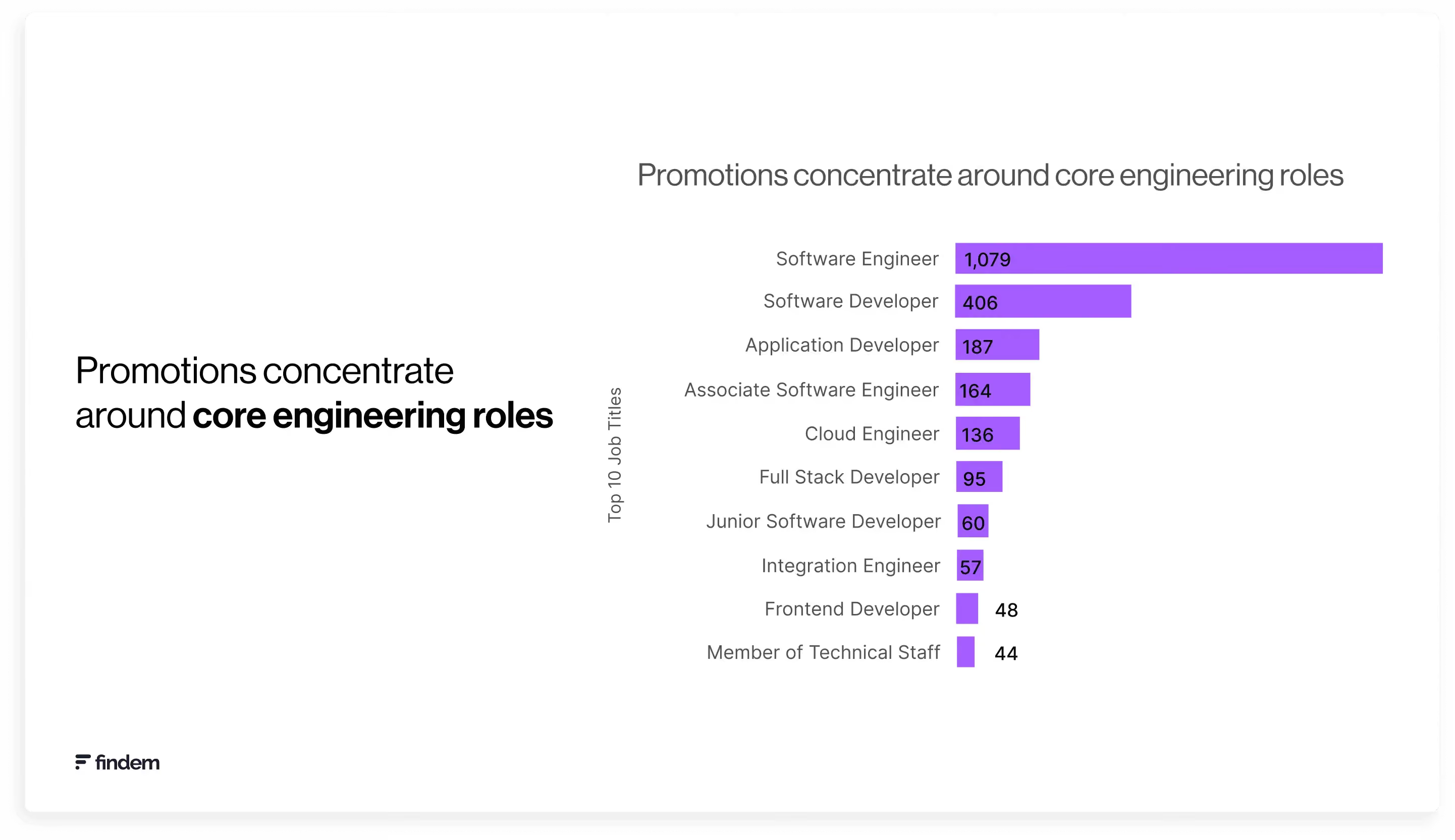
Promotions remain concentrated around foundational technical positions such as:
- Software Engineer
- Software Developer
- Application Developer
- Cloud Engineer
These roles continue to serve as the main entry points for upward mobility within engineering. Employees who already understand the company’s culture, customers, and systems are consistently outperforming expectations when they transition into these roles.
Finding 4: Internal mobility remains an untapped leadership opportunity
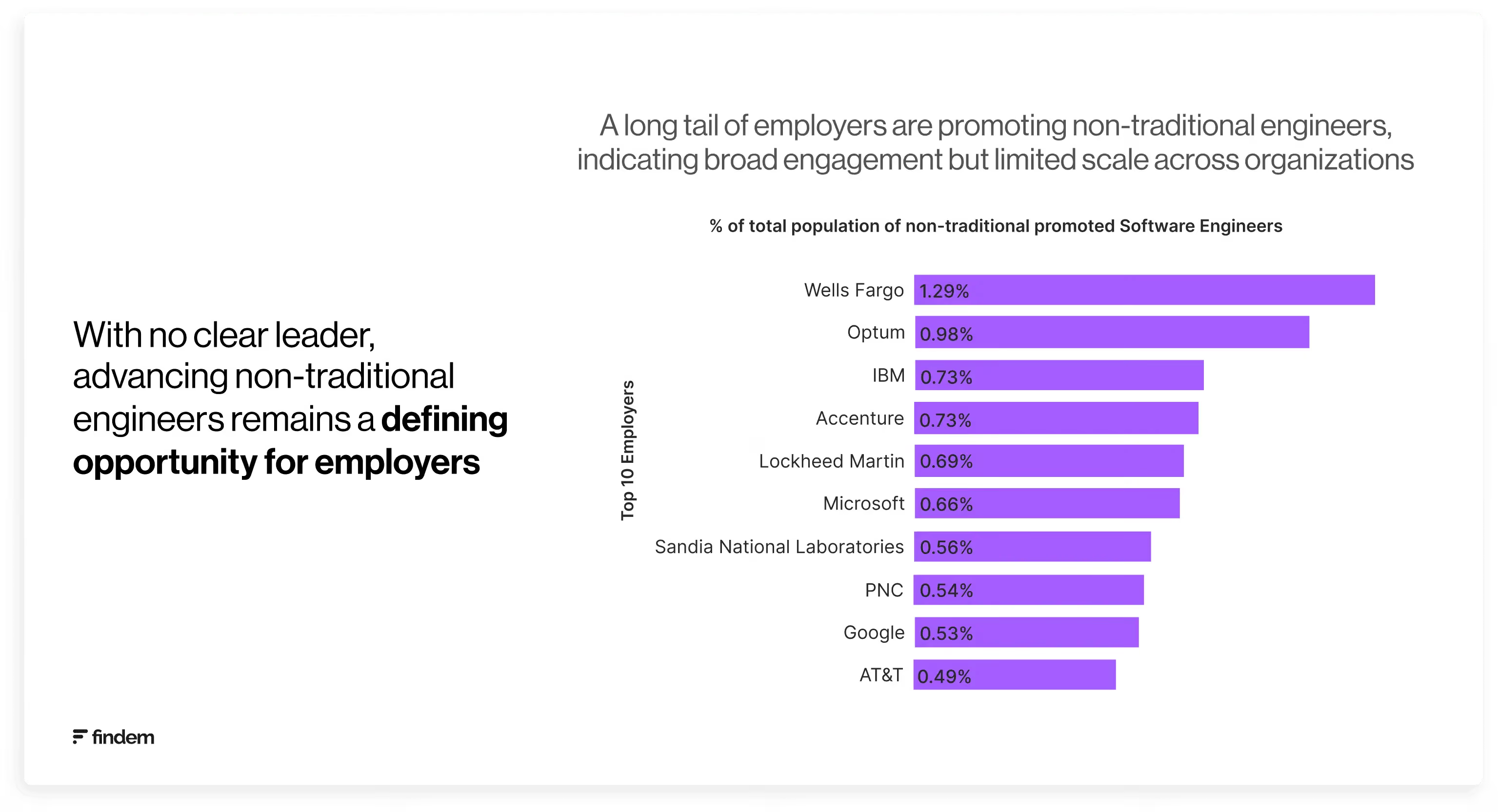
Advancement of non-traditional engineers is widely distributed. No single company accounts for more than 1.3% of promoted engineers from non-engineering backgrounds.
This dispersion suggests opportunity without scale. While many organizations enable mobility informally, few have built structured pathways to develop and advance this talent intentionally. Establishing structured mobility pathways can help companies convert contextual expertise into sustained technical leadership.
Organizations that move first to recognize and promote non-traditional engineers will strengthen both retention and innovation capacity.
Why contextual fit matters now
Relying on surface-level indicators such as degrees, certifications, or past titles overlooks the people already demonstrating potential. Internal promotions from non-engineering roles show what happens when contextual understanding and performance signals are treated as predictors of success.
These individuals have already passed the most meaningful test: they thrive within the company’s ecosystem. Their success is not an anomaly. It is a pattern that can be identified, measured, and repeated.
The future: Hiring for how, not what
As organizations adopt domain-specific AI, talent decisions will increasingly focus on how people achieve outcomes rather than where they started. The goal is not to fill seats, but to replicate the conditions that allow high-signal individuals to emerge and excel.
The next generation of engineering talent may not begin in engineering. Yet their Success Signals, the patterns of persistence, ownership, and contextual intelligence, are already visible. Recognizing them is the key to building the next wave of high-impact teams.



%20Paikeday.avif)