
.svg)
How Findem helped solve 3 real hiring challenges at Northeastern’s SkillsTech Hackathon

December 17, 2025
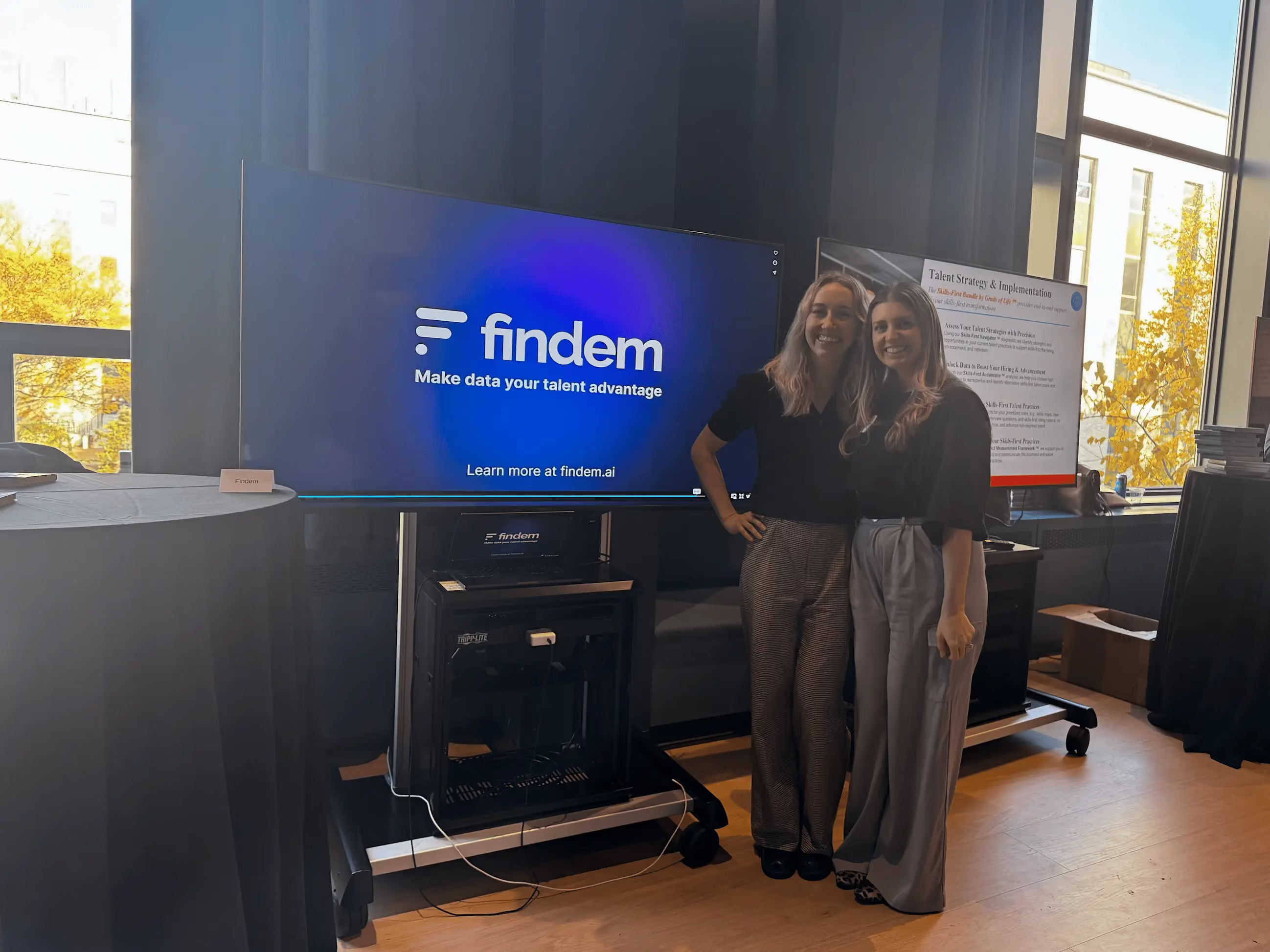
A recap from Findem’s experience at the Workforce Transformation Lab
A new kind of hackathon built for today’s talent challenges
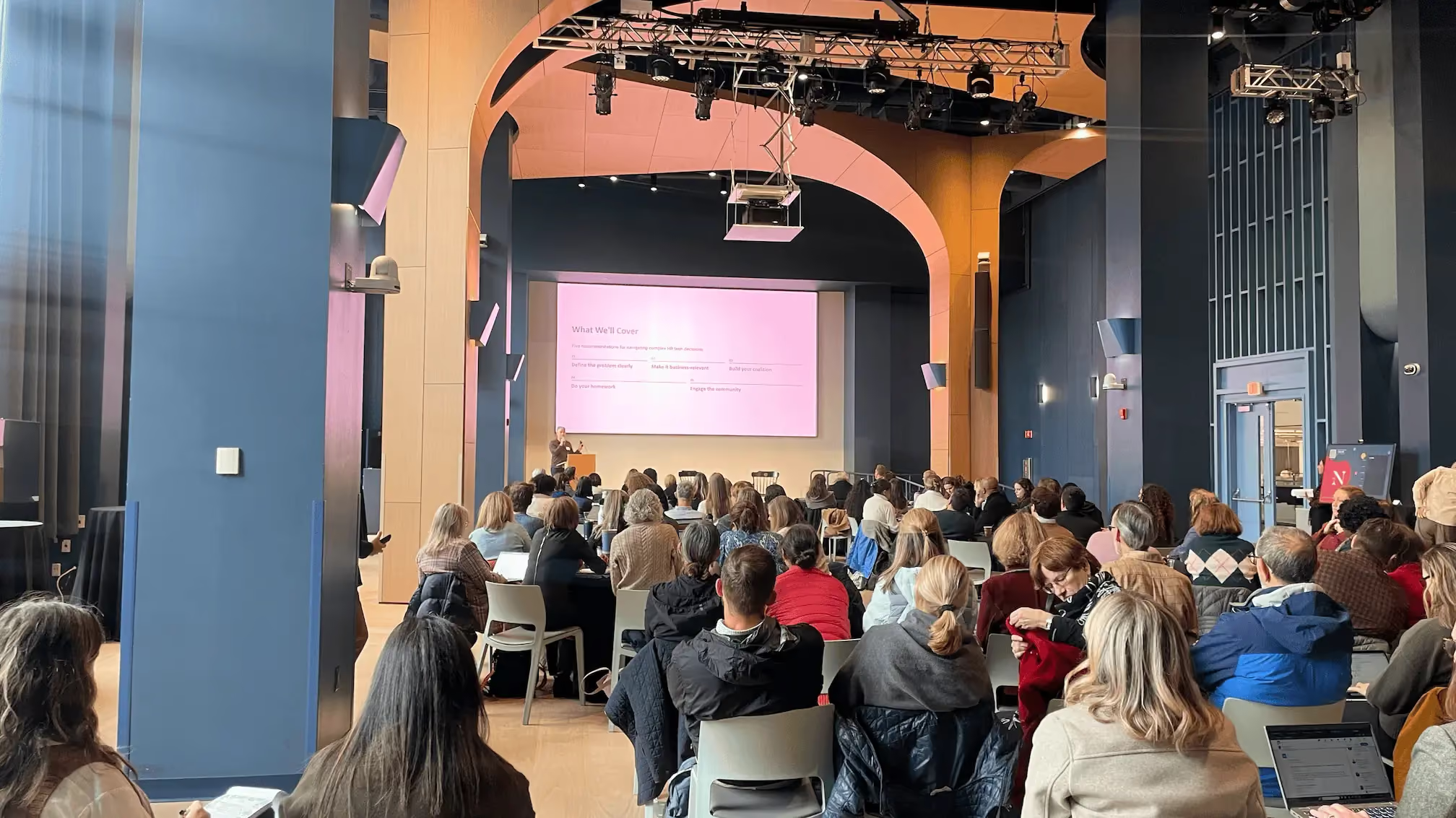
Last month’s AI/SkillsTech Hackathon, hosted by Northeastern University’s Workforce Transformation Lab, brought together HR leaders, talent acquisition practitioners, HR operations teams, and people analytics experts for a hands-on reimagining of modern hiring. This wasn’t a coding competition or a product pitch. It was a working session designed around a simple question: what happens when real hiring challenges meet today’s AI and skills-based tools?
As the day unfolded, one theme surfaced again and again. High-quality, structured, and curated talent data is no longer a nice-to-have. It has become the backbone of modern hiring, shaping everything from how teams source candidates to how they evaluate skills and plan for the future.
Within that context, Findem was one of several tools participants could use to design their solutions. Because Findem profiles are built from more than 100,000 public and validated sources — including the places candidates already maintain, such as LinkedIn, GitHub, personal websites, and historical company records — teams quickly saw the value of durable data. Profiles that update automatically removed the need for manual skill maintenance and allowed participants to design workflows that could actually scale.
That data foundation proved essential as teams worked through three very different hiring scenarios, each rooted in distinct business needs but unified by the same underlying data challenges.
Three real hiring challenges and how Findem supported them
Seasonal hiring at scale for retail
The first scenario asked teams to rethink how a retail organization could hire more than 500 seasonal employees across 50 locations. Speed and coordination were critical, but so was maintaining a consistent candidate experience during peak demand.
Participants explored how Findem could support personalized outreach at scale without adding manual effort. They designed workflows that allowed a single search to power multiple local campaigns, while integrations with applicant tracking systems helped move candidates through the funnel automatically. Instead of recruiters managing handoffs one by one, the process adapted as candidates responded.
Teams also focused on reducing ramp time. By surfacing shared work history between candidates and current employees, and rediscovering past seasonal workers who were already familiar with the organization, they built hiring strategies that emphasized continuity as much as speed. The result was a model for high-volume hiring that stayed efficient without becoming impersonal.
Compliance-driven hiring for government contractors
The second scenario shifted to a very different environment. A defense contractor needed to design a hiring process that could withstand regulatory scrutiny, reduce bias, and evaluate internal and external candidates using the same standards.
Here, consistency mattered more than velocity. Teams leaned on Findem’s ability to apply identical criteria across talent pools, ensuring that every candidate was assessed against the same competencies. Verified security clearances and certifications could be surfaced directly within profiles, while military occupational specialties were translated into comparable skills to support veteran hiring.
Participants also tested anonymous review workflows that removed identifying information early in the process. The exercise made one point clear: in compliance-heavy environments, fairness and auditability are impossible without accurate, structured, and consistently applied data.
Early-career software engineering in the AI era
The final scenario focused on early-career software engineers, where traditional degree requirements are increasingly poor predictors of success. Teams were asked to design a hiring and development approach that reflected how AI and modern development tools are reshaping the role.
Rather than relying on credentials alone, participants evaluated candidates based on demonstrated experience. Signals such as hands-on work with AI and machine learning tools, GitHub contributions, portfolio projects, and participation in technical communities helped teams identify practical ability earlier in the process. Graduation year and availability filters were used to shape pipelines appropriate for early-career programs, while tailored outreach strategies addressed the expectations of this talent segment.
One of the most impactful moments came when teams compared internal skill sets against external benchmarks. This shifted the conversation from “who should we hire” to “where should we upskill or create mobility paths,” reinforcing the growing connection between hiring and long-term workforce strategy.
Why these scenarios matter for talent decisions
Although the scenarios varied widely, the underlying needs were strikingly consistent. Across every exercise, teams returned to the same principles: trustworthy and validated data, consistent and bias-aware evaluation, connected workflows, and the ability to activate warm relationships quickly.
These insights weren’t driven by any single tool. They were driven by the realities of modern talent work. As participants applied these principles, Findem’s data foundation and workflows naturally supported what they were trying to build, without forcing them into fragmented systems or rigid processes.
The day reinforced a broader truth. Whether organizations are hiring at scale, navigating regulatory complexity, or shifting to skills-based models, success depends on infrastructure that can flex across use cases while remaining grounded in reliable data.
A reflection from our team
For our team, the hackathon offered a clear view into how HR and talent leaders are thinking right now. What stood out most wasn’t just the solutions teams designed, but the questions they asked — about ethical data use, reducing manual effort, identifying real skill signals, and moving from reactive hiring toward proactive workforce planning.
More than anything, the event showed that teams aren’t simply experimenting with AI. They’re actively preparing to rebuild how hiring operates, anchored in better data, clearer workflows, and fairer decision-making. The pace of that shift was impossible to ignore.
Want to see how AI and 3D talent data can support modern hiring workflows? Request a demo to explore how organizations use Findem to bring clarity, automation, and trustworthy data into hiring and workforce strategy.
🎥 Join Findem and the Workforce Transformation Lab for a webinar on January 21, 2026 at 9am PT!


%20Paikeday.avif)