

.svg)
Talent acquisition has a navigation problem: Why AI for recruiting needs connected intelligence

July 16, 2026

Think about how we use GPS today. It knows where we're starting, where we're trying to go, current traffic, road closures, alternate routes, and how conditions shift in real time. As new information comes in, it recalculates the best path. It's built to navigate the whole trip, not optimize one turn.
Talent acquisition should work the same way.
Why AI for recruiting isn’t enough
Much of today's conversation around AI for recruiting focuses on helping recruiters complete individual tasks faster. One tool writes outreach. Another summarizes resumes. Another rewrites job descriptions. Another analyzes the market.
Each solves a real task, but none of them sees how one hiring decision influences the next.
Talent acquisition isn't a series of disconnected workflows — it's a connected system. A workforce planning decision shapes hiring strategy. Hiring strategy determines where recruiters invest their time. Recruiting uncovers market realities that should feed back into future workforce plans. Changes in the market reshape every decision that follows.
Instead, those decisions get made in isolation. Workforce planning, hiring strategy, recruiting, candidate engagement, and market intelligence each generate real insight, but that insight rarely travels with the decision. Teams spend their time rebuilding context instead of building on it.
AI for recruiting hasn't failed. It's just been built to understand individual tasks instead of the full talent acquisition system. That's a navigation problem, not an AI problem.
Great navigation starts with context
GPS works because it understands context — every recommendation combines trusted information about roads, traffic, weather, construction, and your destination into one complete picture. As conditions change, so does the recommendation.
Talent acquisition needs that same foundation. Connected intelligence means trusted, expert-labeled data about people, companies, and the broader market that guides AI so organizations can build agents that understand the entire talent acquisition system, not just the task in front of them.
Connected intelligence ties workforce planning, hiring strategy, recruiting, candidate engagement, and market intelligence into one continuous decision-making system, instead of optimizing recruiting in isolation. That shift — from task automation to intelligence that stays connected across the whole system — is what actually produces better decisions.
When intelligence stays connected, every decision gets smarter
Imagine your CEO asks whether the business can double its engineering organization over the next 12 months.
A traditional AI assistant helps write the job description once the requisition opens. A connected system starts much earlier: it evaluates whether the hiring plan is realistic based on talent supply, competitive demand, adjacent skills, company growth, and market conditions, and it flags where the goal will likely stall before recruiting even begins.
Those insights carry forward. When recruiters and hiring managers start defining the role, the system already understands the workforce strategy, the available talent market, and the constraints identified during planning. It builds a hiring strategy grounded in that reality, suggesting adjacent skills, expanding target companies, and flagging requirements that unnecessarily shrink the available pool.
That same context carries into recruiting. Recruiters don't start every search with a blank slate, because the system already understands what success looks like and why. It recommends representative candidates, explains why they fit, and surfaces additional talent pools aligned to the original hiring objective.
The intelligence carries into candidate engagement too, helping recruiters personalize outreach, prepare interview teams, anticipate candidate motivations, and build more meaningful conversations.
Meanwhile, the market keeps moving. A competitor opens a new engineering hub. Another announces layoffs. A critical skill suddenly gets more competitive.
Connected intelligence folds new information into the system continuously — hiring strategies adapt, recruiting priorities shift, workforce plans evolve. Just like GPS recalculates the best route, talent acquisition keeps adjusting as conditions change.
Why AI for recruiting needs connected intelligence
Most of the conversation around AI has focused on building better agents. But an agent is only as effective as the intelligence guiding it. Trusted context is what turns task automation into real reasoning — the difference between AI that automates a workflow and AI that helps solve a systemic hiring challenge.
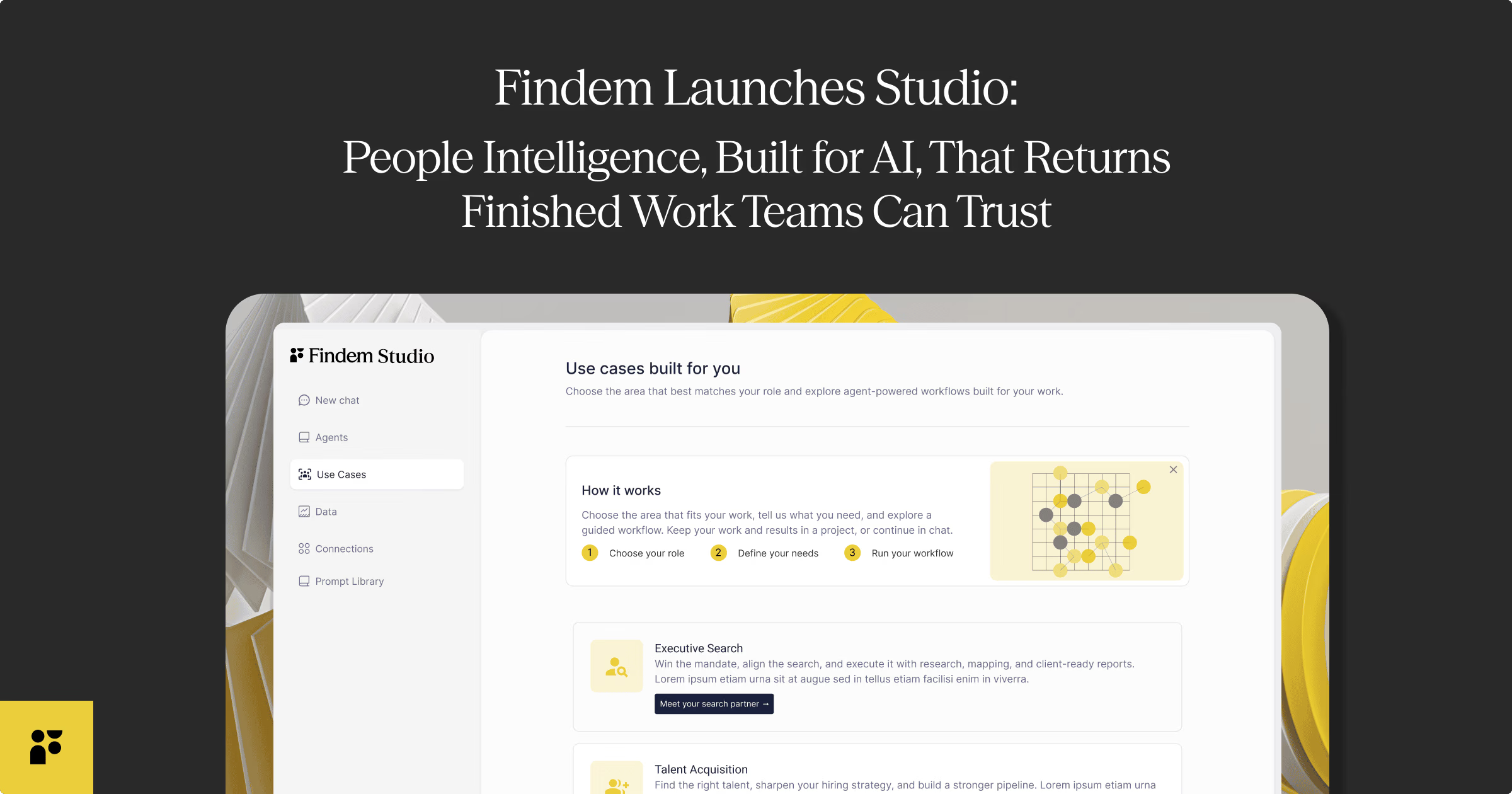
That's the opportunity behind Findem Studio. By combining trusted, expert-labeled data about people, companies, and the broader market with configurable AI agents, organizations can build solutions tailored to their own talent acquisition strategy — AI that understands how each hiring decision connects to the next, instead of a collection of isolated assistants.
The future of talent acquisition is better navigation
The future of AI for recruiting will be defined by who gives AI the context to understand the entire talent acquisition system — not by who builds the most agents. Organizations that ground AI in trusted, contextual intelligence will anticipate change instead of reacting to it, connect decisions instead of rebuilding context, and guide every stage of talent acquisition with more confidence.
The real opportunity is giving talent acquisition the navigation system it has always needed.
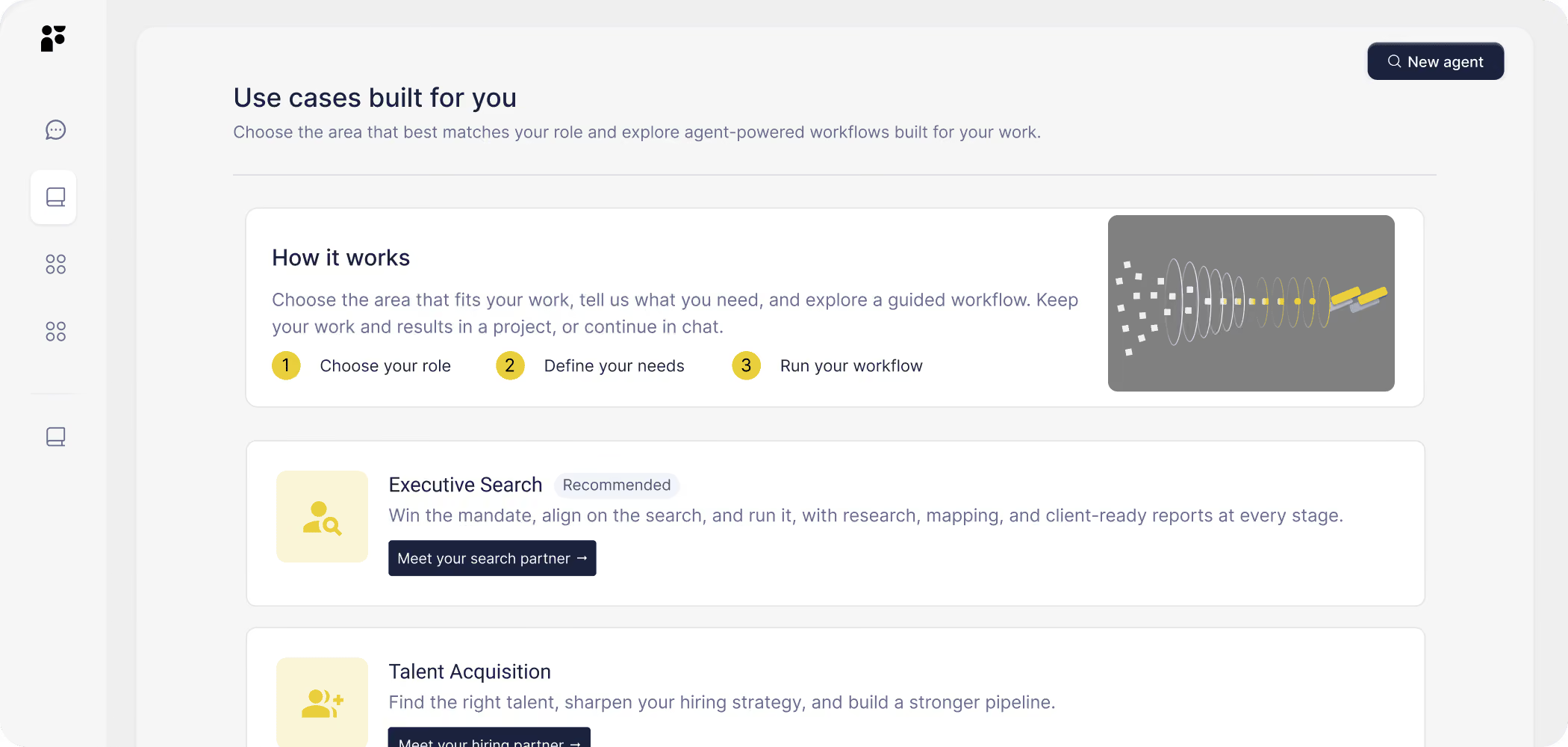
Organizations don't have to start from scratch. Findem Studio provides a growing library of AI agents built on trusted, expert-labeled intelligence across people, companies, and the broader market. Whether you're exploring new ideas or building custom agents tailored to your own strategy, Studio gives you the foundation to create AI that understands the entire hiring journey — not just individual tasks.
Explore the Talent Acquisition Agent Library or start building your own at studio.findem.ai.