.svg)
Findem partnered with McKinsey on groundbreaking research into women in European tech

March 11, 2026
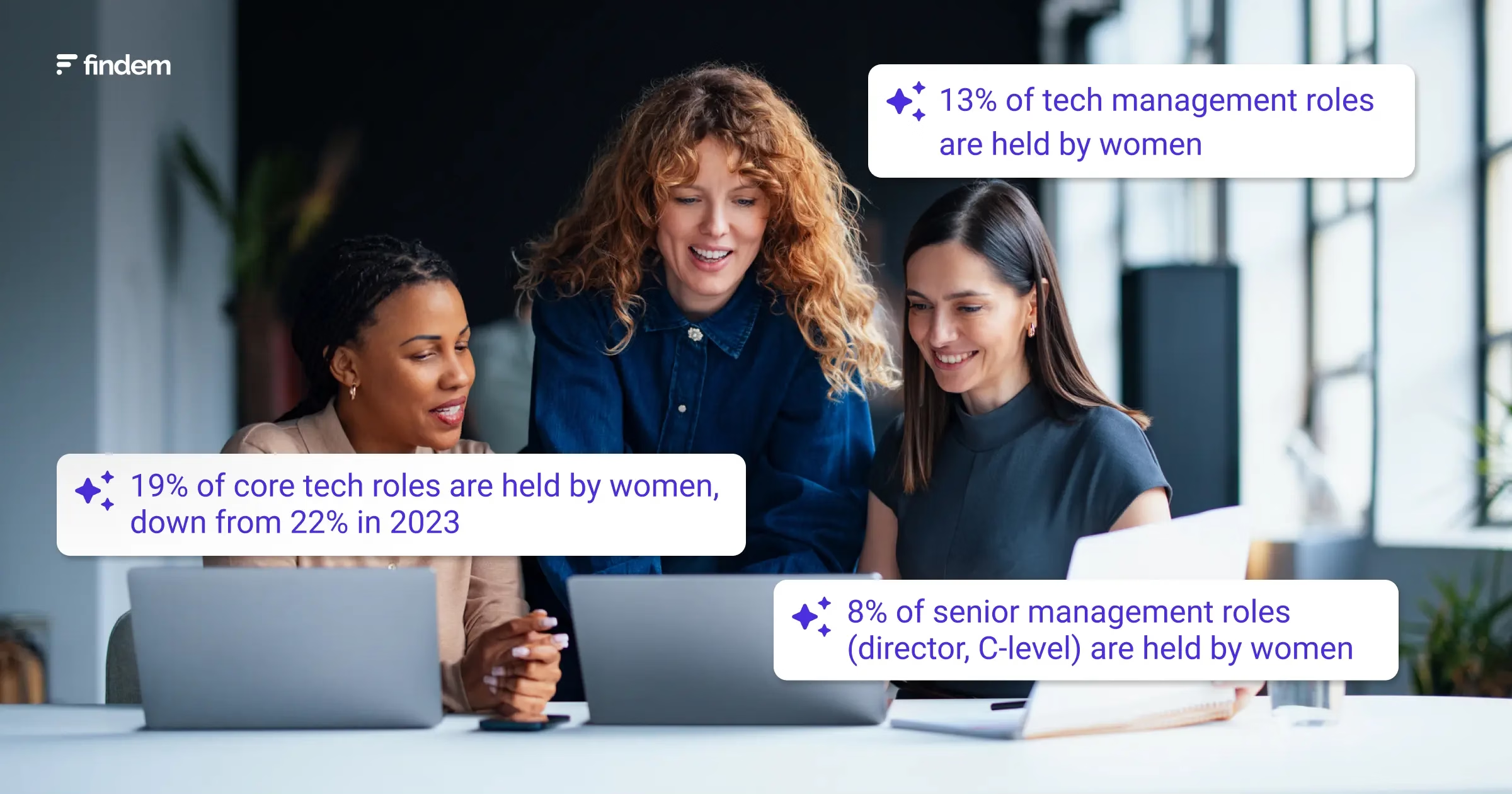
We are proud to share that Findem partnered with McKinsey on a new report: Women in Tech and AI in Europe: Can the Region Close Its Gender Gap? McKinsey drew on Findem's proprietary workforce data across global tech companies, to power one of the most comprehensive analyses of where women in European tech stand today.
The picture is sobering. The share of women in core tech roles has fallen from 22% in 2022 to 19% today, an all-time low. At every career stage, from entry level to the C-suite, the attrition of women from the tech pipeline continues. The research makes clear that current approaches are not working, but it also points to a concrete path forward.
The problem is getting worse and AI is accelerating it
Women in tech face what McKinsey calls a "triple threat." They are underrepresented to begin with. The AI-driven automation of entry-level roles is eliminating many of the positions they disproportionately hold, particularly in product management and design. And the women who remain in tech are hitting a glass ceiling, with representation falling sharply at every leadership transition.
The data tells the story clearly:
- 19% of core tech roles are held by women, down from 22% in 2023
- 13% of tech management roles are held by women
- 8% of senior management roles (director, C-level) are held by women
- In software engineering alone, women's share falls 15 percentage points from entry level to C-suite
Meanwhile, AI and data roles, the one job family with growing entry-level demand, are being captured predominantly by men, leaving women further behind in the field most central to Europe's AI future.
Why traditional approaches are failing
The McKinsey analysis surfaces a counterintuitive finding: gender equality at the country level does not translate into greater female representation in tech. Finland and Sweden, two of Europe's highest-ranked countries on the Global Gender Gap Index, still have female tech workforce shares of 36% and 23%, respectively. Similarly, rising STEM graduation rates among women are not converting into tech employment; the pipeline from graduate school to tech roles fell by 20 percentage points between 2022 and 2025.
Corporate DEI programs have also underdelivered. Senior tech leaders interviewed for the report described a landscape where diversity goals fade after initial hiring milestones, where women carry invisible loads of unrewarded "office housework" (an estimated 200 extra hours per year), and where the absence of senior female role models compounds attrition at every level.
Three actions that can make a real difference
The good news: the same AI disruption that threatens women's current positions also creates an opening. As entry-level roles contract and demand rises for mid- and senior-level leaders who can design, govern, and oversee AI systems, companies have an opportunity to bring women into the roles of the future if they act deliberately.
McKinsey outlines three interconnected levers.
1. Reculture
Culture is the strongest predictor of whether women stay in tech and advance. Companies that get this right don't treat inclusion as a side program; they embed it into how they operate. That means holding leaders accountable through transparent representation targets tied to executive KPIs, redesigning performance systems to reward output rather than visibility, and ensuring that structured meeting practices (round-robin input, written decisions) make every contribution visible. Critically, it means pairing mid-career women with senior sponsors, not just mentors, who actively advocate for their advancement.
2. Realign Skills
The tech roles of the future emphasize judgment, oversight, and human-AI collaboration, capabilities where women are well-positioned. Companies can create new on-ramps by investing in company-wide AI and data literacy programs, building return-to-work learning tracks for the estimated 140,000 to 200,000 women with STEM backgrounds currently outside the workforce, and developing personalized upskilling plans with funded certifications in AI, cloud, and data.
3. Reimagine Operations
Cultural intentions and skill investments only stick when operating models support them. That means standardizing parental leave and return-to-work frameworks so women are not penalized for using them, assigning high-value career-advancing work rather than "office housework," and building transparent career pathways that reduce dependence on informal networks. When sponsorship is a formal operating mechanism rather than an informal favor, women with sponsors are 200% more likely to see their ideas implemented.
The opportunity for Europe
Europe's AI competitiveness depends on its ability to build and retain the talent needed to lead in an AI-driven economy. McKinsey estimates that sovereign AI could add more than 480 billion euros in annual value to Europe's economy by 2030. Closing the gender gap in tech is not a separate agenda from that ambition; it is one of the most direct levers available.
The data from Findem and the analysis McKinsey built on it, make the stakes clear. The companies and countries that treat women's advancement in tech as a strategic priority, not a compliance exercise, will be better equipped to compete.
Read the full McKinsey report here.




%20Paikeday.avif)