





.svg)
Gender parity advances while racial equity stalls in CHRO ranks

December 12, 2025
A data-driven examination of divergent progress in HR’s most senior role
Over the past decade, representation within the CHRO role has shifted, but not in the same direction for all groups.
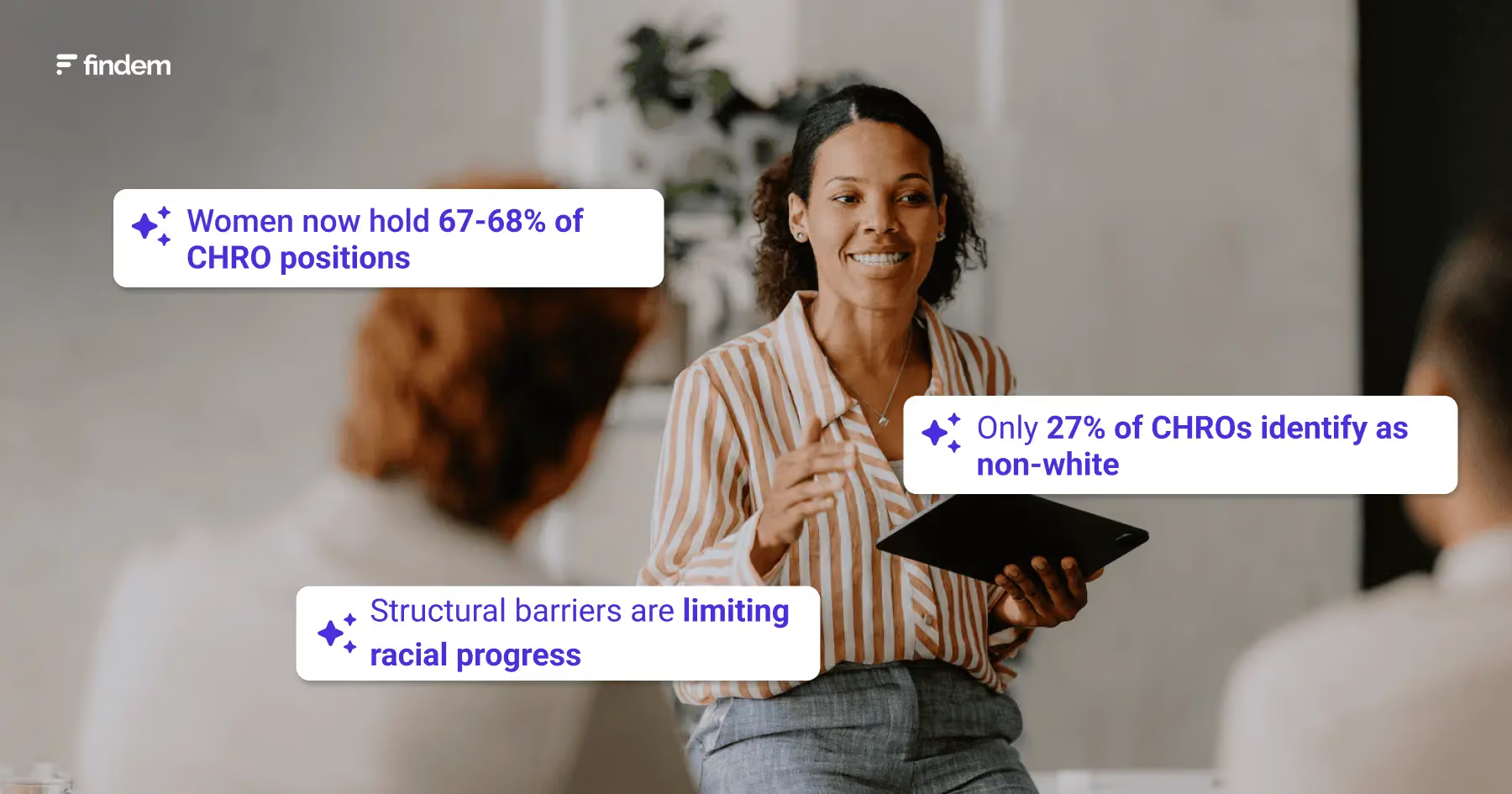
Women now hold 68% of CHRO positions, nearly mirroring the gender composition of the broader HR field (70%). Racial and ethnic representation, however, has barely moved despite HR being one of the most racially diverse corporate functions. While 48% of the HR workforce identifies as non-white, only 27% of CHROs do.
This disparity points to a systemic breakdown not in capability or supply, but in how organizations assess and select senior HR leaders.
Gender representation: A decade of sustained progress
Longitudinal data across 25,000 CHRO profiles shows a clear, uninterrupted rise in female representation. Women held just over half of CHRO roles in 2014; by 2024, that number had reached 68%. The growth has been steady, and the CHRO role is now the most gender-diverse position in the C-suite.
This trajectory reflects decades of structured investment, from formal sponsorship programs to leadership development pathways and a board-level focus on meeting gender equity commitments. Organizations built mechanisms that translated into outcomes, and the results show what’s possible when incentives, infrastructure, and visibility align.
Racial equity: Progress that never materialized
Racial equity tells a far different story. Over the same 11-year period, white CHRO representation declined only slightly, from roughly 75% to 73%. The highest point of non-white representation, 30% in 2021, proved temporary, receding in subsequent years.
Today, white leaders are 1.4x overrepresented in the CHRO seat relative to the HR workforce (52% white). Representation among Asian (15%), Hispanic (9%), and Black (4%) CHROs has shown no meaningful multi-year acceleration.
Despite a deep and diverse talent pipeline, the top HR role remains among the least racially diverse positions in the C-suite.
Why gender advanced while racial equity stalled
The contrast is not explained by the difference in candidate readiness. Instead, the data points to structural dynamics inside succession and selection processes.
Structural advantages that fueled gender diversity
Organizations built the infrastructure to support improvements in gender parity. Over the past decade, four mechanisms in particular created consistent upward mobility:
- Codified succession pathways
- Formal sponsorship and leadership programs
- Clear board-level incentives
- Strong visibility into gender diversity metrics
Structural barriers limiting racial progress
The mechanisms that accelerated gender diversity were not mirrored in efforts to advance racial equity. Instead, CHRO selection continues to rely heavily on legacy decision-making patterns, shaped by familiarity, subjective judgments, and long-established networks.
Across organizations, five patterns repeatedly surface:
- Referral-driven succession, reinforcing existing homogenous networks
- Narrow candidate slates, often recycling known leaders
- Subjective readiness assessments that disproportionately disadvantage non-white candidates
- Uneven access to informal sponsorship and high visibility assignments
- Over-reliance on title pedigree rather than demonstrated leadership outcomes
These forces collectively create a “concrete ceiling”, more rigid and less permeable than the glass ceiling broken by many women.
A diverse pipeline held back by legacy decision-making
A central paradox emerges: HR’s pipeline is both gender-diverse and racially diverse, yet only gender diversity shows meaningful mobility into the CHRO role.
The report reveals that HR leaders of color frequently demonstrate strong differentiators, exceeding peer averages in global leadership, cross-cultural fluency, and experience leading transformation, yet these career signals are not systematically weighted in CHRO selection. Instead, organizations continue to default to legacy patterns: familiarity, proximity, and title-based proxies for impact.
Closing the gap: Modernizing CHRO succession with evidence
To close the racial equity gap, organizations must modernize CHRO succession processes using the same rigor that drove gender parity.
Implementing evidence-based readiness criteria
Replace intuition with structured evaluation of:
- Leadership impact
- Transformation outcomes
- Enterprise influence
- Strategic capability
Expanding succession visibility
Systematically review the full HR pipeline, not just “known quantities.”
Formalizing sponsorship access
Ensure racially diverse leaders receive high-value assignments, cross-functional exposure, and executive advocacy.
Standardizing selection processes
Move from informal networks to transparent, criteria-based decision-making.
Tracking progression consistently
Measure progression at every level of the HR ladder, not only at the executive tier.
Building CHRO leadership that reflects the workforce
Gender parity in the CHRO role demonstrates that meaningful progress is possible when organizations redesign systems rather than relying on goodwill. Yet racial and ethnic equity remain stalled, even as the HR profession continues to grow more diverse and globally representative.
Unlocking the full breadth of HR talent requires re-engineering how organizations identify, assess, and elevate future CHROs. When leadership decisions shift from optics and intuition to evidence and outcomes, organizations not only expand access to opportunity — they also strengthen the strategic capacity of their HR function.
To explore the full analysis and recommendations, download The Five CHRO Paradoxes: Turning Tension into Advantage.