


.svg)
Forward deployed engineers in the modern AI enterprise

January 14, 2026
A data-driven view of role composition, market dynamics, and strategic importance.
Forward Deployed Engineers (FDEs) have become central to how organizations adopt and scale advanced technology, particularly artificial intelligence. As AI systems grow more complex and more deeply embedded into business operations, companies need professionals who can move between product, engineering, and customer environments without friction.
The FDE role exists to meet that need. It combines deep technical capability with applied problem-solving and customer context, ensuring that sophisticated systems function in the real world, not just in theory.
This analysis draws on a dataset of more than 3,000 Forward Deployed Engineers to examine who fills these roles, how the market is evolving, and why FDEs now sit at the center of enterprise AI execution.
Role definition and core responsibilities
Forward Deployed Engineers operate at the intersection of engineering, implementation, and customer strategy. They design, customize, and deploy products inside complex customer environments, ensuring the technology performs as intended and aligns with customer goals.
In the AI era, this responsibility has expanded. FDEs increasingly act as the operators and configurators of AI systems, ensuring models behave predictably, workflows remain stable, and outputs align with organizational goals. The work is rarely “set and forget.” It requires continuous calibration, monitoring, and adjustment as systems encounter real-world constraints.
This human layer has become critical as enterprise investment in generative AI accelerates. Despite tens of billions of dollars flowing into GenAI initiatives, the majority of organizations report little to no return. Most struggle not with access to AI tools, but with the ability to configure, monitor, and apply them in ways that produce measurable ROI.
Forward Deployed Engineers close this gap. They connect abstract model capability to operational reality, turning experimentation into durable value.
Characteristics of the forward deployed engineer talent market
The dataset reveals a consistent profile across skills, education, experience, and employer concentration. Together, these patterns help explain why demand for FDEs has intensified.
Skills profile
Technical depth defines the role. Forward Deployed Engineers are not peripheral advisors. They are practicing engineers with production-level capability. The most commonly reported skills include:
- Python (61%)
- C++ (44%)
- Java (43%)
- SQL (40%)
- JavaScript (33%)
- Leadership (31%)
This blend reflects a role that requires both hands-on engineering and the ability to guide implementation in high-stakes environments.
Educational background
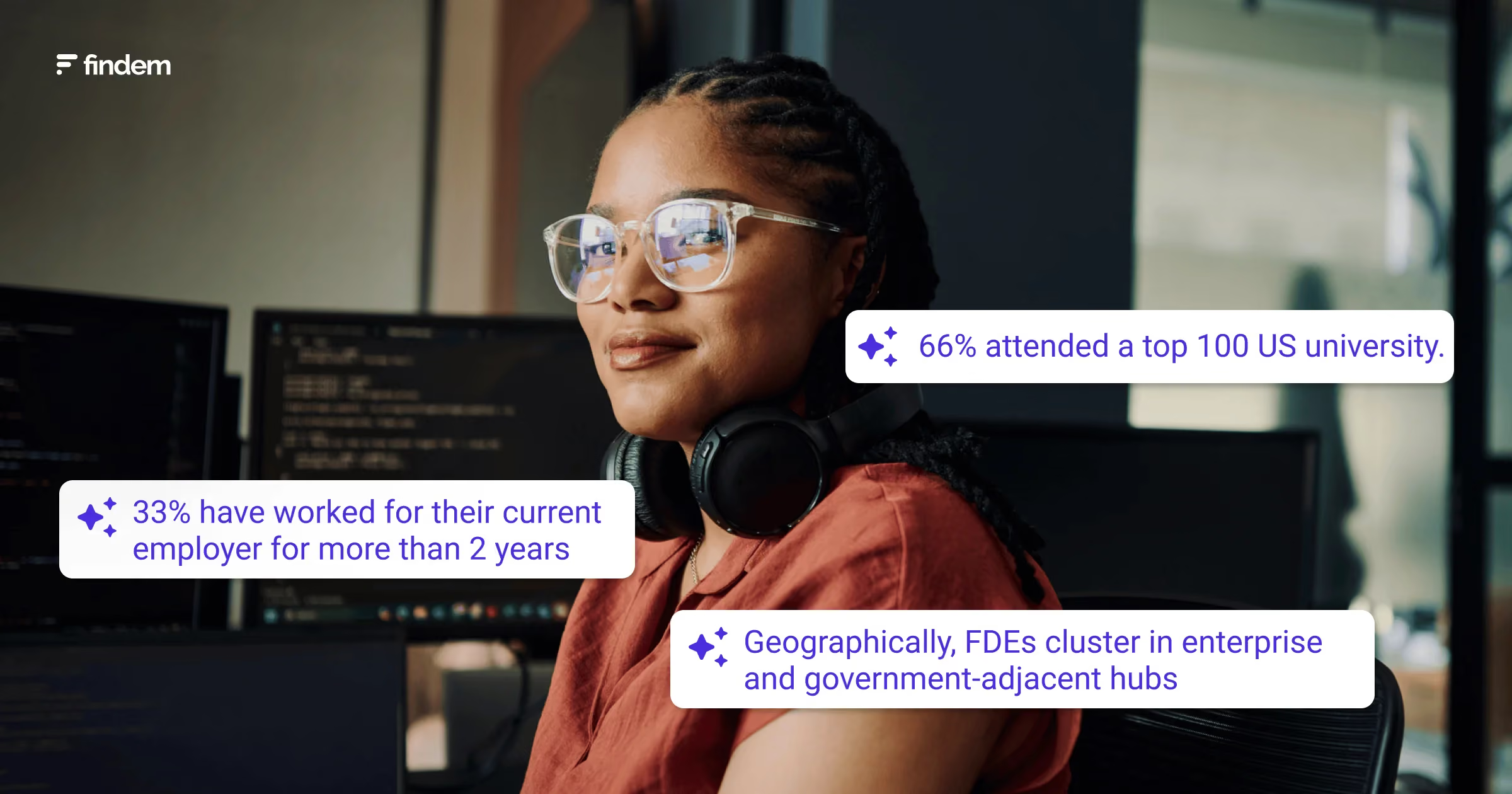
FDEs are disproportionately drawn from highly selective and engineering-focused institutions, with 18% having attended an Ivy League School and 66% a top 100 US university. The dataset shows:
- 4.4% attended Georgia Institute of Technology
- 3.8% attended The University of Pennsylvania
- 3.4% attended The University of California, Berkeley
- MIT, Stanford, Cornell, Dartmouth, Harvard, the University of Michigan, and Princeton are also well-represented.
This concentration suggests employers are prioritizing analytical rigor and technical fluency over narrowly defined industry backgrounds.
Experience levels
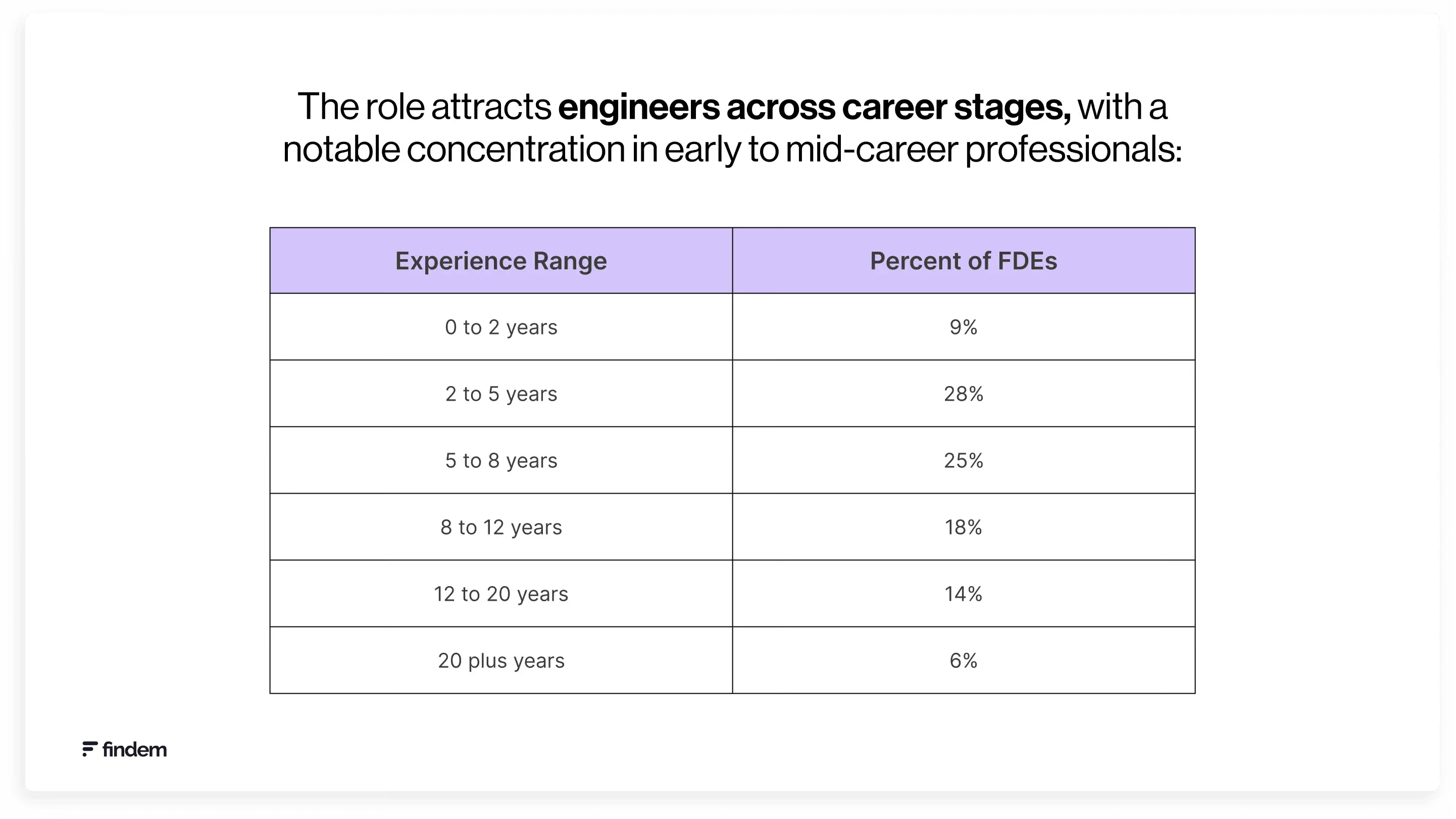
This pattern suggests that the role appeals especially to early-career and mid-career engineers seeking a combination of technical depth and customer impact.
Tenure
Tenure among Forward Deployed Engineers is relatively short:
- 24% have worked for their current employer for less than 6 months
- 37% have worked for their current employer for less than 9 months
- 33% have worked for their current employer for more than 2 years
This pattern signals rapid market growth and increasing competition for FDE talent, with organizations frequently rebuilding deployment capacity as demand accelerates.
Employer landscape and geography
Palantir Technologies continues to define the FDE talent pool, employing 50% of all Forward Deployed Engineers in the US. Salesforce (4.6%), Peregrine (1.6%), and Gecko Robotics (1.4%) appear but at much smaller levels. The dominance of Palantir reflects how foundational its deployment model has been in shaping the modern FDE role.
Geographically, FDEs cluster in enterprise and government-adjacent hubs:
- New York (35%)
- San Francisco (11%)
- Washington, D.C. (9%)
These locations align with complex deployment environments, regulated industries, and advanced AI adoption.
What does this mean for organizations deploying AI systems?
Several implications emerge from the data.
First, organizations should expect FDEs to be deeply technical. These roles require full-stack engineering capability paired with systems thinking and customer fluency.
Second, short tenure underscores the importance of structured onboarding, documentation, and repeatable deployment processes. Without them, organizations risk losing institutional knowledge just as systems mature.
Third, geographic concentration suggests that companies unwilling to support remote or hybrid deployment models may struggle to access sufficient talent.
Most importantly, AI systems require human expertise to translate model outputs into business outcomes. FDEs represent the primary conduit for this work. Their ability to configure, manage, and continuously refine AI agents makes them essential to achieving ROI and avoiding the high failure rates documented across the industry.
Forward Deployed Engineers serve as the translation layer between AI potential and business performance. As enterprises move from experimentation to execution, this role will increasingly determine which AI investments succeed and which quietly stall.